
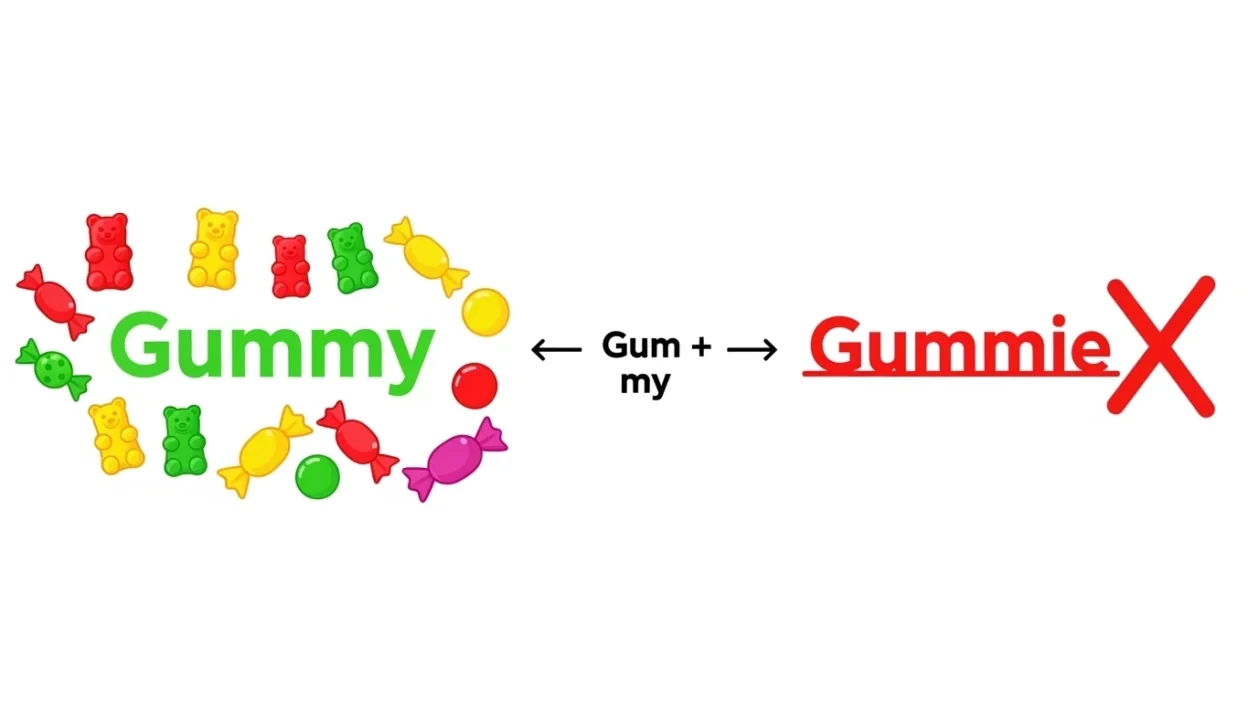
Many writers get confused between gummy vs gummie, especially when talking about candies or something sticky. Both may look reasonable, but only one spelling is correct in standard English.
In this guide, you will learn the correct spelling, meaning, examples, common mistakes, and an easy trick to remember the difference. By the end, you will clearly understand why gummy is correct and why gummie should not be used.
Quick Answer: Gummy vs Gummie
Gummy is the correct spelling.
Gummie is a spelling mistake (except in very rare or nonstandard uses).
Correct examples:
- I love eating gummy candies.
- The texture is soft and gummy.
Incorrect example:
- I love eating gummie candies. ❌
Always use gummy in proper writing.
What Does Gummy Mean?
Gummy is an adjective and sometimes a noun. It describes something that is soft, sticky, or chewy, or it refers to a type of candy.
Gummy as a Texture
Examples:
- The bread became gummy after baking.
- The surface felt sticky and gummy.
Gummy as Candy
The word is commonly used to describe chewy sweets.
Examples:
- She bought a pack of gummy bears.
- Kids enjoy colorful gummy candies.
Why “Gummie” Is Incorrect
The spelling gummie is usually incorrect because it does not follow standard English word forms.
The correct form is:
Gum + my → Gummy
Not:
Gum + mie → Gummie ❌
The confusion often comes from plural forms like:
- Candy → Candies
- Baby → Babies
But gummy is not formed that way.
Gummy vs Gummie: Comparison Table
| Word | Correct? | Meaning |
|---|---|---|
| Gummy | ✔ Yes | Sticky, chewy, or candy type |
| Gummie | ✘ No | Misspelling |
Whenever you describe chewy texture or candy, use gummy.
Examples of Gummy in Sentences
Here are some examples showing correct usage.
Food and Candy
- The store sells many flavors of gummy candies.
- He loves gummy worms.
Texture Description
- The rice turned gummy because of too much water.
- The glue felt thick and gummy.
These examples show how the word is used in everyday language.
Common Mistakes with Gummy
Let’s review typical errors.
Mistake 1: Writing Gummie
❌ She bought gummie bears.
✔ She bought gummy bears.
Mistake 2: Confusing with Plural Rules
Some writers mistakenly apply the y → ies rule incorrectly.
Mistake 3: Typing Based on Sound
Because both spellings sound similar, writers sometimes choose the wrong one.
Memory Trick to Remember the Correct Spelling
Here is a simple trick.
Think of the base word:
Gum
Add -my:
Gum → Gummy
This helps you remember the correct ending is -my, not -mie.
Related Words to Gummy
Here are some related forms:
- Gum
- Gums
- Gummier (comparative)
- Gummiest (superlative)
All these forms keep the correct base gummy.
American vs British English
There is no difference between American and British English.
Both use:
✔ Gummy
The spelling gummie is incorrect in standard usage.
Frequently Asked Questions
Is “gummie” a real word?
It is not standard and is considered a spelling mistake in most contexts.
What does gummy mean?
Gummy means soft, sticky, or chewy, often used for candy.
Why do people write gummie?
Because they confuse it with plural spelling patterns like -ies.
Is gummy used for candy?
Yes, it commonly describes chewy candies like gummy bears.
Is the spelling different in US and UK English?
No, both use gummy.
What is the plural of gummy?
The plural is gummies (e.g., gummy candies → gummies).
Final Summary: Gummy vs Gummie
The difference between gummy vs gummie is simple. Gummy is the correct spelling and describes something soft, sticky, or chewy. Meanwhile, gummie is a common spelling mistake caused by confusion with plural rules.
By remembering the base word gum, you can easily form the correct spelling gummy.
Actionable Takeaway
Whenever you write about chewy candy or sticky textures, use gummy. If you see gummie, correct it immediately to keep your writing accurate.