Many English learners and writers get confused between more then vs more than. The two phrases sound very similar, but only one of them is correct in most situations. Because “then” and “than” are commonly mixed up, this mistake appears frequently in everyday writing.
In this guide, you will learn the correct usage, meanings, examples, common mistakes, and a simple trick to remember the difference. After reading, you will confidently know when to use more than and why more then is usually wrong.
Quick Answer: More Then vs More Than
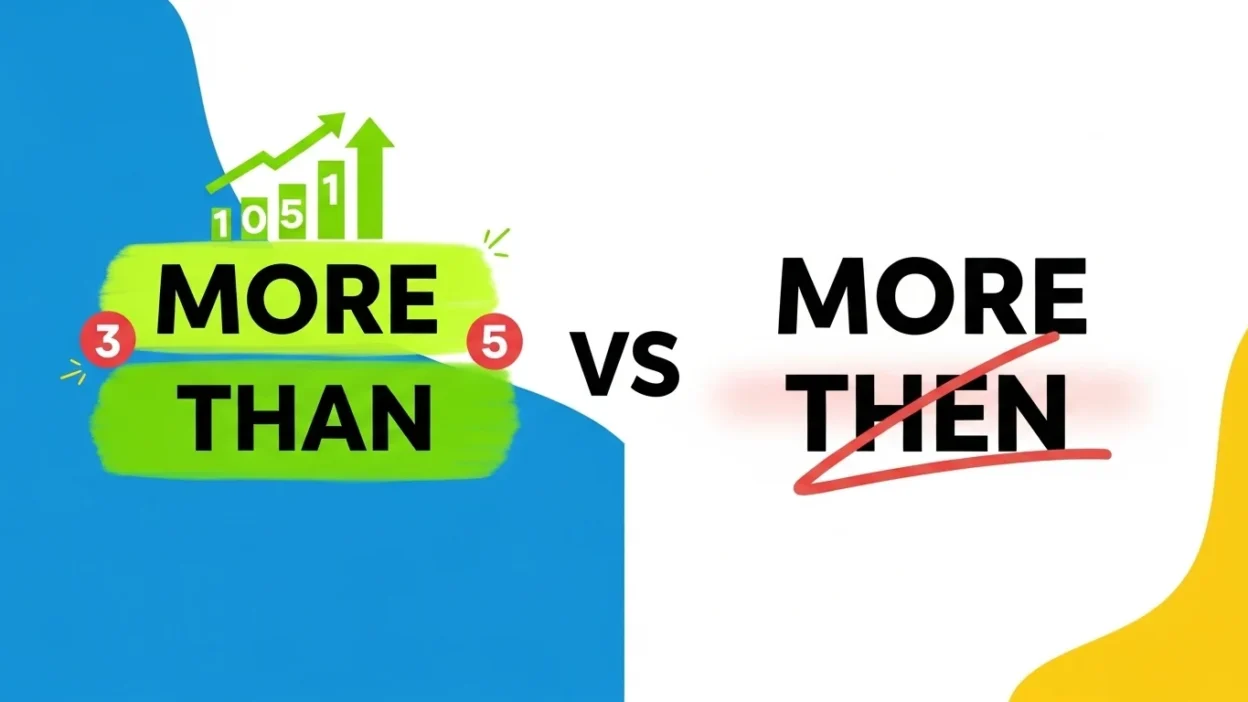
More than is the correct phrase in standard English.
More then is a grammatical mistake.
Use more than when comparing numbers, amounts, or quantities.
Examples:
- She has more than ten books.
- The movie lasted more than two hours.
- This phone costs more than the previous one.
In almost every case, “more then” should be corrected to “more than.”
What Does More Than Mean?
More than is used to compare quantities, numbers, amounts, or degrees. It means a greater amount or number.
Used for Numbers
You use more than when talking about quantities.
Examples:
- The library has more than 5,000 books.
- He waited more than an hour.
- The company hired more than 100 employees.
In these examples, “more than” shows that the number is greater than the one mentioned.
Used for Comparisons
It also works when comparing two things.
Examples:
- She loves reading more than watching TV.
- I value honesty more than money.
- This laptop is more than powerful enough.
Here, “more than” compares preferences, values, or qualities.
Used for Emphasis
Sometimes “more than” means very or extremely.
Examples:
- I am more than happy to help.
- The team was more than ready for the challenge.
In these cases, it emphasizes intensity.
Why “More Then” Is Incorrect
The phrase more then is usually incorrect because then has a completely different meaning.
“Then” refers to time, sequence, or what happens next.
Examples of correct “then” usage:
- We ate dinner, then watched a movie.
- Finish your homework, then go outside.
- Back then, life was simpler.
Because “then” relates to time, it does not work in comparisons.
Incorrect example:
❌ She has more then five dogs.
Correct version:
✔ She has more than five dogs.
More Then vs More Than: Comparison Table
| Feature | More Than | More Then |
|---|---|---|
| Correct Grammar | ✔ Yes | ✘ No |
| Used for Comparison | Yes | No |
| Used for Numbers | Yes | No |
| Standard English | Yes | Incorrect |
If you are talking about quantity or comparison, always choose more than.
Simple Grammar Rule to Remember
A quick rule helps avoid the mistake:
Than = Comparison
Then = Time
Examples:
Comparison → more than
Time → then
This rule instantly clarifies which word you need.
Examples of More Than in Sentences
Let’s look at practical examples.
With Numbers
- The stadium holds more than 50,000 people.
- She has more than twenty pairs of shoes.
- The journey took more than three hours.
With Preferences
- He enjoys music more than sports.
- I trust her more than anyone else.
With Emphasis
- The teacher was more than pleased with the results.
- Your help is more than appreciated.
These examples show how flexible and useful “more than” is.
Common Mistakes with More Then
Here are the most frequent errors people make.
Mistake 1: Using Then in Comparisons
❌ There were more then 100 guests.
✔ There were more than 100 guests.
Mistake 2: Confusing Sound with Meaning
Because then and than sound similar, people often type the wrong word quickly.
Always pause and ask:
“Am I comparing something?”
If yes, use than.
Mistake 3: Ignoring the Comparison Rule
Whenever a sentence compares numbers, amounts, or preferences, you need than, not then.
Memory Trick to Remember the Difference
Here is an easy trick:
THAN = Compare
Both words contain the letter A.
Than → compare
This small connection helps you remember instantly.
Similar Comparisons Using “Than”
The word than appears in many comparison phrases.
Examples:
- Better than
- Faster than
- Larger than
- Smaller than
- More than
Because of this pattern, “than” is strongly connected to comparisons in English grammar.
American vs British English
There is no spelling difference between American and British English.
Both use:
- More than (correct)
- More then (incorrect)
So the grammar rule stays the same worldwide.
Frequently Asked Questions
Is “more then” ever correct?
No, it is considered a grammatical mistake in standard English.
Why do people confuse then and than?
Because the two words sound similar in pronunciation.
When should I use “then”?
Use “then” when talking about time, sequence, or what happens next.
When should I use “than”?
Use “than” when comparing numbers, quantities, or preferences.
Is “more than” formal or informal?
It works in both formal and informal writing.
Can “more than” mean very?
Yes, it can emphasize intensity, such as “more than happy.”
Final Summary: More Then vs More Than
The difference between more then vs more than comes down to grammar and meaning. More than is the correct phrase used for comparisons, quantities, and emphasis. Meanwhile, more then is a common spelling mistake caused by confusion between “then” and “than.”
Once you remember that than is used for comparisons, the choice becomes easy. Anytime you describe a greater amount or number, always use more than.
Actionable Takeaway
Before publishing your writing, quickly check sentences with comparisons. If you see more then, replace it with more than to keep your grammar clear and correct.