Many writers hesitate when choosing between panic vs panick because both versions may appear similar at first glance. However, only one of them is correct in standard English spelling.
In this guide, you will learn the correct spelling, meaning, examples, common mistakes, and an easy way to remember the difference. By the end, you will clearly understand why panic is correct and why panick should not be used.
Quick Answer: Panic vs Panick
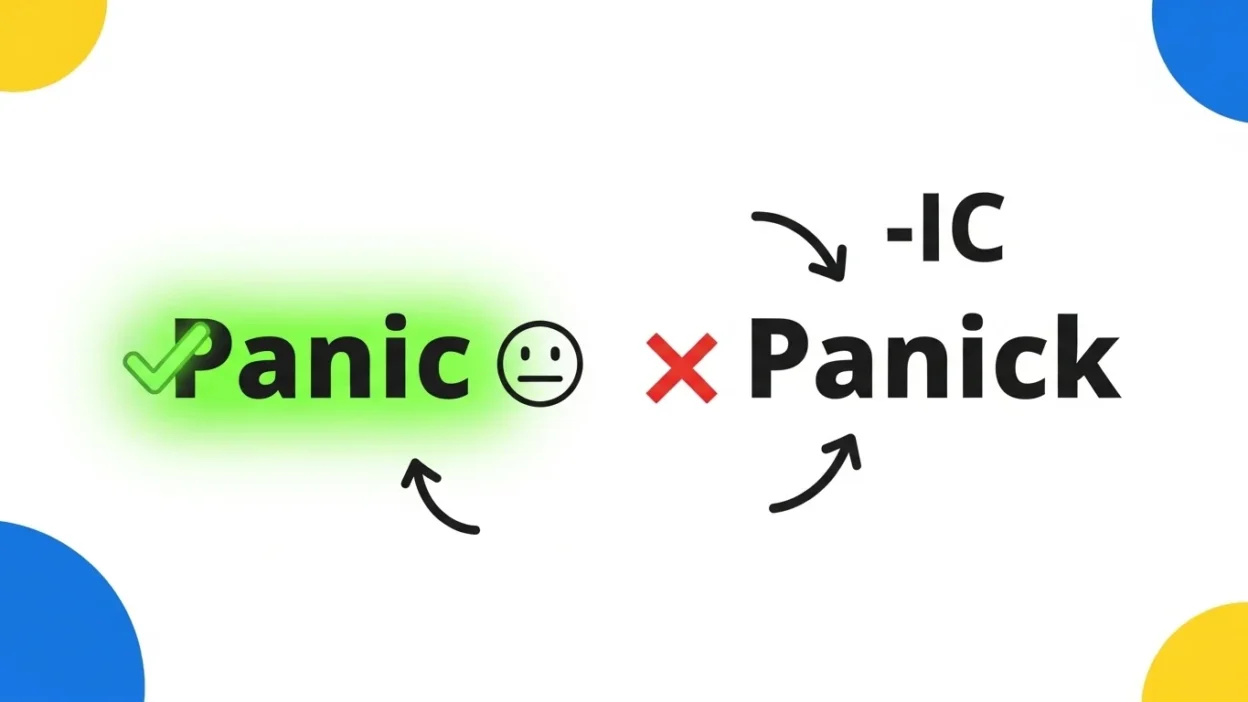
Panic is the correct spelling.
Panick is a spelling mistake.
Correct examples:
- The sudden noise caused people to panic.
- There was a moment of panic during the emergency.
Incorrect example:
- The sudden noise caused people to panick. ❌
In proper English writing, always use panic.
What Does Panic Mean?
Panic can be used as both a noun and a verb. It describes a sudden feeling of fear, anxiety, or loss of control, often in stressful or dangerous situations.
Panic as a Noun
When used as a noun, panic refers to a strong feeling of fear.
Examples:
- There was widespread panic after the loud explosion.
- The crowd reacted with panic during the emergency.
Here, the word describes a sudden emotional reaction.
Panic as a Verb
As a verb, panic means to become very frightened or anxious.
Examples:
- Try not to panic during the exam.
- The passengers began to panic when the lights went out.
In these sentences, the word describes the action of becoming afraid.
Why “Panick” Is Incorrect
The spelling panick is simply a misspelling of “panic.”
The correct word always ends with the letter c, not ck.
Spelling Pattern Explanation
Many English words ending with -ic keep that ending without adding k.
Examples:
| Correct Word | Incorrect Version |
|---|---|
| Panic | Panick |
| Music | Musick |
| Public | Publick |
Because of this pattern, panic never ends with ck.
Panic vs Panick: Comparison Table
| Word | Correct? | Meaning |
|---|---|---|
| Panic | ✔ Yes | Sudden fear or anxiety |
| Panick | ✘ No | Misspelling |
Whenever you describe sudden fear or stress, always write panic.
Examples of Panic in Sentences
Here are some examples showing how the word is used.
Everyday Situations
- He felt a wave of panic before the presentation.
- She tried not to panic when she lost her phone.
Emergency Situations
- The crowd began to panic when the alarm sounded.
- Firefighters helped prevent panic among residents.
Emotional Context
- Many students panic before exams.
- A moment of panic made him forget the answer.
These examples show how the word appears in everyday communication.
Common Mistakes with Panic
Let’s review the most frequent errors.
Mistake 1: Writing Panick
❌ People started to panick during the storm.
✔ People started to panic during the storm.
Mistake 2: Confusing Word Endings
Some writers assume the word should end with ck, but English words ending with -ic usually do not add k.
Mistake 3: Typing Too Quickly
Fast typing can sometimes lead to accidentally adding extra letters.
Memory Trick to Remember the Correct Spelling
Here is an easy trick.
Think of the phrase:
“Don’t panic.”
It’s a common expression and always spelled panic without k.
Another tip:
Many words ending with -ic keep the same ending.
- Panic
- Music
- Logic
- Public
This pattern helps reinforce the correct spelling.
American vs British English
There is no difference between American and British spelling for this word.
Both varieties use:
✔ Panic
The spelling panick is considered incorrect everywhere.
Frequently Asked Questions
Is “panick” a real word?
No, it is considered a spelling mistake.
What does panic mean?
Panic means sudden fear, anxiety, or loss of control.
Can panic be both a noun and a verb?
Yes. It can describe a feeling or the action of becoming frightened.
Why do people write panick?
Because they assume the word should end with ck, which is incorrect.
Is the spelling different in US and UK English?
No, both use the spelling panic.
What is the past tense of panic?
The past tense is panicked.
Example: She panicked during the emergency.
Final Summary: Panic vs Panick
The difference between panic vs panick is simple. Panic is the correct spelling and describes sudden fear or anxiety. Meanwhile, panick is a common spelling mistake caused by incorrectly adding the letter k.
Because many English words end with -ic, remembering this pattern makes the correct spelling easier to recall. Once you remember this rule, avoiding the mistake becomes simple.
Actionable Takeaway
Before publishing your writing, quickly check for the mistake panick. If you see it, replace it with panic to keep your spelling accurate and professional.

Fenwick Quentin is a creative blogging author known for his analytical yet engaging writing style.
He explores topics such as innovation, digital culture, and personal development with depth and clarity.
Through his articles, Fenwick encourages readers to think critically and embrace continuous growth.