Many writers get confused between possess vs posses because the words look almost identical. However, only one spelling is correct in standard English, while the other is a common mistake.
In this guide, you will learn the correct spelling, meaning, examples, common mistakes, and an easy trick to remember the difference. By the end, you will clearly understand why possess is correct and why posses should not be used.
Quick Answer: Possess vs Posses
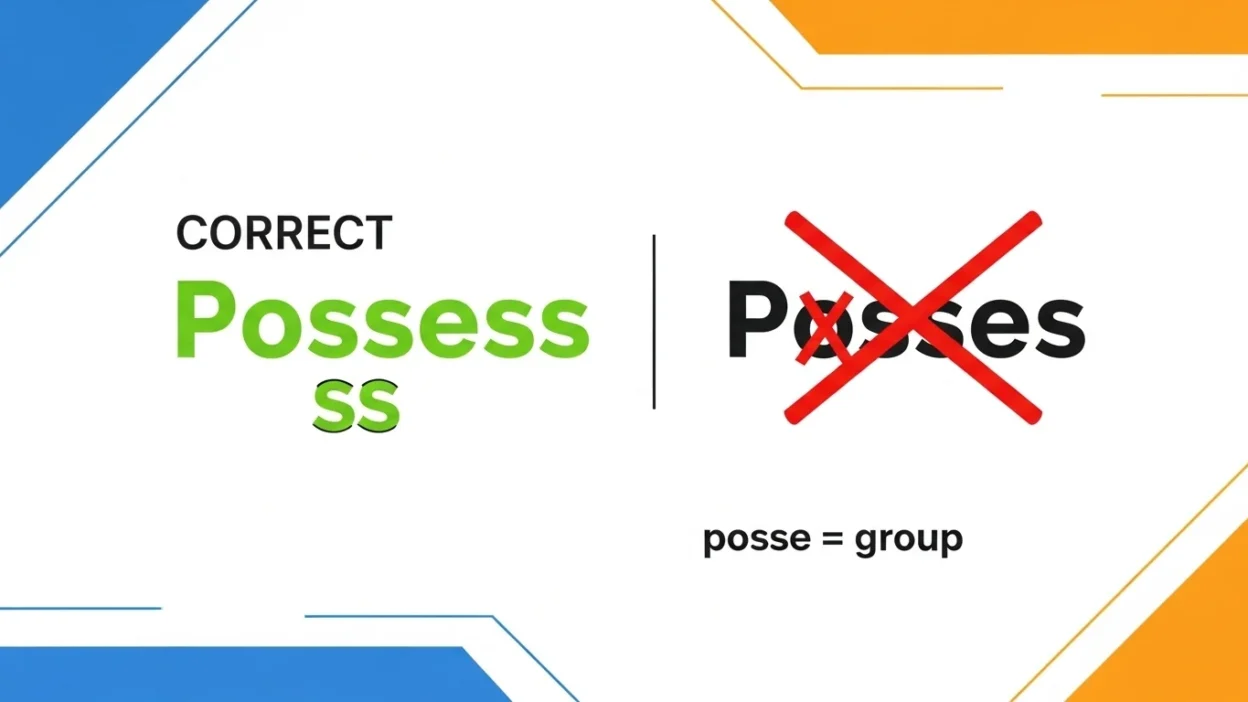
Possess is the correct spelling.
Posses is a spelling mistake (except in a completely different word, explained below).
Correct examples:
- She possesses great talent.
- They possess strong leadership skills.
Incorrect example:
- She posses great talent. ❌
Always use possess when you mean “to have or own something.”
What Does Possess Mean?
Possess is a verb that means to own, have, or hold something. It can refer to physical ownership or qualities.
Possess as Ownership
Examples:
- He possesses a large house.
- They possess valuable assets.
Possess as Having Qualities
Examples:
- She possesses great intelligence.
- Leaders must possess strong communication skills.
Why “Posses” Is Incorrect
The spelling posses is usually incorrect when you intend to use possess.
The correct word contains double “s” at the end:
Possess
Not:
Posses ❌
Important Note: “Posse” Is a Different Word
There is a real word posse, which means a group of people, often formed for a specific purpose.
Examples:
- The sheriff gathered a posse.
- He arrived with his group, or posse.
The plural form is posses.
So:
- Possess = to own or have
- Posses = plural of posse (different meaning)
Possess vs Posses: Comparison Table
| Word | Correct? | Meaning |
|---|---|---|
| Possess | ✔ Yes | To have or own something |
| Posses | ✘ No (in this context) | Plural of “posse” |
Whenever you mean ownership or having qualities, use possess.
Examples of Possess in Sentences
Here are examples showing correct usage.
Ownership
- They possess several properties.
- She possesses a rare collection of books.
Qualities
- He possesses natural leadership skills.
- Great athletes possess discipline.
These examples show how commonly the word is used.
Common Mistakes with Possess
Let’s review typical errors.
Mistake 1: Writing Posses Instead of Possess
❌ She posses great talent.
✔ She possesses great talent.
Mistake 2: Forgetting Double “S”
Writers often drop one s, which changes the word incorrectly.
Mistake 3: Confusing with “Posse”
Some people mix up possess with the unrelated word posse.
Memory Trick to Remember the Correct Spelling
Here is a simple trick.
Think of the word:
“You possess success.”
Both words end with “ss”.
So remember:
Possess has double S at the end.
Related Words to Possess
Here are some related forms:
- Possession
- Possessive
- Possessing
- Possessed
All of these keep the double s, reinforcing the correct spelling.
American vs British English
There is no difference between American and British English.
Both use:
✔ Possess
The spelling posses is incorrect in this context everywhere.
Frequently Asked Questions
Is “posses” a real word?
Yes, but only as the plural of posse, not as a verb.
What does possess mean?
It means to own, have, or hold something.
Why does possess have double “s”?
Because the correct root spelling includes two s at the end.
Is possess used in formal writing?
Yes, it is very common in both formal and informal English.
Is the spelling different in US and UK English?
No, both use possess.
What is the noun form of possess?
The noun form is possession.
Final Summary: Possess vs Posses
The difference between possess vs posses is important. Possess is the correct spelling when you mean to have or own something. Meanwhile, posses is only correct as the plural of posse, which has a completely different meaning.
Remembering that possess ends with double “ss” will help you avoid this common mistake.
Actionable Takeaway
Whenever you write about ownership or qualities, use possess. If you see posses, double-check the meaning and correct it if necessary.

Fenwick Quentin is a creative blogging author known for his analytical yet engaging writing style.
He explores topics such as innovation, digital culture, and personal development with depth and clarity.
Through his articles, Fenwick encourages readers to think critically and embrace continuous growth.