If you’ve ever typed “layed” and felt unsure, you’re definitely not alone. This is one of the most common English mistakes, especially because the verbs “lay” and “lie” already cause confusion on their own.
Understanding layed vs laid can instantly improve your writing clarity and confidence. In this guide, you’ll learn the correct spelling, meanings, examples, grammar rules, and simple tricks to avoid this mistake forever.
Quick Answer
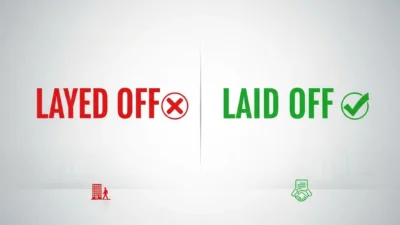
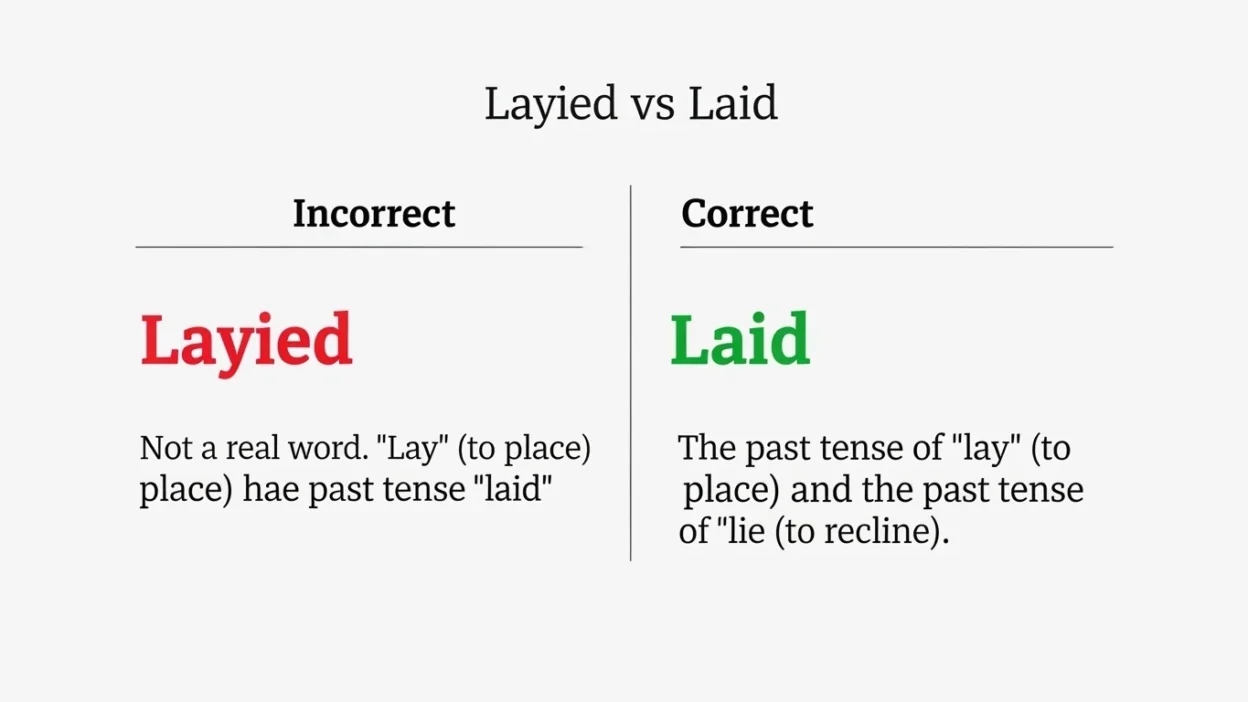
- ❌ Layed is incorrect
- ✅ Laid is the correct past tense of “lay”
- Always use laid when referring to placing or putting something down
What Does “Laid” Mean?
The word laid is the past tense and past participle of the verb “lay.” It means to put, place, or set something down carefully.
Core meanings:
- To place something somewhere
- To set something down
- To prepare or arrange
Examples:
- She laid the book on the table.
- He laid the bricks carefully.
- They laid the foundation for the project.
LSI keywords and related phrases:
- placed
- positioned
- set down
- arranged
- put
- installed
These related terms help improve readability and SEO.
What Is “Layed”? Is It Ever Correct?
Let’s clear this up: “layed” is not a correct standard English word.
It’s a common misspelling of “laid.”
Why people write “layed”:
- Confusion with regular verb patterns (play → played)
- Assuming “lay” follows the same rule
- Mixing up “lay” and “lie”
Important:
- ❌ Layed → Incorrect
- ✅ Laid → Correct
Always use laid in both casual and formal writing.
Layed vs Laid: Side-by-Side Comparison
| Feature | Layed ❌ | Laid ✅ |
|---|---|---|
| Valid word | No | Yes |
| Grammar | Incorrect spelling | Correct |
| Meaning | None | Past of “lay” (to place) |
| Usage | Never correct | Standard English |
| Example | ✖ He layed the tile | ✔ He laid the tile |
Why “Laid” Is the Correct Form
The confusion comes from how English verbs form their past tense.
Rule:
👉 Lay is an irregular verb
- Present: lay
- Past: laid
- Past participle: laid
Unlike regular verbs (play → played), lay does not take “-ed.”
Memory trick:
👉 Think: “Lay turns into laid, not layed.”
Similar irregular verbs:
- say → said
- pay → paid
Notice the pattern? The vowel changes instead of adding “-ed.”
How to Use “Laid” Correctly
The word laid appears in many everyday situations.
1. Placing objects
- She laid her keys on the table.
- He laid the phone beside him.
2. Construction or work
- Workers laid the tiles carefully.
- The company laid new cables.
3. Figurative use
- They laid the groundwork for success.
- She laid out her plans clearly.
4. Expressions
- He laid it all on the line.
- She laid her cards on the table.
Tip:
Use laid when something is being placed or put somewhere.
Lay vs Lie: The Real Source of Confusion
Many people confuse layed vs laid because of the verbs lay and lie.
Let’s simplify:
Lay:
- Means to put something down
- Requires an object
- Example: I lay the book down
Lie:
- Means to recline or rest
- Does NOT need an object
- Example: I lie down
Past tense comparison:
| Verb | Present | Past |
|---|---|---|
| Lay | lay | laid |
| Lie | lie | lay |
👉 Yes, this is tricky:
- “Lie” becomes “lay” in the past
- “Lay” becomes “laid”
Example:
- Yesterday, I lay on the bed (from “lie”)
- Yesterday, I laid the book down (from “lay”)
Common Mistakes to Avoid
Here are the most frequent errors:
1. Using “layed” instead of “laid”
- ❌ He layed the carpet
- ✅ He laid the carpet
2. Mixing up “lay” and “lie”
- ❌ I will lay down (wrong unless object exists)
- ✅ I will lie down
3. Incorrect tense usage
- ❌ She has layed the table
- ✅ She has laid the table
4. Assuming all verbs follow “-ed”
English has many irregular verbs—memorization helps.
American vs British English Differences
There is no difference in this case.
- ✅ Laid is correct in both American and British English
- ❌ Layed is incorrect everywhere
Key takeaway:
The rule is universal across English varieties.
Synonyms and Alternatives for “Laid”
To improve your writing, try these alternatives:
Physical context:
- placed
- set
- positioned
- installed
Abstract context:
- arranged
- established
- prepared
Examples:
- Laid the foundation → Established the foundation
- Laid the book → Placed the book
These synonyms enhance variety and SEO performance.
Real-Life Usage Examples
Let’s see how laid is used naturally:
Daily life:
- She laid her bag on the chair.
Work:
- The team laid out a clear strategy.
Construction:
- Workers laid bricks for the new building.
Figurative:
- He laid the blame on someone else.
These examples show how versatile the word is.
FAQs About Layed vs Laid
Is “layed” ever correct?
No, it is always incorrect.
What is the correct past tense of “lay”?
The correct past tense is laid.
Why is “layed” wrong?
Because “lay” is an irregular verb and does not take “-ed.”
What is the difference between “lay” and “lie”?
“Lay” needs an object; “lie” does not.
Is “laid” formal or informal?
It is used in both formal and informal contexts.
Is there a British vs American difference?
No, both use “laid.”
What is the past participle of “lay”?
It is laid.
How can I remember the correct form?
Think: lay → laid, like pay → paid.
Summary: Layed vs Laid Made Simple
The difference between layed vs laid is clear once you understand the rule. Laid is the correct past tense of “lay,” while layed is simply a common misspelling that should be avoided.
This confusion often comes from mixing up irregular verbs and assuming all words follow standard “-ed” patterns. By remembering that “lay” becomes “laid,” you can instantly improve your writing accuracy.
Actionable Takeaway
Here’s your simple rule:
👉 Always use laid, never write layed
Before submitting emails, assignments, or content, take a moment to proofread. Catching small mistakes like this helps you communicate more clearly and professionally.