
Losing someone is never easy, and choosing the right words matters—especially when expressing sympathy or writing about someone’s death. If you’ve ever wondered whether to write “past away” or “passed away,” you’re not alone. This is a very common confusion in English.
The difference may look small, but only one of these phrases is correct. In this guide, you’ll learn the correct usage, meaning, examples, and how to avoid this mistake with confidence and sensitivity.
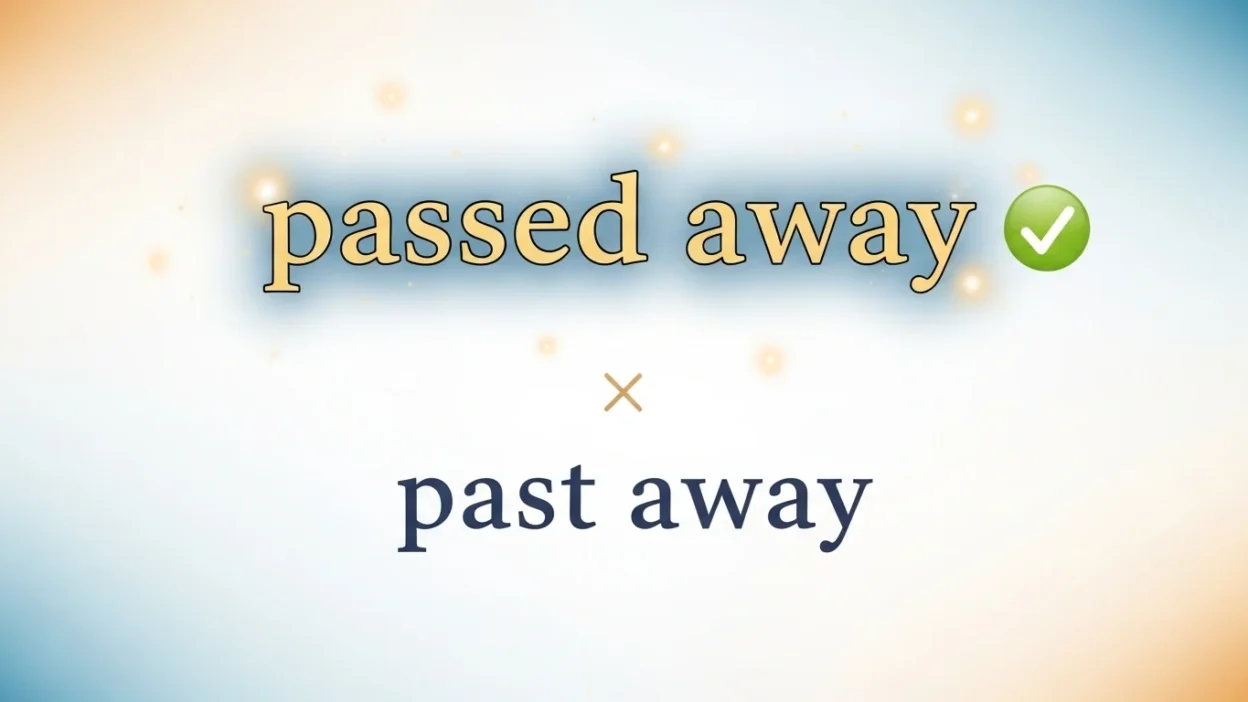
Quick Answer
- “Passed away” ✅ is the correct and respectful phrase.
- “Past away” ❌ is incorrect and should not be used.
👉 Always use “passed away” when referring to someone’s death politely.
What Does “Passed Away” Mean?
The phrase “passed away” is a gentle, respectful way to say that someone has died. It’s considered a euphemism, often used to soften the emotional impact.
Simple definition:
Passed away = to die (in a polite or indirect way)
Examples:
- Her grandfather passed away peacefully last night.
- We were saddened to hear that he passed away.
- She passed away after a long illness.
This phrase is commonly used in:
- Obituaries
- Condolence messages
- Formal and respectful communication
What About “Past Away”?
Here’s the key point: “past away” is not correct in this context.
It’s a mistake that happens because:
- “Past” and “passed” sound similar
- People confuse verb and preposition forms
- It’s a common spelling error in fast typing
Important:
Using “past away” instead of “passed away” can seem careless, especially in sensitive situations.
Past Away vs Passed Away: Key Differences
| Feature | Past Away ❌ | Passed Away ✅ |
|---|---|---|
| Correct phrase? | No | Yes |
| Meaning | Incorrect/meaningless | Polite way to say “died” |
| Grammar | Incorrect usage | Correct verb phrase |
| Tone | Can seem insensitive | Respectful and appropriate |
| Usage | Should be avoided | Widely accepted |
Why Do People Confuse “Past” and “Passed”?
This is one of the most common grammar mix-ups in English.
1. Same pronunciation
Both “past” and “passed” sound alike, which leads to confusion in writing.
2. Different roles in grammar
- Passed = verb (past tense of “pass”)
- Past = noun, adjective, or preposition
Examples:
- He passed the test. (verb)
- That’s in the past. (noun/preposition)
So in “passed away,” we need a verb, not “past.”
Common Mistakes to Avoid
Let’s look at incorrect vs correct usage:
❌ Incorrect:
- She past away last year.
- His father past away peacefully.
✅ Correct:
- She passed away last year.
- His father passed away peacefully.
Tip:
If you can replace the word with a verb, use “passed.”
How to Use “Passed Away” Correctly
This phrase is used in respectful and emotional contexts.
1. In condolences:
- I’m sorry to hear your aunt passed away.
- Our thoughts are with you after your loss.
2. In formal writing:
- The author passed away in 2010.
3. In announcements:
- We regret to inform you that he has passed away.
Tone Tip:
“Passed away” is softer than “died,” making it more appropriate in sensitive situations.
Synonyms and Related Phrases (LSI Keywords)
Using alternatives can help vary your writing while staying respectful.
Synonyms:
- Died
- Departed
- Deceased
- Lost their life
Gentle alternatives:
- No longer with us
- Passed on
- Left us
Example:
- She passed away peacefully.
- She departed peacefully.
American vs British English Differences
There’s no difference in this case:
- ✅ “Passed away” is correct in both American and British English
- ❌ “Past away” is incorrect everywhere
This rule applies universally across standard English.
When Should You Use “Passed Away”?
Use this phrase when:
- Speaking respectfully about someone’s death
- Writing condolence messages
- Communicating in formal or sensitive contexts
Avoid using it when:
- Writing very clinical or medical reports (where “died” may be preferred)
Memory Trick to Remember the Difference
Here’s a simple trick:
👉 “Passed” has ‘ed’ like a completed action.
Death is a completed event, so:
- pass → passed away ✅
Think: The action has “passed,” not “past.”
FAQs About Past Away vs Passed Away
1. Is “past away” ever correct?
No, it is always incorrect.
2. What is the correct phrase?
The correct phrase is “passed away.”
3. Why do people say “past away”?
Because “past” and “passed” sound the same.
4. Is “passed away” formal or informal?
It’s semi-formal and respectful, commonly used in both personal and formal contexts.
5. Can I say “died” instead of “passed away”?
Yes, but “passed away” is softer and more polite.
6. Is “passed away” appropriate in condolences?
Yes, it’s one of the most appropriate phrases to use.
7. What part of speech is “passed”?
It’s a verb (past tense of “pass”).
8. How can I avoid this mistake?
Remember: if it’s an action, use “passed,” not “past.”
Final Summary
The difference between “past away vs passed away” is important, especially in sensitive situations. “Passed away” is the correct and respectful phrase used to refer to someone’s death, while “past away” is simply a common spelling mistake that should be avoided.
Using the correct phrase not only improves your writing but also shows care and respect for others. Small details like this can make a big difference, particularly when communicating during emotional moments.
Actionable Takeaway
Next time you write:
- ✅ Use “passed away” for respectful and correct communication
- ❌ Avoid “past away” completely
Remember: actions are “passed,” not “past.”