If you’ve ever typed anyway and wondered whether anyways might sound more natural, you’re not alone. These two words appear constantly in conversations, emails, text messages, and online writing, which makes the confusion incredibly common.
The tricky part is that both words exist in English—but they are not always used the same way. One is considered standard in formal writing, while the other feels more casual and conversational. Understanding the difference can instantly improve your grammar, tone, and writing confidence.
Quick Answer
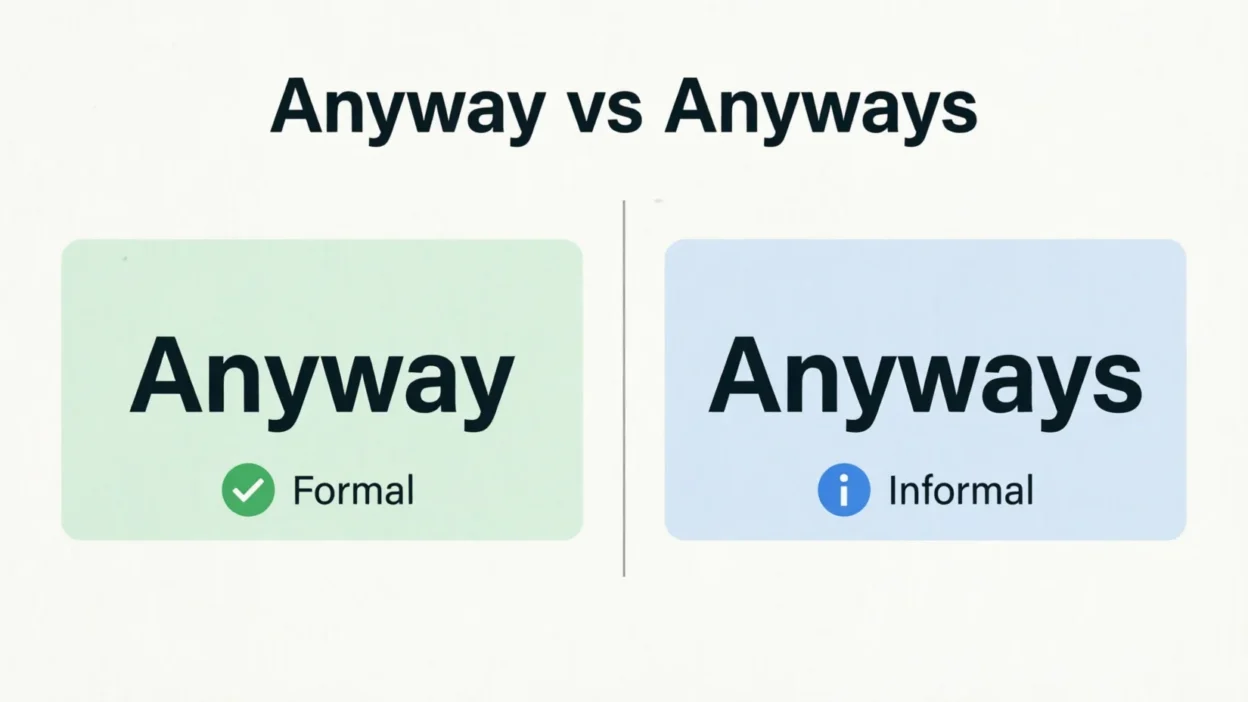
“Anyway” is the standard and grammatically preferred form in formal and professional English. “Anyways” is informal, conversational, and more common in casual speech.
What Does “Anyway” Mean?
“Anyway” is an adverb used to continue, transition, or emphasize a point in conversation or writing.
1. Meaning and Definition
Meaning: Regardless, in any case, or moving on
Usage Rule: Preferred in formal and standard English
Example: Anyway, let’s continue the discussion
Tip: Best choice for professional writing
2. Used as a Transition Word
Meaning: Helps shift topics smoothly
Usage Rule: Common at the beginning of sentences
Example: Anyway, what were you saying earlier?
Tip: Creates a natural conversational flow
3. Used to Emphasize a Point
Meaning: Shows something remains true despite circumstances
Usage Rule: Often follows contrasting information
Example: I was tired, but I went anyway
Tip: Adds emphasis naturally
4. Common in Professional Writing
Meaning: Neutral and polished tone
Usage Rule: Preferred in emails, essays, and reports
Example: Anyway, the project deadline remains Friday
Tip: Safer choice in formal communication
What Does “Anyways” Mean?
“Anyways” is an informal variation of “anyway.” While commonly heard in speech, it’s less accepted in formal writing.
1. Meaning and Definition
Meaning: Informal version of “anyway”
Usage Rule: Mostly used in casual conversation
Example: Anyways, let’s grab lunch later
Tip: Sounds relaxed and conversational
2. Common in Spoken English
Meaning: Used casually in everyday dialogue
Usage Rule: More frequent in North American speech
Example: Anyways, I should get going
Tip: Natural in friendly chats
3. Informal Tone and Style
Meaning: Adds a casual or playful feel
Usage Rule: Avoid in academic or professional contexts
Example: Anyways, that’s what happened yesterday
Tip: Works better in texts or social media
4. Regional and Cultural Usage
Meaning: More accepted in certain dialects
Usage Rule: Depends on audience and tone
Example: Some people use anyways naturally in speech
Tip: Not technically wrong, but less formal
Anyway vs Anyways: Key Differences Table
| Feature | Anyway | Anyways |
|---|---|---|
| Grammar Status | Standard English | Informal variation |
| Tone | Neutral / Professional | Casual / Conversational |
| Best For | Essays, emails, formal writing | Texts, speech, casual chats |
| Usage Frequency | Widely accepted everywhere | Mostly spoken English |
| Recommended Choice | Yes | Only in informal settings |
When to Use Anyway vs Anyways
The right choice depends mostly on tone and context.
Use “Anyway” When:
- Writing professionally
- Sending emails
- Creating academic content
- Speaking formally
Examples:
- Anyway, we need to finish the report
- She decided to go anyway
Use “Anyways” When:
- Texting friends
- Speaking casually
- Writing informal dialogue
- Posting casually online
Examples:
- Anyways, how was your weekend?
- Anyways, I’ll call you later
Why “Anyway” Is Usually Preferred
Most grammar guides and style manuals recommend “anyway” because it’s the standard form recognized in formal English.
“Anyways” isn’t considered grammatically incorrect by everyone, but many editors view it as overly casual or unnecessary. If you want your writing to sound polished, “anyway” is almost always the safer option.
Common Mistakes and How to Avoid Them
Mistake 1: Using “Anyways” in Formal Writing
❌ Anyways, the research supports this idea
✔ Anyway, the research supports this idea
Mistake 2: Assuming “Anyways” Is Wrong Everywhere
❌ You should never use anyways
✔ Anyways is acceptable in casual speech
Mistake 3: Mixing Tone Inconsistently
Using “anyways” in a professional report can make writing feel less polished.
Tip: Match the word to your audience and tone.
Easy Memory Trick
Here’s a simple trick to remember:
- Anyway = professional and standard
- Anyways = casual and conversational
If you’re unsure, choose anyway. It works almost everywhere.
Practical Example Paragraph
Here’s how both words appear naturally:
Anyway, the meeting went well, and the client approved the proposal. Anyways, after the meeting, we all went out for coffee to celebrate. Notice how “anyway” sounds more polished, while “anyways” feels relaxed and informal.
American vs British English Differences
There’s a slight difference in frequency between regions.
- American English: Both forms appear, though “anyway” is still preferred formally
- British English: “Anyway” is strongly preferred, and “anyways” is less common
In both regions, “anyway” remains the standard written form.
Related Words and Synonyms
Using related transition words can improve variety in your writing:
- Regardless
- Nevertheless
- Still
- In any case
- Moving on
- At any rate
- Nonetheless
These alternatives can help avoid repetition while maintaining clarity.
FAQs
1. Is “anyways” grammatically incorrect?
Not entirely, but it’s considered informal and less standard than “anyway.”
2. Which is better in professional writing?
“Anyway” is the preferred choice in professional and academic contexts.
3. Why do people say “anyways”?
It evolved naturally in spoken English and sounds conversational to many speakers.
4. Is “anyways” slang?
Not exactly slang, but it is informal.
5. Can I use “anyways” in emails?
It’s better to avoid it in formal emails unless the tone is very casual.
6. Is there a difference in meaning?
No major difference—both generally mean the same thing.
7. Which form is more common globally?
“Anyway” is much more widely accepted and commonly used.
Final Thoughts
The difference between anyway vs anyways comes down mainly to tone and formality. “Anyway” is the standard, polished choice that fits almost every situation, while “anyways” works better in relaxed conversations and casual writing.
When in doubt, stick with “anyway.” It sounds cleaner, more professional, and universally accepted. Still, understanding both forms helps you adapt your language naturally depending on your audience and communication style.
Actionable Takeaway
- Use anyway for formal, academic, and professional writing
- Use anyways only in casual speech or informal messaging
- Match your word choice to your audience and tone
- When unsure, choose “anyway” for safest grammar
Mastering small distinctions like this can make your writing clearer, smoother, and more confident.