English can feel tricky when two words mean the same thing but sound slightly different. That is exactly what happens with “dreamed” vs “dreamt.” Many writers, students, and English learners wonder which spelling is correct and whether one sounds more professional than the other.
The good news is that both words are correct. However, they are not always used the same way in every region or writing style. Understanding the difference can help your writing sound more natural, polished, and confident. In this guide, you will learn the meanings, grammar rules, examples, regional differences, and common mistakes related to dreamed and dreamt.
Quick Answer
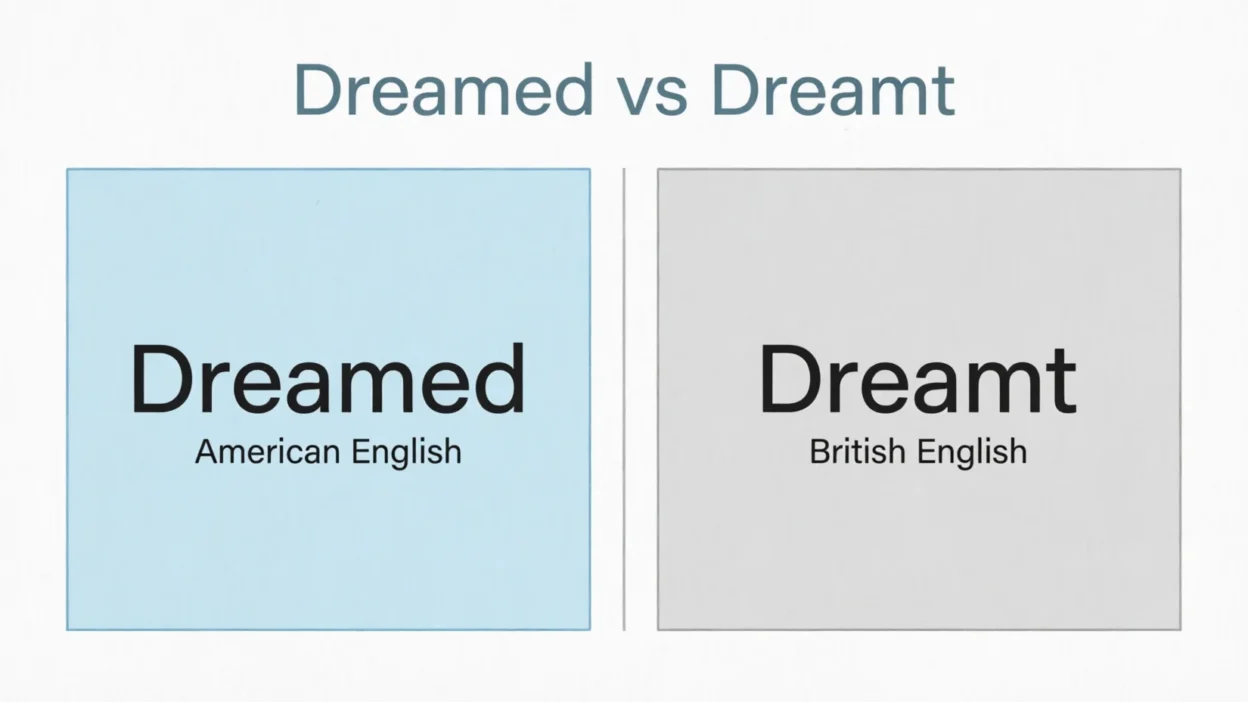
“Dreamed” and “dreamt” are both correct past tense forms of the verb “dream.” “Dreamed” is more common in American English, while “dreamt” appears more often in British English and literary writing.
What Do Dreamed and Dreamt Mean?
Both “dreamed” and “dreamt” describe the past tense of “dream.” They refer to imagining or experiencing something while asleep or hoping for something deeply.
Meaning of Dreamed
“Dreamed” is the standard past tense and past participle form commonly used in American English.
Examples:
- I dreamed about traveling the world.
- She dreamed of becoming a doctor.
- We dreamed that it was snowing outside.
Meaning of Dreamt
“Dreamt” has the same meaning but follows an irregular verb pattern. It is more common in British English and creative writing.
Examples:
- He dreamt of living near the sea.
- They dreamt about old friends.
- I dreamt I could fly.
Are Both Grammatically Correct?
Yes. Both forms are grammatically acceptable. The choice usually depends on:
- Writing style
- Regional preference
- Tone of writing
- Personal habit
Dreamed vs Dreamt Comparison Table
| Feature | Dreamed | Dreamt |
|---|---|---|
| Grammar Status | Correct | Correct |
| Common in | American English | British English |
| Tone | Modern and conversational | Literary and traditional |
| Verb Type | Regular form | Irregular form |
| Used in formal writing | Yes | Yes |
| Frequency | More common globally | Less common |
When to Use Dreamed
“Dreamed” is the safer and more universal option, especially in modern writing.
In American English
Most American writers prefer “dreamed.”
Example:
- She dreamed about her childhood home.
In Academic Writing
Teachers, editors, and formal publications often favor “dreamed” because it feels more standard.
Example:
- Participants dreamed vividly during the experiment.
In Business Communication
Professional emails and reports usually use “dreamed.”
Example:
- The founders dreamed of creating a global company.
In Everyday Conversations
Native speakers in the United States naturally say “dreamed.”
Example:
- I dreamed about pizza last night.
In Digital Content and SEO Writing
Online content tends to use “dreamed” because it matches modern search behavior.
Example:
- Many children dreamed of becoming astronauts.
Tips for Using Dreamed
- Choose it for clarity.
- Use it in professional writing.
- Prefer it for international audiences.
When to Use Dreamt
“Dreamt” adds a slightly poetic or classic tone to writing.
In British English
British speakers commonly use “dreamt.”
Example:
- She dreamt of a quiet countryside cottage.
In Creative Writing
Authors often use “dreamt” for rhythm and style.
Example:
- He dreamt beneath the silver moonlight.
In Poetry
The softer sound of “dreamt” works beautifully in poems.
Example:
- I dreamt of rivers made of gold.
In Historical or Traditional Writing
Older texts frequently use “dreamt.”
Example:
- The king dreamt of victory before battle.
In Dramatic Storytelling
“Dreamt” can make sentences sound emotional or atmospheric.
Example:
- She dreamt of seeing him again.
Tips for Using Dreamt
- Use it for artistic tone.
- Choose it in British-style writing.
- Avoid overusing it in technical documents.
American vs British English Differences
Regional usage plays a major role in the dreamed vs dreamt debate.
| Region | Preferred Form |
|---|---|
| United States | Dreamed |
| Canada | Dreamed |
| United Kingdom | Dreamt |
| Australia | Dreamt and dreamed |
| International English | Dreamed |
Why the Difference Exists
American English generally favors regular verb endings like “-ed.” British English keeps more irregular forms alive.
This pattern also appears in words like:
- Learned vs learnt
- Burned vs burnt
- Spoiled vs spoilt
Which Should You Choose?
Choose based on your audience.
- Use “dreamed” for American readers.
- Use “dreamt” for British audiences or literary style.
Common Mistakes With Dreamed and Dreamt
Many learners confuse usage because both forms are technically correct.
Mixing Styles
Switching between American and British English in the same article can look inconsistent.
Incorrect:
- She dreamed yesterday and dreamt again today.
Better:
- She dreamed yesterday and dreamed again today.
Assuming Dreamt Is Wrong
Some people think “dreamt” is incorrect because it sounds unusual in American English.
Truth:
- “Dreamt” is fully correct.
Using Dreamt in Very Formal Technical Writing
Although correct, “dreamt” may sound too poetic in business or scientific writing.
Less natural:
- The researchers dreamt about future innovations.
More natural:
- The researchers dreamed about future innovations.
Spelling Errors
People sometimes write:
- dreemt
- drempt
- dreamted
Correct forms are only:
- dreamed
- dreamt
Forgetting Audience Expectations
Using “dreamt” in American marketing content may feel outdated to some readers.
Practical Examples of Dreamed vs Dreamt
Seeing the words in real sentences makes the difference easier to understand.
Everyday Examples
- I dreamed about missing my flight.
- She dreamt of becoming famous.
Professional Examples
- The entrepreneur dreamed of launching a successful startup.
- The inventor dreamed about changing the world.
Creative Examples
- He dreamt beneath a sky full of stars.
- She dreamt of magical forests and hidden kingdoms.
Educational Examples
- Students dreamed about summer vacation.
- The child dreamt of exploring space.
Placement and Grammar Rules Table
| Word or Phrase | Sentence Placement | Tone | Example Sentence |
|---|---|---|---|
| Dreamed | Common in all sentence positions | Neutral and modern | I dreamed about my future career. |
| Dreamt | Often used in descriptive writing | Literary and elegant | She dreamt of endless oceans. |
| Dreamed of | After subject and verb | Conversational | They dreamed of success. |
| Dreamt about | Flexible placement | Emotional or poetic | He dreamt about lost memories. |
| Had dreamed | Perfect tense usage | Formal | She had dreamed of this moment forever. |
| Had dreamt | Perfect tense usage | Literary | He had dreamt of adventure since childhood. |
Why Dreamed Is More Common Today
Language changes over time. Regular verb forms become more popular because they are easier to learn and use.
That is why many modern verbs follow standard “-ed” endings. Search engines, news outlets, and educational materials also use “dreamed” more often.
Still, “dreamt” remains respected and widely understood.
Similar Word Pairs in English
If you understand dreamed vs dreamt, you may notice similar patterns in other verbs.
| American English | British English |
|---|---|
| Learned | Learnt |
| Burned | Burnt |
| Spelled | Spelt |
| Spoiled | Spoilt |
These pairs show how English evolves differently across regions.
FAQs About Dreamed vs Dreamt
Is dreamt a real word?
Yes. “Dreamt” is a correct English word and commonly used in British English.
Which is more correct: dreamed or dreamt?
Neither is more correct. Both are grammatically acceptable.
Is dreamt old-fashioned?
Not exactly. It sounds more literary and traditional, especially in American English.
Should I use dreamed in formal writing?
Yes. “Dreamed” is usually preferred in professional and academic writing.
Do Americans use dreamt?
Some do, but “dreamed” is far more common in the United States.
Is dreamt more poetic?
Yes. Many writers choose “dreamt” because it sounds softer and more artistic.
Can I use both in one article?
It is better to stay consistent with one style throughout your writing.
Final Thoughts
The debate between dreamed vs dreamt is not about right or wrong. Both words are correct, useful, and accepted in English grammar. The main difference comes down to style, tone, and regional preference. “Dreamed” feels more modern and universal, while “dreamt” carries a classic and poetic touch.
If you write for an American audience or professional setting, “dreamed” is usually the best choice. If you want a literary tone or write in British English, “dreamt” works beautifully. The key is consistency. Once you choose a style, stick with it throughout your writing for a polished and professional result.
Actionable Takeaway
Use “dreamed” for modern, clear, and professional communication. Choose “dreamt” when you want a more artistic or British-English tone. Knowing the difference helps your writing sound natural and confident.

Fenwick Quentin is a creative blogging author known for his analytical yet engaging writing style.
He explores topics such as innovation, digital culture, and personal development with depth and clarity.
Through his articles, Fenwick encourages readers to think critically and embrace continuous growth.