Have you ever typed “ect” instead of “etc.” and wondered if anyone would notice? You’re not alone. This is one of the most common writing mistakes, especially in emails, notes, and casual messages.
The confusion around ect vs etc usually comes from how the word sounds when spoken. But in writing, only one form is correct—and using the wrong one can make your content look unpolished.
In this guide, you’ll learn the correct usage, meaning, examples, and simple tips to avoid this mistake forever.
Quick Answer
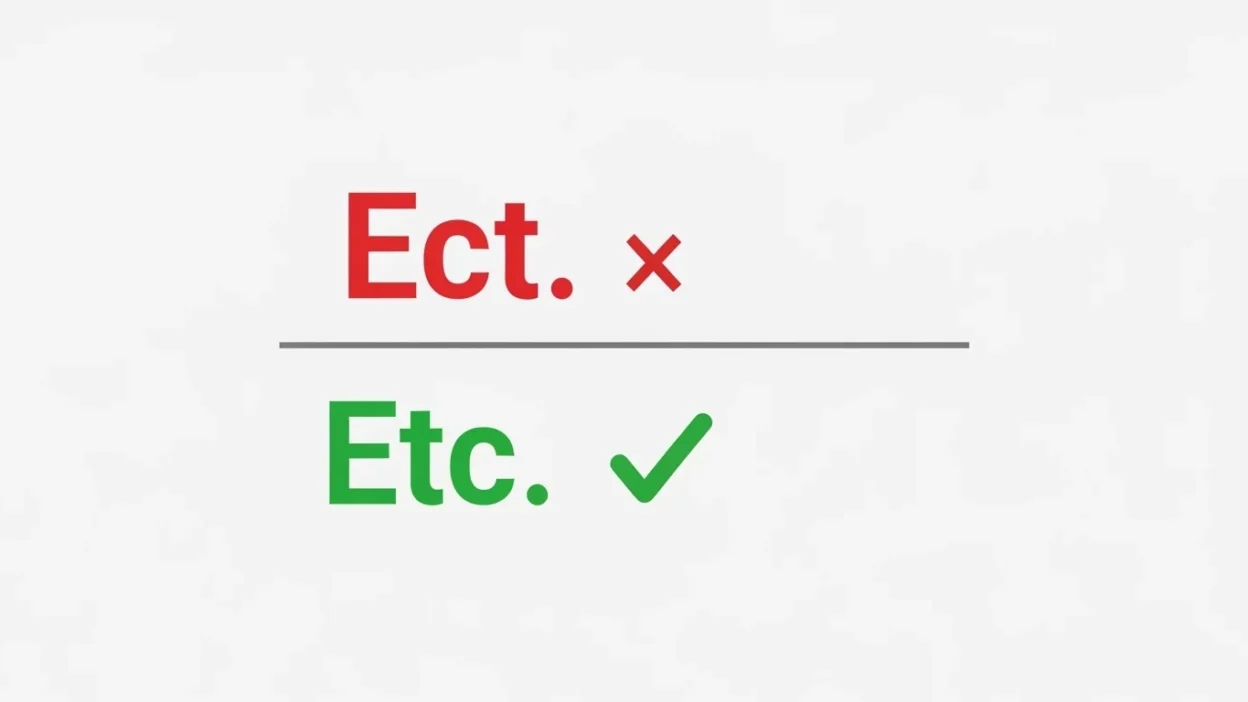
- ❌ Ect is incorrect
- ✅ Etc. is the correct abbreviation
- Always use etc. when you want to say “and so on” or “and other similar things”
What Does “Etc.” Mean?
The abbreviation etc. comes from the Latin phrase et cetera, which means “and other things” or “and so on.”
Core meanings:
- Used to continue a list without naming everything
- Refers to similar items not mentioned
- Helps keep writing concise
Examples:
- We bought apples, bananas, oranges, etc.
- Bring pens, notebooks, folders, etc.
- The store sells clothes, shoes, accessories, etc.
LSI keywords and related phrases:
- and so on
- and more
- and others
- and similar items
- and the rest
These variations improve readability and SEO naturally.
What Is “Ect”? Is It Ever Correct?
Let’s be clear: “ect” is not a correct English abbreviation.
It’s simply a misspelling of “etc.”
Why people write “ect”:
- Mishearing the pronunciation
- Typing quickly and reversing letters
- Not knowing the Latin origin
Important:
- ❌ Ect → Incorrect
- ✅ Etc. → Correct
Always use etc. in writing, especially in professional or academic contexts.
Ect vs Etc: Side-by-Side Comparison
| Feature | Ect ❌ | Etc. ✅ |
|---|---|---|
| Valid word | No | Yes |
| Origin | None | Latin (et cetera) |
| Meaning | None | And so on |
| Usage | Never correct | Standard English |
| Example | ✖ Books, pens, ect | ✔ Books, pens, etc. |
Why “Etc.” Is the Correct Form
The abbreviation etc. comes from:
- et = “and”
- cetera = “the rest”
So writing “ect” flips the letters and breaks the meaning.
Memory trick:
👉 Think: “Et means and, so it must come first”
Simple rule:
👉 Always write etc., never “ect”
How to Use “Etc.” Correctly
Using etc. properly makes your writing cleaner and more natural.
1. At the end of a list
- We need chairs, tables, lights, etc.
2. For similar items
- She enjoys painting, drawing, sketching, etc.
3. In casual and formal writing
- Emails, essays, reports, and notes
4. With commas
- Place a comma before etc. in lists:
- Apples, bananas, grapes, etc.
Tip:
Avoid overusing etc. in formal writing—be specific when needed.
Common Mistakes to Avoid
Here are the most frequent errors with ect vs etc:
1. Reversing letters
- ❌ Ect
- ✅ Etc.
2. Writing “and etc.”
- ❌ Apples, bananas, and etc.
- ✅ Apples, bananas, etc.
👉 “Et” already means “and,” so adding “and” is redundant.
3. Missing the period
- ❌ etc
- ✅ etc.
4. Overusing in formal writing
Avoid using etc. when clarity is important.
When NOT to Use “Etc.”
While etc. is useful, it’s not always appropriate.
Avoid it:
- In academic or formal documents requiring precision
- When the list is unclear
- When important items are omitted
Example:
- ❌ Submit documents, forms, etc.
- ✅ Submit ID proof, application form, and payment receipt
Clarity is always better than vagueness.
American vs British English Differences
There is no major difference in meaning or usage.
Minor punctuation variation:
- American English: etc. (with period)
- British English: etc. (also commonly used with period)
Key takeaway:
- ✅ Etc. is correct worldwide
- ❌ Ect is incorrect everywhere
Synonyms and Alternatives for “Etc.”
To improve writing variety, try these alternatives:
Informal:
- and so on
- and more
- and the rest
Formal:
- among others
- and similar items
- and related things
Examples:
- Books, pens, etc. → Books, pens, and more
- Tools, materials, etc. → Tools and similar items
These alternatives enhance readability and SEO.
Real-Life Usage Examples
Here’s how etc. is used in everyday writing:
Daily life:
- I packed clothes, shoes, toiletries, etc.
Work:
- The report includes data, charts, graphs, etc.
School:
- Bring pencils, erasers, rulers, etc.
Online content:
- Topics include SEO, writing tips, grammar, etc.
These examples show how practical and common the abbreviation is.
FAQs About Ect vs Etc
Is “ect” ever correct?
No, it is always incorrect.
What is the correct spelling?
The correct abbreviation is etc.
What does “etc.” stand for?
It stands for the Latin phrase et cetera, meaning “and so on.”
Why do people write “ect”?
Because of pronunciation confusion or typing errors.
Should I always use a period after “etc”?
Yes, because it is an abbreviation.
Can I write “and etc.”?
No, it is redundant since “et” already means “and.”
Is “etc.” formal or informal?
It can be used in both, but avoid overuse in formal writing.
Is there a British vs American difference?
No significant difference—both use etc.
Summary: Ect vs Etc Made Simple
The difference between ect vs etc is simple but important. Etc. is the correct abbreviation meaning “and so on,” while ect is a common spelling mistake that should always be avoided.
Because “etc.” comes from the Latin phrase et cetera, remembering that “et” means “and” can help you keep the letters in the right order. Small corrections like this can make your writing look more polished and professional.
Actionable Takeaway
Here’s your simple rule:
👉 Always write etc., never ect
Before sending messages, publishing content, or submitting work, take a moment to proofread. Fixing small errors like this can instantly improve your writing clarity and credibility.