Language mistakes often happen because of small spelling differences, and alterior vs ulterior is a perfect example. While both may seem interchangeable, only one is recognized in proper English usage.
If you want to write with clarity and confidence, knowing which word to use—and why—can make a big difference. This article breaks down everything you need to know, with real examples, rules, and expert tips.
Quick Answer
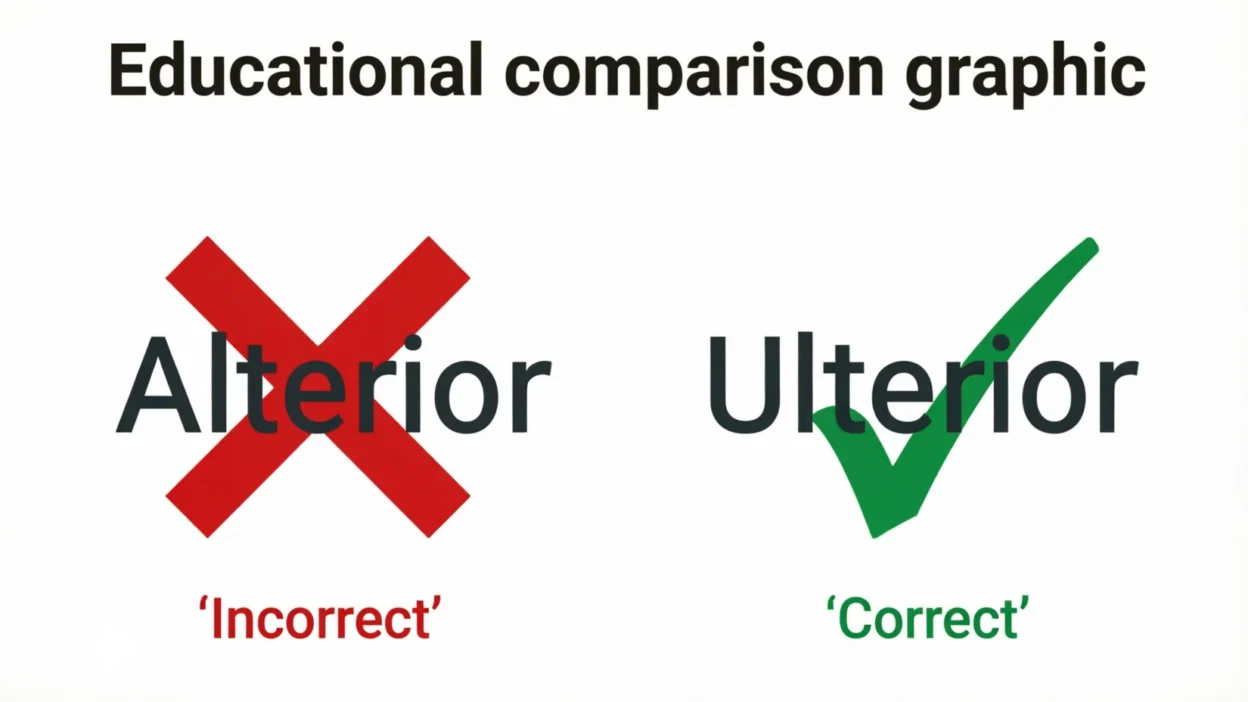
“Ulterior” is the correct word.
“Alterior” is a misspelling and should not be used in formal or standard English.
Understanding the Meaning and Core Difference
Ulterior Meaning and Definition
Meaning: Hidden, secret, or beyond what is openly stated
Usage Rule: Use “ulterior” when referring to motives or intentions that are not obvious
Example: She helped him, but she had an ulterior motive
Tip: Think of “ulterior” as something beneath the surface
Alterior Meaning and Definition
Meaning: No recognized meaning in standard English
Usage Rule: Avoid using “alterior”
Example: Incorrect: He had an alterior motive
Tip: Always replace with “ulterior”
Why the Confusion Happens
Meaning: Similar spelling creates confusion
Usage Rule: Focus on correct root word “ulterior”
Example: Writers often assume “al-” works like “alternative”
Tip: Memorize the correct form
Origin of Ulterior
Meaning: Derived from Latin “ulterior” meaning “further”
Usage Rule: Often used in formal or academic contexts
Example: The plan had ulterior implications
Tip: Helps remember its depth-related meaning
Context of Usage
Meaning: Mostly used for motives or intentions
Usage Rule: Pair with “motive” or “purpose”
Example: His kindness had an ulterior purpose
Tip: Rarely used casually
Tone and Connotation
Meaning: Slightly negative or suspicious tone
Usage Rule: Use when implying hidden agenda
Example: They suspected an ulterior agenda
Tip: Avoid in neutral contexts
Key Takeaway
Meaning: Only one correct word exists
Usage Rule: Always choose “ulterior”
Example: Never use “alterior”
Tip: Keep it simple—ulterior is correct
Usage Rules and Grammar Application
Correct Placement in Sentences
Meaning: Usually placed before nouns
Usage Rule: Use as adjective
Example: Ulterior motive
Tip: Never use as a verb
Common Collocations
Meaning: Words commonly paired
Usage Rule: Use with “motive,” “purpose,” “agenda”
Example: Ulterior agenda
Tip: These phrases boost natural writing
Formal vs Informal Use
Meaning: More formal usage
Usage Rule: Use in essays, reports
Example: The decision had ulterior motives
Tip: Avoid in slang
Sentence Structure
Meaning: Works as descriptive word
Usage Rule: Place before noun
Example: An ulterior plan
Tip: Don’t overuse
Negative Implication
Meaning: Suggests hidden intent
Usage Rule: Use carefully
Example: She had ulterior reasons
Tip: Can sound accusatory
Avoiding Misplacement
Meaning: Incorrect grammar weakens meaning
Usage Rule: Don’t use alone without context
Example: Incorrect: His motive was ulterior
Tip: Use with noun
Consistency in Writing
Meaning: Maintain correct usage
Usage Rule: Stick to one correct spelling
Example: Always write “ulterior”
Tip: Proofread carefully
Comparison Table: Alterior vs Ulterior
| Feature | Alterior ❌ | Ulterior ✅ |
|---|---|---|
| Correct spelling | No | Yes |
| Meaning | None | Hidden or secret |
| Usage | Incorrect | Standard English |
| Grammar | Invalid | Adjective |
| Example | ✖ alterior motive | ✔ ulterior motive |
Placement & Grammar Rules Table
| Synonym/Phrase | Placement | Tone/Formality | Example Sentence |
|---|---|---|---|
| Hidden motive | Before noun | Neutral | He had a hidden motive |
| Secret agenda | Before noun | Slightly formal | They followed a secret agenda |
| Ulterior motive | Before noun | Formal | She had an ulterior motive |
| Concealed intent | Before noun | Formal | His concealed intent was revealed |
| Underlying reason | Before noun | Neutral | There was an underlying reason |
Common Mistakes and How to Avoid Them
Using “Alterior” Instead of “Ulterior”
Meaning: Spelling error
Usage Rule: Always correct it
Example: Replace immediately
Tip: Use spell-check
Assuming Both Are Correct
Meaning: Misconception
Usage Rule: Only one is valid
Example: Ulterior is correct
Tip: Learn once, avoid forever
Misusing Tone
Meaning: Using in wrong context
Usage Rule: Avoid casual tone
Example: Don’t overuse in friendly chat
Tip: Use when needed
Incorrect Sentence Placement
Meaning: Grammar issue
Usage Rule: Use before nouns
Example: Ulterior motive
Tip: Avoid standalone usage
Overusing the Word
Meaning: Reduces clarity
Usage Rule: Use sparingly
Example: Don’t repeat excessively
Tip: Use synonyms
Ignoring Context
Meaning: Wrong implication
Usage Rule: Use for hidden intent
Example: Not for neutral meaning
Tip: Understand tone
Skipping Proofreading
Meaning: Leads to errors
Usage Rule: Always review
Example: Catch “alterior” mistakes
Tip: Double-check spelling
Practical Example Paragraphs
Example 1
He appeared helpful during the meeting, but several team members suspected he had an ulterior motive. His suggestions seemed beneficial on the surface, yet they subtly shifted control in his favor.
Example 2
While the donation seemed generous, critics believed there was an ulterior agenda behind it. The timing raised questions about hidden intentions.
Example 3
In negotiations, it’s important to identify whether the other party has an ulterior purpose that could affect the outcome.
Advanced Usage and Writing Tips
When to Use Ulterior
Meaning: For hidden intentions
Usage Rule: Use in analysis or critique
Example: Political ulterior motives
Tip: Common in journalism
Alternatives for Variety
Meaning: Synonyms improve flow
Usage Rule: Rotate words
Example: Hidden agenda
Tip: Avoid repetition
SEO Writing Tip
Meaning: Keyword variation
Usage Rule: Use “ulterior motive meaning”
Example: Improves ranking
Tip: Natural placement
Academic Writing Use
Meaning: Formal context
Usage Rule: Use carefully
Example: Ulterior implications
Tip: Maintain tone
Professional Communication
Meaning: Workplace usage
Usage Rule: Avoid sounding accusatory
Example: Phrase politely
Tip: Use neutral alternatives
Tone Sensitivity
Meaning: Word carries suspicion
Usage Rule: Use wisely
Example: Avoid unnecessary negativity
Tip: Choose context carefully
Final Writing Tip
Meaning: Clarity is key
Usage Rule: Use correct word
Example: Ulterior only
Tip: Keep it simple
FAQs
Is “alterior” a real word?
No, it is a misspelling and not accepted in standard English.
What does “ulterior motive” mean?
It refers to a hidden or secret reason behind someone’s actions.
Can I use “ulterior” in casual writing?
Yes, but it is more common in formal contexts.
Why do people confuse alterior and ulterior?
Because they look and sound similar.
Is “ulterior” always negative?
Usually, it has a slightly suspicious or negative tone.
Final Thoughts
The difference between alterior vs ulterior is simple but important. Only ulterior is correct, and it carries a specific meaning related to hidden motives or intentions.
Using the wrong spelling can weaken your writing and reduce credibility.
By understanding its meaning, usage rules, and context, you can write more clearly and professionally. Stick with ulterior, proofread carefully, and your writing will instantly feel more polished and trustworthy.