The confusion between relieving vs reliving is more common than many people realize. These two words look similar, sound somewhat alike, and both relate to experiences or emotions. However, their meanings are completely different. Using the wrong one can change the meaning of your sentence entirely and create awkward or confusing writing.
Whether you are writing an essay, email, social media caption, or professional document, understanding the distinction between “relieving” and “reliving” helps your communication sound more natural and polished. One word is connected to reducing stress or pain, while the other refers to experiencing something again in your mind or memory.
In this guide, you will learn the meanings of both words, grammar rules, practical examples, pronunciation tips, common mistakes, regional usage differences, and simple memory tricks to help you choose the correct term confidently every time.
Quick Answer
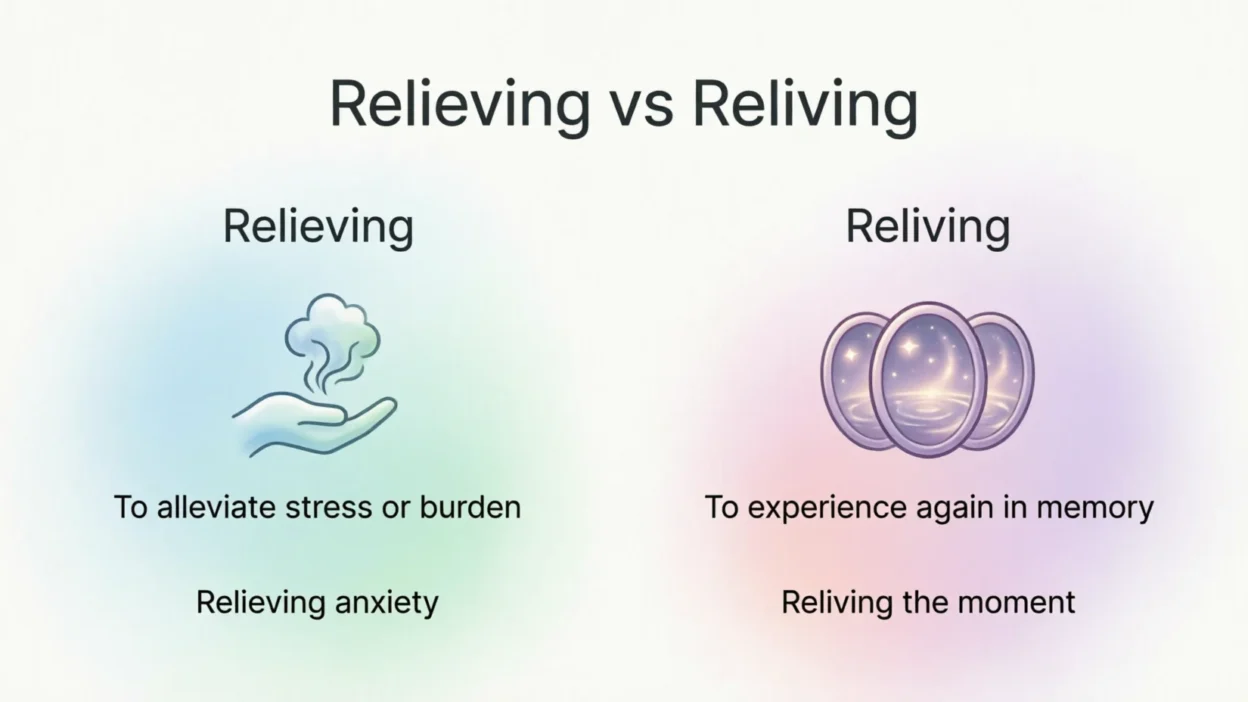
Use “relieving” when talking about reducing pain, stress, pressure, or discomfort.
Use “reliving” when talking about experiencing a past event or memory again.
Examples:
- Taking a break was relieving after a stressful day. ✅
- She kept reliving the embarrassing moment in her mind. ✅
What Does “Relieving” Mean?
“Relieving” comes from the verb:
- relieve
It means:
- reducing discomfort
- easing pain
- removing stress or pressure
- making someone feel better
Examples of Relieving
- The cold drink was relieving on a hot afternoon.
- Talking to a friend felt emotionally relieving.
- The medicine is relieving his headache.
- Finishing the exam was incredibly relieving.
Common Contexts for Relieving
“Relieving” often appears in discussions about:
- stress relief
- emotional comfort
- physical pain
- relaxation
- pressure reduction
What Does “Reliving” Mean?
“Reliving” comes from the verb:
- relive
It means:
- experiencing something again mentally
- remembering past events vividly
- going through memories again emotionally
Examples of Reliving
- He spent hours reliving childhood memories.
- She kept reliving the accident in her mind.
- Watching old videos felt like reliving the past.
- The reunion helped them relive happy moments.
Common Contexts for Reliving
“Reliving” is commonly associated with:
- memories
- nostalgia
- emotional experiences
- traumatic events
- storytelling
Relieving vs Reliving Comparison Table
| Word | Meaning | Emotional Focus | Example |
|---|---|---|---|
| Relieving | Reducing discomfort | Comfort and ease | The massage was relieving |
| Reliving | Experiencing again mentally | Memory and repetition | He was reliving the moment |
How to Use “Relieving” Correctly
Use “relieving” when something:
- removes stress
- eases pain
- creates comfort
- reduces pressure
Examples
- Hearing the good news was relieving.
- Deep breathing exercises can be relieving.
- The vacation was mentally relieving.
- Apologizing felt surprisingly relieving.
Grammar Tip
“Relieving” often describes:
- feelings
- experiences
- actions
- treatments
How to Use “Reliving” Correctly
Use “reliving” when someone:
- mentally revisits the past
- remembers experiences vividly
- emotionally re-experiences events
Examples
- She was reliving her graduation day.
- Trauma survivors sometimes relive painful memories.
- Looking at photos made him relive the trip.
- The documentary helped viewers relive history.
Grammar Tip
“Reliving” usually connects to:
- memories
- past moments
- emotional recollections
Common Mistakes With Relieving vs Reliving
Because the words differ by only one letter, many writers accidentally confuse them.
Mistake 1: Using Relieving for Memories
Incorrect:
- I was relieving my childhood memories. ❌
Correct:
- I was reliving my childhood memories. ✅
Mistake 2: Using Reliving for Stress Reduction
Incorrect:
- Taking time off was reliving. ❌
Correct:
- Taking time off was relieving. ✅
Mistake 3: Ignoring Context
The surrounding sentence usually reveals which word is correct.
Ask yourself:
- Is this about comfort? → relieving
- Is this about memories? → reliving
Practical Example Paragraphs
Real-world examples make the difference easier to understand.
Example Using Relieving
After weeks of nonstop work, Maya finally took a weekend off. Spending quiet time outdoors felt deeply relieving and helped her regain emotional balance and energy.
Example Using Reliving
During the school reunion, old classmates laughed while reliving memories from their teenage years. Stories from the past brought back emotions they had not felt in decades.
Placement and Grammar Rules Table
| Word | Sentence Placement | Tone | Example Sentence |
|---|---|---|---|
| Relieving | After linking verbs or before nouns | Emotional/Descriptive | The silence felt relieving |
| Reliving | Usually before memories or events | Reflective/Emotional | He kept reliving the moment |
| Relieving stress | Common phrase | Neutral/Professional | Meditation helps with relieving stress |
| Reliving memories | Common phrase | Nostalgic/Emotional | She enjoys reliving memories |
Emotional Difference Between the Two Words
The emotional tone of each word differs greatly.
Relieving = Comfort
This word often creates feelings of:
- calm
- relaxation
- peace
- emotional release
Reliving = Repetition
This word often involves:
- nostalgia
- emotional reflection
- trauma
- vivid remembrance
American vs British English Differences
There is very little difference between American and British English regarding these words.
American English
Both “relieving” and “reliving” follow the same meanings and usage rules.
British English
British English also uses these words similarly, with no major spelling or grammar variations.
Why This Difference Matters
Using the correct word improves:
- writing accuracy
- emotional clarity
- professionalism
- reader understanding
Mixing them up can completely alter your sentence meaning.
For example:
- “The therapy was relieving.” ✅
- “The therapy was reliving.” ❌
One suggests comfort, while the other sounds confusing or incorrect.
Synonyms and Related Terms
Understanding related vocabulary improves fluency naturally.
Synonyms for Relieving
- comforting
- soothing
- easing
- calming
- relaxing
Synonyms for Reliving
- remembering
- revisiting
- recalling
- re-experiencing
- reminiscing
Related Grammar Searches
People searching for “relieving vs reliving” also search for:
- loose vs lose
- affect vs effect
- breath vs breathe
- advice vs advise
- empathic vs empathetic
Helpful Memory Trick
Simple word associations make this distinction easier.
Relieving = Relief
Notice:
- relieving → relief
Both relate to comfort and easing pain.
Reliving = Living Again
Notice:
- reliving → living again
It means mentally experiencing something another time.
Relieving vs Reliving in Mental Health Discussions
These words often appear in emotional and psychological contexts.
Relieving Stress
Examples:
- therapy
- exercise
- meditation
- rest
Reliving Trauma
Examples:
- PTSD
- flashbacks
- emotional memories
- painful recollections
Using the correct term is especially important in sensitive discussions.
Everyday Usage Examples
These words appear frequently in daily communication.
Relieving in Daily Life
- Finishing homework felt relieving.
- The cool rain was relieving after the heat.
- Honest communication can be relieving.
Reliving in Daily Life
- Friends relive old memories together.
- Watching childhood movies can feel nostalgic.
- Grandparents often enjoy reliving family stories.
FAQs About Relieving vs Reliving
What is the difference between relieving and reliving?
“Relieving” means easing discomfort, while “reliving” means experiencing past memories again.
Is reliving a real word?
Yes. “Reliving” is a correct English word meaning mentally experiencing something again.
Can relieving describe emotions?
Yes. It often describes emotional comfort or stress reduction.
Which word relates to memories?
“Reliving” relates to memories and past experiences.
Is relieving positive or negative?
Usually positive because it suggests comfort or relief.
Can reliving be emotional?
Yes. Reliving often involves strong emotional reactions tied to memories.
How do I remember the difference?
Relieving connects to relief. Reliving means living something again.
Final Thoughts
The difference between relieving vs reliving becomes much clearer once you focus on their emotional purpose. “Relieving” relates to comfort, stress reduction, and easing discomfort, while “reliving” refers to mentally experiencing memories or past events again.
Mastering this distinction helps your writing sound more natural, precise, and emotionally accurate. Whether you are describing memories, emotions, therapy, stress, or nostalgia, choosing the correct word improves clarity and strengthens communication.
Actionable Takeaway
Remember this simple shortcut:
- relieving = relief and comfort
- reliving = living the memory again
Quick test:
- If it eases pain or stress → use relieving
- If it revisits the past → use reliving
This simple rule will help you choose the correct word confidently in everyday writing and conversation.