If you’ve ever typed “simular” and felt unsure, you’re not alone. It sounds close to the right word, and many people use it by mistake—especially when typing quickly or relying on pronunciation instead of spelling.
The confusion between simular vs similar is incredibly common, but thankfully, it’s also easy to fix. In this guide, you’ll learn the correct spelling, meaning, real-life usage, and simple tricks to avoid this mistake forever.
Quick Answer
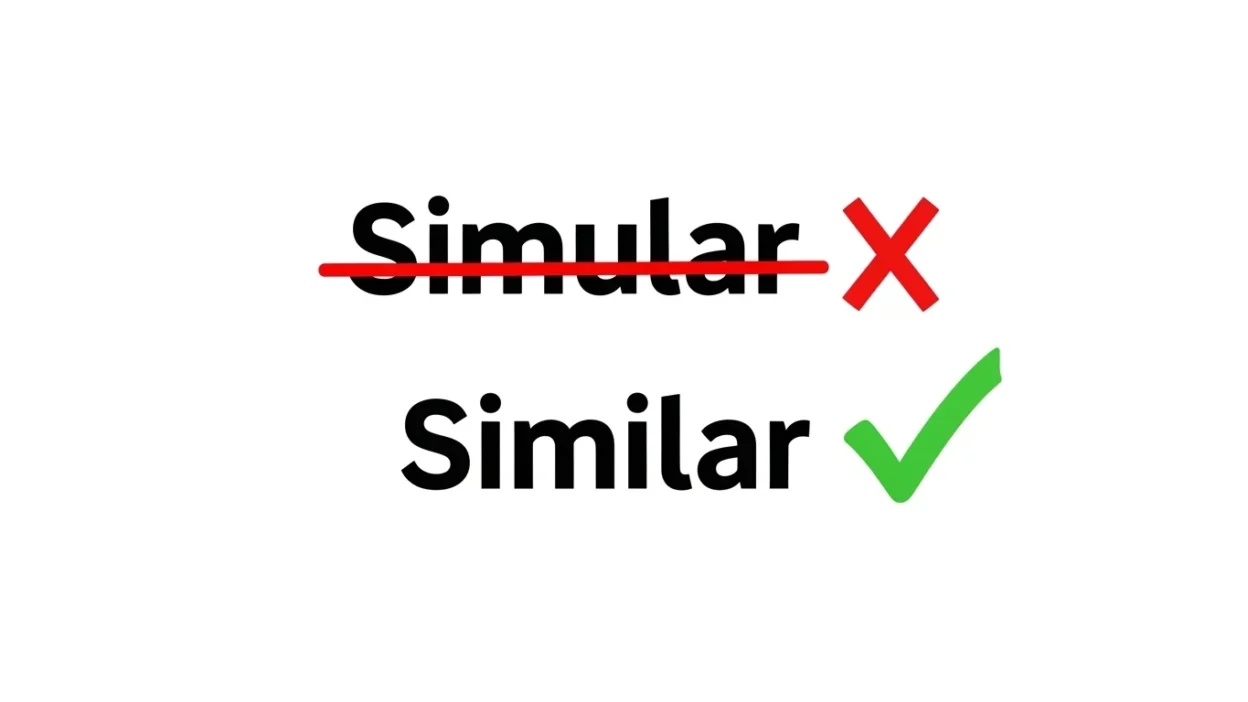
- ❌ Simular is incorrect and not a real English word
- ✅ Similar is the correct spelling
- Always use similar when describing things that are alike or nearly the same
What Does “Similar” Mean?
The word similar is a widely used adjective that describes things that are alike in appearance, nature, or characteristics—but not exactly the same.
Core meaning:
- Almost the same
- Having shared features or qualities
- Resembling something else
Examples:
- The two designs look very similar.
- Their ideas are similar, but not identical.
- We had similar experiences growing up.
LSI keywords and related phrases:
- alike
- comparable
- related
- resembling
- nearly identical
- close in nature
Using these related terms helps strengthen your writing and improve SEO.
What Is “Simular”? Is It Ever Correct?
Let’s make it clear: “simular” is not a correct English word.
It’s a misspelling of “similar”, usually caused by how the word sounds when spoken.
Why people write “simular”:
- Pronunciation confusion (“sim-yuh-ler” can sound like “simular”)
- Typing too quickly
- Mixing vowel sounds (“i” vs “u”)
Important:
- ❌ Simular → Incorrect
- ✅ Similar → Correct
Even in casual writing, “simular” should be corrected.
Simular vs Similar: Side-by-Side Comparison
| Feature | Simular ❌ | Similar ✅ |
|---|---|---|
| Valid word | No | Yes |
| Meaning | None | Nearly the same or alike |
| Usage | Incorrect | Correct |
| Accepted globally | No | Yes (US & UK English) |
| Example | ✖ Simular results | ✔ Similar results |
How to Use “Similar” Correctly
Using similar is simple once you understand its purpose.
1. Comparing two or more things
- These two phones are similar in design.
- The results were similar across all tests.
2. Expressing shared qualities
- They have similar goals and values.
- Our backgrounds are quite similar.
3. In professional or academic writing
- The study found similar patterns in both groups.
- The systems operate in similar ways.
Tip:
Use similar when things are not identical but share noticeable traits.
Common Mistakes to Avoid
Here are the most frequent errors people make with simular vs similar:
1. Writing “simular” instead of “similar”
- ❌ These ideas are simular
- ✅ These ideas are similar
2. Mishearing pronunciation
Spoken English often blurs vowel sounds, leading to confusion.
3. Mixing up spelling patterns
English has many words ending in “-lar” and “-lar,” but this one is fixed.
4. Ignoring spellcheck suggestions
Most tools will flag “simular”—don’t ignore it.
Why “Similar” Is the Correct Spelling
The word similar comes from the Latin word similis, meaning like or resembling.
Spelling breakdown:
- sim- (same root as “same”)
- -ilar (standard suffix form)
Memory trick:
👉 Think: “Similar = same + i → sim-i-lar”
Focusing on the “i” instead of “u” helps you avoid the mistake.
American vs British English Differences
Here’s something helpful:
- Similar is spelled the same in both American English and British English
- There are no regional variations
- Simular is incorrect everywhere
So once you learn the correct spelling, you’re covered globally.
Synonyms and Alternatives for “Similar”
To improve your writing flow and avoid repetition, try these alternatives:
Synonyms:
- alike
- comparable
- equivalent
- related
- resembling
Context-based alternatives:
- nearly identical
- close in appearance
- matching
- parallel
Examples:
- Similar results → Comparable results
- Similar ideas → Related ideas
Using synonyms enhances readability and SEO performance.
Real-Life Usage Examples
Let’s look at how similar appears in different contexts:
Everyday life:
- Our tastes in music are very similar.
Business:
- The two strategies produced similar outcomes.
Education:
- Students showed similar learning patterns.
Technology:
- These apps offer similar features.
These examples show how commonly and naturally the word is used.
FAQs About Simular vs Similar
Is “simular” ever correct?
No, it is always a misspelling of “similar.”
What does “similar” mean in simple terms?
It means things are alike but not exactly the same.
Why do people write “simular”?
Because of pronunciation confusion and vowel mixing.
Is “similar” used in formal writing?
Yes, it’s widely used in both formal and informal contexts.
Is there a British spelling of “similar”?
No, both British and American English use the same spelling.
What is a synonym for “similar”?
Alike, comparable, or resembling.
How can I remember the correct spelling?
Focus on the “i” in the middle: sim-i-lar.
Summary: Simular vs Similar Made Simple
The difference between simular vs similar is straightforward once you understand it. Similar is the correct and widely accepted spelling used to describe things that are alike or nearly the same. On the other hand, simular is simply a spelling mistake that should be avoided in all forms of writing.
By learning the correct spelling and practicing it in real-life contexts, you can eliminate this error completely. Whether you’re writing professionally or casually, using the right word improves clarity and credibility.

Fenwick Quentin is a creative blogging author known for his analytical yet engaging writing style.
He explores topics such as innovation, digital culture, and personal development with depth and clarity.
Through his articles, Fenwick encourages readers to think critically and embrace continuous growth.