Have you ever typed “costumer” when you meant “customer”? It’s one of those sneaky mistakes that can slip into emails, websites, and even professional documents.
The words look similar, sound alike, and are easy to mix up—yet their meanings are completely different.
Understanding costumer vs customer isn’t just about spelling—it’s about clarity.
Using the wrong word can confuse readers or even make your writing seem less professional. In this guide, you’ll learn the exact difference, correct usage, examples, and simple tricks to remember the right word every time.
Quick Answer
- ✅ Customer = a person who buys goods or services
- ✅ Costumer = a person who makes or sells costumes
- ❗ Both are correct words—but used in completely different contexts
What Does “Customer” Mean?
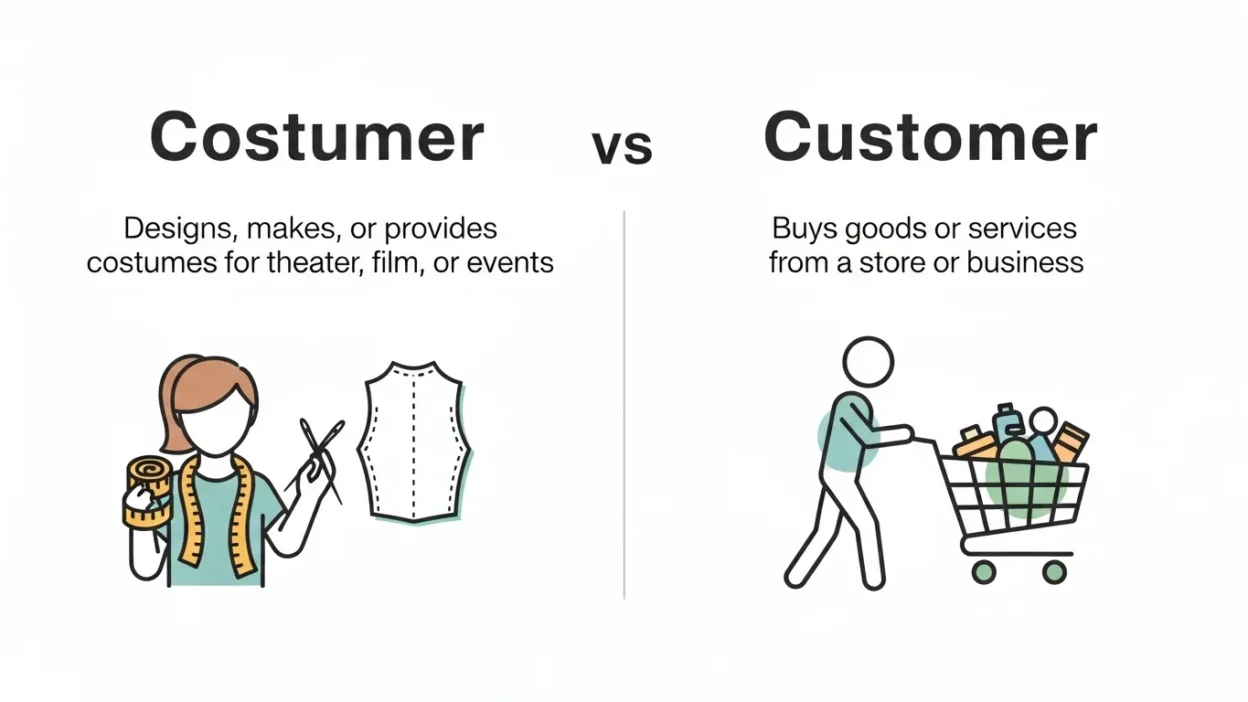
The word customer refers to a person who purchases goods or services from a business. It’s one of the most commonly used words in business, marketing, and everyday communication.
Core meanings:
- A buyer or client
- Someone who uses a service
- A person engaged in a transaction
Examples:
- The customer was happy with the service.
- We value every customer.
- She is a regular customer at that store.
LSI keywords and related phrases:
- client
- buyer
- consumer
- shopper
- patron
- user
These related terms help improve SEO and expand understanding.
What Does “Costumer” Mean?
The word costumer refers to a person who designs, makes, or sells costumes, often for theater, film, or events.
Core meanings:
- Costume designer or maker
- Seller of costumes
- Specialist in clothing for performances
Examples:
- The costumer created outfits for the play.
- She works as a professional costumer in film production.
- The costumer designed historical costumes.
LSI keywords and related phrases:
- costume designer
- wardrobe stylist
- theatrical clothing
- fashion specialist
- outfit creator
Costumer vs Customer: Side-by-Side Comparison
| Feature | Costumer 🎭 | Customer 🛍️ |
|---|---|---|
| Meaning | Makes or sells costumes | Buys goods or services |
| Usage | Theater, film, fashion | Business, retail, services |
| Frequency | Less common | Very common |
| Context | Creative industry | Commercial transactions |
| Example | The costumer designed outfits | The customer bought a product |
Why These Words Are Confusing
The confusion between costumer vs customer happens because:
- They differ by just one letter
- They sound almost identical
- Both are real English words
Key difference:
- Customer → buying something
- Costumer → making costumes
Memory trick:
👉 Think:
- Customer = “custom” (buying choices)
- Costumer = “costume” (clothing/design)
This simple trick makes it easier to remember.
How to Use “Customer” Correctly
The word customer is essential in business and everyday life.
1. Business context
- The company focuses on customer satisfaction.
- Every customer matters.
2. Retail and shopping
- The customer asked for help.
- Discounts attract more customers.
3. Service industry
- Good service keeps customers loyal.
- The customer left positive feedback.
Tip:
Use customer whenever referring to someone who buys or uses services.
How to Use “Costumer” Correctly
The word costumer is more specialized and used in creative industries.
1. Theater and film
- The costumer prepared outfits for actors.
2. Fashion and design
- She trained as a costumer.
3. Events and performances
- The costumer created themed costumes.
Tip:
Use costumer only when talking about costume-related professions.
Common Mistakes to Avoid
Here are the most frequent errors with costumer vs customer:
1. Using “costumer” instead of “customer”
- ❌ Our costumers are important
- ✅ Our customers are important
2. Ignoring context
Always check whether the sentence involves buying or costumes.
3. Autocorrect mistakes
Sometimes spellcheck won’t catch this because both words are valid.
4. Writing too quickly
Slow down and double-check important words.
American vs British English Differences
Good news—there’s no difference here:
- Customer is spelled the same in both American English and British English
- Costumer is also the same in both versions
- No regional variations exist
Key takeaway:
- Both words are correct—but context determines usage
Synonyms and Alternatives
To improve variety and readability, consider these alternatives:
For “customer”:
- client
- buyer
- consumer
- patron
- shopper
For “costumer”:
- costume designer
- wardrobe stylist
- clothing specialist
Examples:
- Customer service → Client service
- Costumer → Costume designer
Using synonyms improves SEO and engagement.
Real-Life Usage Examples
Let’s see how these words appear in real situations:
Business:
- The customer requested a refund.
Retail:
- A happy customer is likely to return.
Film industry:
- The costumer worked on movie costumes.
Theater:
- The costumer prepared outfits for the cast.
These examples show how different the meanings are.
FAQs About Costumer vs Customer
What is the difference between costumer and customer?
A customer buys products, while a costumer makes or sells costumes.
Is “costumer” a real word?
Yes, but it is used only in costume-related contexts.
Which word is more common?
Customer is far more commonly used.
Can I use “costumer” in business writing?
Only if you are talking about costumes or costume design.
Why do people confuse these words?
Because they look and sound very similar.
Is there a spelling difference in British English?
No, both words are spelled the same in American and British English.
How can I remember the difference?
Think: Customer buys, costumer designs costumes.
Summary:
The difference between costumer vs customer comes down to context. A customer is someone who buys goods or services, while a costumer is someone who designs or provides costumes.
Even though the words look similar, their meanings are completely different.
Understanding this distinction helps you communicate clearly and avoid embarrassing mistakes.
Whether you’re writing emails, business content, or creative work, choosing the correct word makes your message more professional and accurate.
Actionable Takeaway
Here’s your simple rule:
👉 Use customer for buyers and costumer for costume professionals
Before submitting your writing, take a moment to double-check the context. This small habit can prevent confusion and improve your credibility instantly.

Fenwick Quentin is a creative blogging author known for his analytical yet engaging writing style.
He explores topics such as innovation, digital culture, and personal development with depth and clarity.
Through his articles, Fenwick encourages readers to think critically and embrace continuous growth.