The confusion between accept vs except is one of the most common grammar and spelling mistakes in English. These words sound very similar when spoken, but their meanings are completely different. Because of their similar pronunciation, many writers accidentally use the wrong word in emails, essays, business communication, and even social media posts.
Understanding the difference between accept and except can instantly improve your grammar, writing clarity, and confidence. One word relates to receiving or agreeing, while the other is used for exclusion. Once you learn the simple rule behind these terms, choosing the correct one becomes much easier.
This complete guide explains the meanings of accept and except, how to use them correctly, grammar rules, examples, common mistakes, comparison tables, memory tricks, and practical writing tips to help you avoid confusion every time.
Quick Answer
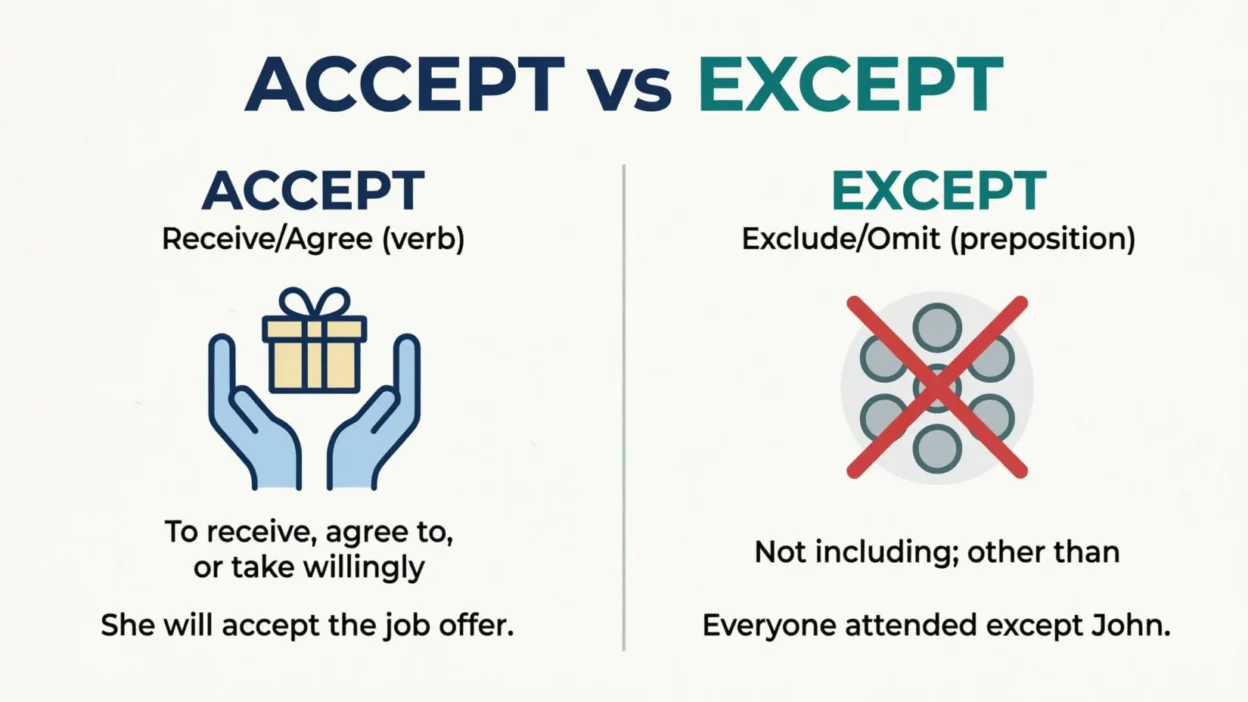
- Accept means to receive, agree to, or approve something.
- Except means excluding or leaving something out.
- I accept your apology. ✅
- Everyone came except John. ✅
Simple rule:
- Accept = receive or agree
- Except = exclude
What Does “Accept” Mean?
The word “accept” is a verb that means:
- receive something
- agree to something
- approve something
- admit something as true
It often involves willingness or agreement.
Examples of Accept
- She accepted the job offer.
- I accept your explanation.
- The store accepts credit cards.
- He accepted responsibility for the mistake.
What Does “Except” Mean?
“Except” is usually used as a preposition or conjunction meaning:
- excluding
- other than
- leaving out
It shows that something or someone does not belong in a group.
Examples of Except
- Everyone attended except Sarah.
- I like all vegetables except onions.
- The store opens daily except Sunday.
- All rooms were cleaned except one.
Accept vs Except Comparison Table
| Word | Part of Speech | Meaning | Example |
|---|---|---|---|
| Accept | Verb | Receive or agree | I accept your offer |
| Except | Preposition/Conjunction | Excluding | Everyone came except him |
The Main Difference Between Accept and Except
The easiest way to remember the difference is by understanding their purpose.
Accept = To Receive or Agree
Use “accept” when talking about:
- approval
- receiving
- agreement
- willingness
Example:
- She accepted the invitation.
Except = To Exclude
Use “except” when removing someone or something from a group.
Example:
- Everyone passed except Mark.
How to Use “Accept” Correctly
“Accept” is always related to:
- agreement
- approval
- receiving
Common Uses of Accept
- accept an apology
- accept a gift
- accept responsibility
- accept an invitation
- accept payment
Correct Examples
- They accepted the proposal immediately.
- Please accept my sincere thanks.
- The company accepts online payments.
- He accepted the challenge confidently.
How to Use “Except” Correctly
“Except” introduces something excluded from a statement.
Common Uses of Except
- everyone except
- all except
- except for
- except when
Correct Examples
- Everyone arrived except Tom.
- I eat everything except seafood.
- The museum opens daily except Mondays.
- She answered every question except the last one.
Common Mistakes With Accept vs Except
Because these words sound alike, writers often confuse them.
Mistake 1: Using Except Instead of Accept
Incorrect:
- I except your apology. ❌
Correct:
- I accept your apology. ✅
Why?
The sentence involves receiving or agreeing.
Mistake 2: Using Accept Instead of Except
Incorrect:
- Everyone came accept David. ❌
Correct:
- Everyone came except David. ✅
Why?
The sentence excludes David from the group.
Mistake 3: Confusing Pronunciation With Meaning
Many English learners rely on pronunciation alone, but these words have very different grammar functions.
Practical Example Paragraphs
Example Using Accept
After carefully reviewing the contract, the client decided to accept the company’s final offer because it matched their expectations and budget.
Example Using Except
Everyone in the office attended the meeting except the regional manager, who was traveling for a business conference.
Placement and Grammar Rules Table
| Phrase | Sentence Placement | Tone/Formality | Example Sentence |
|---|---|---|---|
| Accept responsibility | Middle/end | Formal | He accepted responsibility |
| Accept payment | Middle/end | Professional | We accept online payments |
| Everyone except | Beginning/middle | Neutral | Everyone except Tom agreed |
| Except for | Beginning/middle | Formal/neutral | Except for rain, the trip was perfect |
Accept in Business and Professional Writing
The word “accept” is extremely common in:
- contracts
- customer service
- professional emails
- legal communication
Examples
- We accept major credit cards.
- The applicant accepted the position.
- Please accept our apology.
Using “accept” correctly improves professionalism and communication clarity.
Except in Everyday Communication
“Except” is often used in:
- conversations
- instructions
- schedules
- comparisons
Examples
- Everything was finished except the report.
- All stores are open except this one.
- Everyone except me understood the joke.
The Phrase “Except For”
The phrase “except for” adds emphasis to exclusion.
Examples
- Except for traffic, the trip was smooth.
- Everything was ready except for the decorations.
This phrase is common in both formal and informal writing.
American vs British English Differences
There are no major spelling differences between American and British English for:
- accept
- except
Both forms follow the same grammar rules in each variety of English.
Example
American English:
- I accept your decision.
British English:
- I accept your decision.
Easy Memory Tricks for Accept vs Except
Trick 1: Accept = Approval
“Accept” starts with:
- ac
Think:
- approve
- agree
Trick 2: Except = Exclude
“Except” starts with:
- ex
Think:
- exclude
This simple memory trick helps many learners remember the difference instantly.
Why Correct Usage Matters
Using the correct word improves:
- grammar accuracy
- professional writing
- communication clarity
- reader trust
- change sentence meaning
- create misunderstandings
- weaken credibility
Correct grammar is especially important in:
- academic writing
- resumes
- business communication
- customer service
- SEO content
Similar English Word Confusions
People searching for “accept vs except” often also confuse:
- affect vs effect
- discreet vs discrete
- breath vs breathe
- passed vs past
- complement vs compliment
Learning these confusing word pairs strengthens overall English fluency and writing skills.
Everyday Examples of Accept and Except
Correct Uses of Accept
- I gladly accept your invitation.
- The university accepted her application.
- They accepted responsibility.
- This machine accepts coins only.
Correct Uses of Except
- Everyone came except Alex.
- I work every day except Sunday.
- All the lights were off except one.
- She liked every dress except the blue one.
Incorrect Examples
- I except your apology. ❌
- Everyone accept Jake attended. ❌
FAQs About Accept vs Except
What is the difference between accept and except?
“Accept” means to receive or agree, while “except” means excluding something or someone.
Is accept a verb?
Yes. “Accept” is mainly used as a verb.
Is except a preposition?
Yes. “Except” is commonly used as a preposition or conjunction.
How do you use accept in a sentence?
Example:
- I accept your explanation.
How do you use except in a sentence?
Example:
- Everyone attended except Lisa.
What does “except for” mean?
It means excluding a specific thing from a statement.
Why do people confuse accept and except?
Because they sound similar in pronunciation.
Final Thoughts
Understanding the difference between accept vs except can instantly improve your grammar and writing confidence. “Accept” relates to agreement, approval, or receiving something, while “except” is used when excluding someone or something from a group.
Mastering commonly confused words helps your writing become more professional, polished, and trustworthy. Whether you are writing essays, business emails, academic papers, or social media posts, using the correct word ensures your message remains clear and accurate.
Actionable Takeaway
Use this quick rule:
- accept = receive or agree
- except = exclude
Easy memory trick:
- “except” begins with “ex” like “exclude”
Before choosing the word, ask yourself:
- “Am I receiving something or excluding something?”
That simple question will help you choose the correct word every time.