English expressions can sometimes sound confusing, especially when two phrases sound nearly identical. One common example is make do vs make due. Many people accidentally write “make due” when they actually mean “make do,” especially in emails, essays, business communication, and social media posts.
Although the phrases sound alike, only one is traditionally correct in most situations. Understanding the difference helps improve your grammar, writing clarity, and professional communication. It also prevents a very common spelling mistake that many native English speakers make without realizing it.
In this guide, you will learn the meaning of “make do,” why “make due” is usually incorrect, grammar rules, practical examples, common mistakes, pronunciation tips, and how to confidently use the correct phrase in everyday English.
Quick Answer
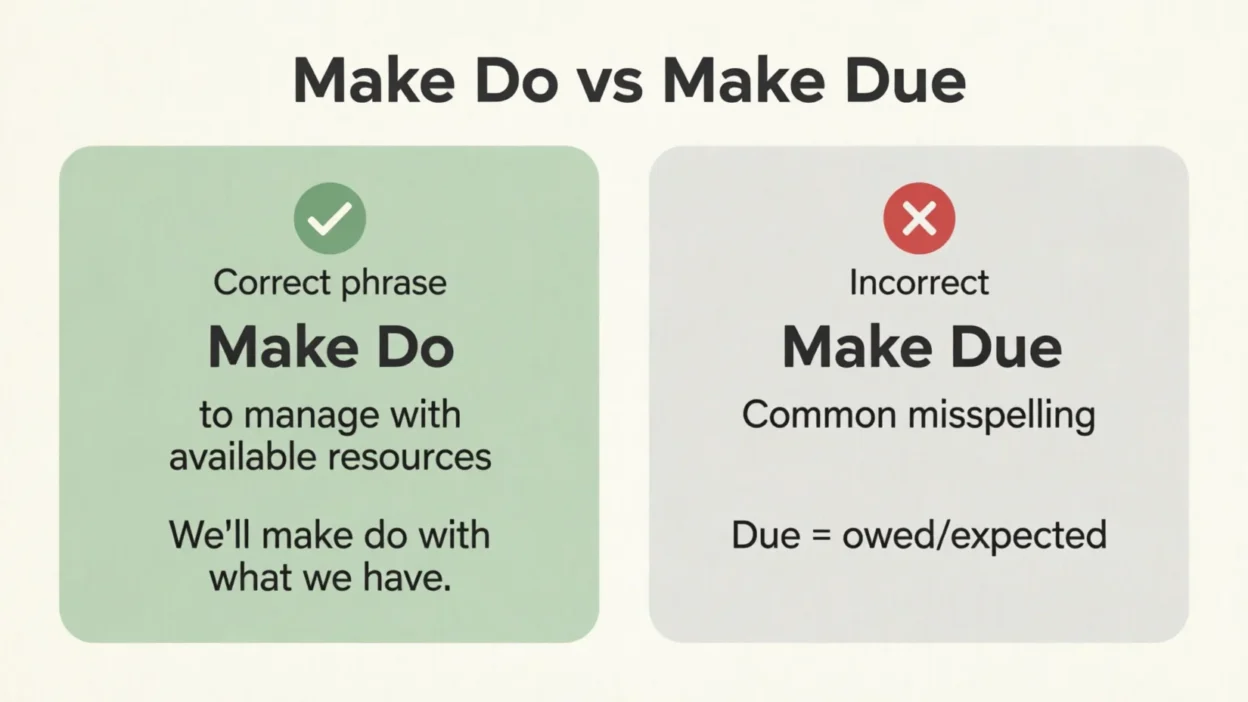
“Make do” is the correct phrase when you mean managing with limited resources or accepting something less than ideal. “Make due” is usually incorrect unless you are specifically referring to making something owed or payable.
Correct:
- We had to make do with what we had. ✅
Usually incorrect:
- We had to make due with what we had. ❌
What Does “Make Do” Mean?
“Make do” is an idiomatic expression that means:
- To manage with limited resources
- To cope with something less than ideal
- To get by without something better
People use this phrase when they must adapt to a situation using whatever is available.
Examples of Make Do
- We didn’t have enough chairs, so we made do with cushions.
- During the storm, the family had to make do without electricity.
- I forgot my charger, so I had to make do with low battery power.
Why “Make Do” Makes Sense
The word “do” refers to performing, functioning, or managing. Together, “make do” means making something work despite limitations.
Common Situations Where “Make Do” Is Used
- Financial struggles
- Limited supplies
- Temporary solutions
- Emergency situations
- Improvisation
What Does “Make Due” Mean?
“Make due” is much less common and usually considered incorrect when people intend to say “make do.”
However, in very rare legal or financial contexts, “due” may relate to something owed, payable, or expected.
Rare Example of “Make Due”
- The company must make due payments before Friday.
Even here, native speakers would usually phrase it differently, such as:
- The company must make the payments due before Friday.
Because of this, “make due” is almost never the correct phrase in everyday writing.
Make Do vs Make Due Comparison Table
| Phrase | Meaning | Correct Usage | Example |
|---|---|---|---|
| Make do | Manage with what is available | Common and correct | We made do with leftovers |
| Make due | Rare financial/legal wording | Usually incorrect | The payment is due tomorrow |
Why People Confuse Make Do and Make Due
The confusion mainly comes from pronunciation.
Same Sound in Conversation
In fast speech, “do” and “due” sound nearly identical:
- do = /duː/
- due = /duː/ or /djuː/
Because they sound alike, many writers accidentally choose the wrong spelling.
Autocorrect and Typing Habits
Spellcheck tools sometimes fail to catch the mistake because “due” is a correctly spelled English word.
Lack of Familiarity With Idioms
Many people learn the phrase by hearing it rather than reading it. As a result, they guess the spelling incorrectly.
How to Use “Make Do” Correctly
The phrase usually appears in this structure:
Make Do With + Something
Examples:
- We made do with old equipment.
- She made do with limited time.
- They had to make do with instant coffee.
Common Sentence Patterns
- make do with less
- make do somehow
- make do for now
- make do without
Practical Examples
- The students made do with borrowed books.
- We couldn’t afford new furniture, so we made do with secondhand items.
- He made do without air conditioning during the heatwave.
Tone and Style
“Make do” sounds:
- conversational
- natural
- practical
- empathetic
It often suggests resilience and adaptability.
Common Mistakes With Make Do vs Make Due
Understanding these mistakes can help you avoid them in your own writing.
Mistake 1: Writing “Make Due” Instead of “Make Do”
Incorrect:
- We had to make due with fewer supplies. ❌
Correct:
- We had to make do with fewer supplies. ✅
Mistake 2: Assuming “Due” Means Appropriate
Some people mistakenly think “due” means “suitable” in this phrase.
However, “make do” is an established idiom with its own meaning.
Mistake 3: Using the Wrong Phrase in Professional Writing
Incorrect phrases in emails or reports can make writing appear less polished.
Correct:
- We will make do until the new shipment arrives.
Mistake 4: Overusing the Phrase
Although “make do” is useful, repeating it too often may sound repetitive.
Alternative phrases include:
- get by
- cope
- manage
- improvise
- work with what you have
Practical Example Paragraphs
Seeing the phrase used naturally makes the meaning clearer.
Example Paragraph Using Make Do
When the office printer stopped working before the presentation, the team had to make do with handwritten notes and digital slides. Although the situation was frustrating, everyone adapted quickly and completed the meeting successfully.
Example Paragraph Showing Incorrect Use
Incorrect:
- During the trip, we had to make due with limited food supplies. ❌
Correct:
- During the trip, we had to make do with limited food supplies. ✅
Placement and Grammar Rules Table
| Phrase | Sentence Placement | Tone | Example Sentence |
|---|---|---|---|
| Make do | Before “with” phrase | Conversational/Formal | We made do with old tools |
| Make do with | Most common structure | Neutral | She made do with leftovers |
| Make do without | Indicates lack of something | Practical | They made do without internet |
| Make due | Rarely used naturally | Awkward/Incorrect | Incorrect in most contexts |
American vs British English Differences
There is no major difference between American English and British English regarding “make do.”
Both varieties strongly prefer:
- make do ✅
And generally avoid:
- make due ❌
You may occasionally see “make due” online because of spelling confusion, but it is not considered standard usage in either region.
Synonyms and Related Phrases
Learning related phrases improves vocabulary and writing flexibility.
Synonyms for Make Do
- get by
- cope
- improvise
- manage
- survive with less
- adapt
- work around limitations
Related English Expressions
- cut corners
- use what you have
- scrape by
- stretch resources
- live within your means
Related Grammar Searches
People searching for “make do vs make due” often also search for:
- apart vs a part
- everyday vs every day
- setup vs set up
- onto vs on to
- awhile vs a while
Why Correct Usage Matters
Using the correct phrase helps your writing sound more professional and trustworthy.
This matters especially in:
- job applications
- business communication
- academic writing
- blog articles
- social media captions
- professional emails
Small grammar details shape how readers perceive your credibility and attention to detail.
FAQs About Make Do vs Make Due
Is “make due” ever correct?
Rarely. In most everyday situations, “make due” is incorrect. “Make do” is almost always the intended phrase.
What does “make do” mean?
It means managing with limited resources or coping with what is available.
Why do people write “make due”?
Because “do” and “due” sound similar when spoken aloud.
Is “make do with” grammatically correct?
Yes. It is the standard and correct structure.
Can I use “make do” in formal writing?
Yes. It works well in both formal and informal English.
What is a synonym for “make do”?
Common alternatives include “manage,” “cope,” “get by,” and “improvise.”
Is “make due with” ever acceptable?
No. Standard English prefers “make do with.”
Final Thoughts
The difference between make do vs make due comes down to understanding one important idiom. “Make do” is the correct phrase when talking about coping with limited resources or managing a difficult situation. “Make due” is usually a spelling mistake caused by pronunciation confusion.
Learning small grammar distinctions like this strengthens your writing and helps you communicate more confidently. Whether you are writing an email, article, essay, or social media post, using “make do” correctly makes your English sound more polished and natural.
Actionable Takeaway
Whenever you want to describe adapting, surviving, or managing with what you have, always choose make do. A quick memory trick is simple: if the phrase means “manage,” the correct word is always “do,” not “due.”

Fenwick Quentin is a creative blogging author known for his analytical yet engaging writing style.
He explores topics such as innovation, digital culture, and personal development with depth and clarity.
Through his articles, Fenwick encourages readers to think critically and embrace continuous growth.