English spelling mistakes often happen because some words sound exactly alike when spoken. One of the most common examples is “laid off vs layed off.” If you have ever typed “layed off” in an email, resume, social media post, or workplace conversation, you are definitely not alone.
The confusion comes from the irregular verb “lay.” While many English verbs simply add “-ed” in the past tense, “lay” changes differently. That is why “laid off” is correct, while “layed off” is considered a spelling error in standard English.
In this guide, you will learn the difference between “laid off” and “layed off,” understand the grammar rule behind the phrase, explore practical examples, avoid common mistakes, and gain confidence using the correct term in professional and everyday writing.
Quick Answer
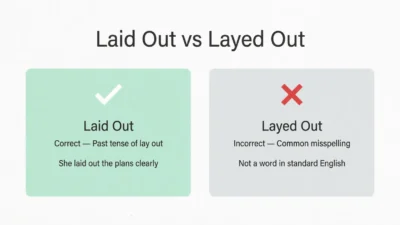
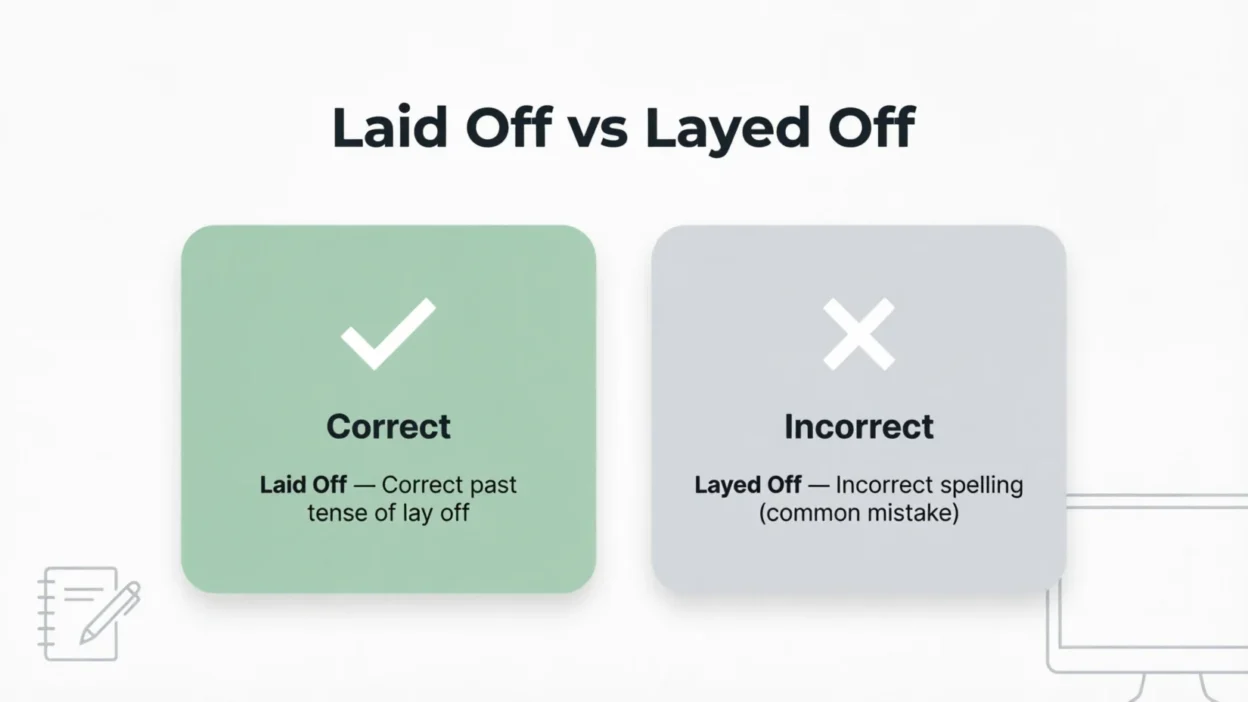
“Laid off” is the correct phrase. “Layed off” is a misspelling and is not considered standard English.
Correct:
- She was laid off last month. ✅
Incorrect:
- She was layed off last month. ❌
What Does “Laid Off” Mean?
“Laid off” refers to someone losing a job temporarily or permanently, usually because of business conditions rather than personal performance.
Companies may lay off employees because of:
- budget cuts
- restructuring
- economic downturns
- automation
- company closures
Examples of “Laid Off”
- Hundreds of workers were laid off during the recession.
- He was laid off after the company downsized.
- Many employees feared being laid off.
- She found a new job quickly after being laid off.
Grammar Breakdown
The phrase comes from the verb “lay.”
Verb forms:
- Present tense: lay
- Past tense: laid
- Past participle: laid
That means:
- lay off → laid off
Not:
- layed off ❌
Why “Layed Off” Is Incorrect
“Layed” is not the accepted past tense of “lay” in standard English grammar.
Many people assume:
- play → played
- stay → stayed
- delay → delayed
So they mistakenly write:
- lay → layed ❌
However, English contains irregular verbs, and “lay” is one of them.
Correct conjugation:
- lay
- laid
- laid
Because of this rule, “laid off” is always the proper spelling in professional and grammatical English.
Laid Off vs Layed Off Comparison Table
| Phrase | Correct? | Meaning | Example |
|---|---|---|---|
| Laid off | Yes | Lost a job temporarily or permanently | She was laid off yesterday |
| Layed off | No | Misspelling | Incorrect in standard English |
Understanding the Verb “Lay”
To fully understand why “laid off” is correct, it helps to look at how the verb works.
Present Tense
- I lay the book on the table.
- Companies lay off workers during difficult times.
Past Tense
- I laid the book on the table.
- The company laid off 50 employees.
Past Participle
- The book was laid on the desk.
- Several workers have been laid off.
Important Note
“Lay” is different from “lie.”
This causes even more confusion in English grammar.
Common Situations Where “Laid Off” Is Used
The phrase appears often in business, employment, and economic discussions.
Workplace Conversations
- He got laid off last week.
- They were laid off without warning.
News and Media
- Thousands of factory workers were laid off nationwide.
Career Discussions
- After being laid off, she updated her resume.
Financial Contexts
- Families affected by layoffs often reduce spending.
Common Mistakes People Make
Even native English speakers frequently confuse this phrase.
Mistake 1: Writing “Layed Off”
Incorrect:
- He was layed off from work. ❌
Correct:
- He was laid off from work. ✅
Mistake 2: Mixing Up Lay and Lie
Incorrect:
- I will lay down for a nap.
This sentence is common in casual speech but often grammatically debated depending on usage.
The confusion between “lay” and “lie” contributes to spelling errors like “layed.”
Mistake 3: Assuming All Verbs Use “-ed”
English has many irregular verbs:
- speak → spoke
- teach → taught
- lay → laid
Not all verbs follow regular spelling patterns.
Mistake 4: Using Informal Spellings in Professional Writing
Misspelling “laid off” in resumes, cover letters, or LinkedIn posts may hurt credibility.
Correct grammar matters in professional communication.
Practical Example Paragraphs
Seeing real examples helps the grammar stick naturally.
Example Paragraph Using “Laid Off”
After the company lost several major clients, dozens of employees were laid off unexpectedly. Although the situation was stressful, many workers quickly began searching for new opportunities and updating their professional skills.
Incorrect Example
Incorrect:
- She got layed off after the merger. ❌
Correct:
- She got laid off after the merger. ✅
Placement and Grammar Rules Table
| Phrase | Sentence Placement | Tone | Example Sentence |
|---|---|---|---|
| Laid off | After subject or auxiliary verb | Professional/Neutral | He was laid off in June |
| Get laid off | Informal conversational usage | Casual | She got laid off yesterday |
| Being laid off | Ongoing situation | Neutral | Being laid off was difficult |
| Layed off | Incorrect spelling | Nonstandard | Incorrect in formal English |
American vs British English Differences
Both American English and British English use “laid off” as the correct spelling.
There is no regional grammar difference here.
American English
- The company laid off workers.
British English
- Several employees were laid off.
In both forms of English:
- “laid off” = correct ✅
- “layed off” = incorrect ❌
Synonyms and Related Terms
Understanding related workplace vocabulary can improve your writing naturally.
Synonyms for “Laid Off”
- dismissed
- terminated
- furloughed
- downsized
- let go
- released from employment
Related Employment Terms
- job loss
- workforce reduction
- company downsizing
- unemployment
- staff cuts
- restructuring
Related Grammar Searches
People searching for “laid off vs layed off” also often search for:
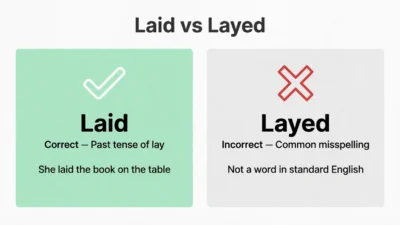
- laid vs layed
- payed vs paid
- setup vs set up
- affect vs effect
- anyway vs anyways
Why Correct Spelling Matters
Using correct grammar helps your writing appear:
- professional
- trustworthy
- polished
- credible
This is especially important in:
- resumes
- business emails
- LinkedIn posts
- job applications
- workplace communication
- academic writing
A small spelling mistake can unintentionally distract readers from your message.
Helpful Memory Trick
A quick trick can help you remember forever:
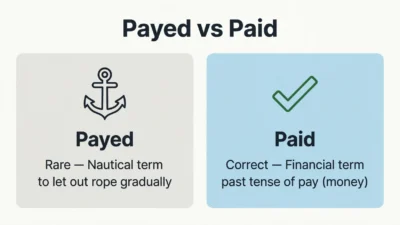
Think of “Paid”
Just like:
- pay → paid
You also have:
- lay → laid
Neither word adds “-ed.”
So:
- laid off ✅
- layed off ❌
This comparison makes the rule much easier to remember.
FAQs About Laid Off vs Layed Off
Is “layed off” ever correct?
No. “Layed off” is considered a misspelling in standard English.
Why is “laid off” correct?
Because “laid” is the correct past tense and past participle form of “lay.”
What does “laid off” mean?
It means losing a job, usually because of business or financial reasons.
Is “laid off” formal English?
Yes. It is widely accepted in professional, academic, and conversational English.
Do Americans and British people both use “laid off”?
Yes. Both American and British English use “laid off.”
What is the difference between fired and laid off?
Being fired usually relates to performance or conduct. Being laid off usually relates to business conditions.
How can I remember the correct spelling?
Think:
- pay → paid
- lay → laid
Never “layed.”
Final Thoughts
The difference between laid off vs layed off is simple once you understand the grammar rule behind the verb “lay.” The correct phrase is always “laid off,” while “layed off” is a common spelling mistake caused by pronunciation confusion and irregular verb patterns.
Mastering small grammar details like this can greatly improve your writing quality and confidence. Whether you are discussing employment, updating a resume, writing professional emails, or posting online, using “laid off” correctly helps your communication sound polished and accurate.
Actionable Takeaway
Whenever you write about job loss or company downsizing, remember that the verb “lay” changes to “laid,” not “layed.” A simple memory trick is:
pay → paid, lay → laid.
Using this rule will help you avoid one of the most common English spelling mistakes.