If you’ve ever typed “whisp” and wondered if it looks right, you’re not alone. It’s one of those sneaky spelling mistakes that slips in because English pronunciation doesn’t always match spelling.
The words wisp and whisp sound similar, which makes the confusion completely understandable.
The good news? Once you understand the difference between wisp vs whisp, you’ll never second-guess yourself again. In this guide, we’ll break it down clearly, with examples, tips, and simple rules you can remember instantly.
Quick Answer
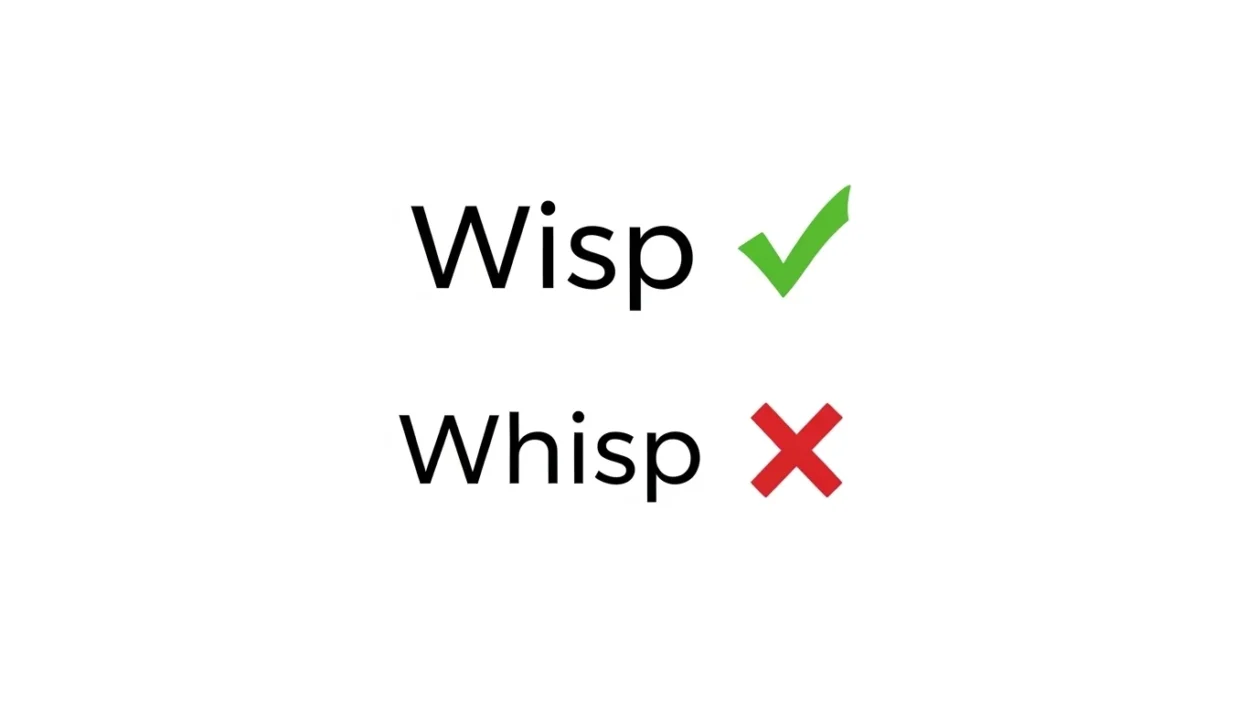
- ✅ Wisp is the correct spelling
- ❌ Whisp is incorrect and not a real English word
- Always use wisp to describe something thin, light, or delicate
What Does “Wisp” Mean?
The word wisp is a real and expressive English noun. It describes something that is thin, delicate, or barely visible.
Core meanings:
- A small, thin strand or piece
- A light curl or trace (often of smoke, hair, or cloud)
- Something fragile or fleeting
Examples:
- A wisp of smoke rose into the air.
- She tucked a wisp of hair behind her ear.
- There was a wisp of fog over the lake.
LSI keywords and related phrases:
- thin strand
- light trace
- faint curl
- delicate thread
- small amount
- hint of something
These variations help enrich your writing and improve SEO naturally.
What Is “Whisp”? Is It Ever Correct?
Let’s clear this up right away: “whisp” is not a correct English word.
It’s simply a misspelling of “wisp”, usually caused by confusion with other English words that begin with “wh” (like whisper, whisk, or whirl).
Why people write “whisp”:
- Influence of similar “wh-” words
- Phonetic confusion
- Typing habits or autocorrect errors
Important:
- ❌ Whisp → Incorrect
- ✅ Wisp → Correct
Even in casual writing, using “whisp” can reduce clarity and credibility.
Wisp vs Whisp: Side-by-Side Comparison
| Feature | Whisp ❌ | Wisp ✅ |
|---|---|---|
| Valid word | No | Yes |
| Meaning | None | Thin, delicate strand or trace |
| Usage | Incorrect | Correct |
| Accepted globally | No | Yes (US & UK English) |
| Example | ✖ A whisp of smoke | ✔ A wisp of smoke |
How to Use “Wisp” Correctly
Using wisp is simple and adds a poetic touch to your writing.
1. Describing smoke or air
- A wisp of smoke drifted upward.
- The fire left only a wisp of ash.
2. Describing hair
- A wisp of hair fell across her face.
- He brushed away a wisp from his eyes.
3. Describing fog or clouds
- A wisp of mist hovered over the field.
- Thin wisps of cloud dotted the sky.
4. Describing something subtle
- There was a wisp of hope in her voice.
- He showed a wisp of a smile.
Tip:
Use wisp when describing something light, faint, or delicate.
Common Mistakes to Avoid
Even though the rule is simple, these errors are common:
1. Adding “h” at the beginning
- ❌ Whisp of smoke
- ✅ Wisp of smoke
2. Confusing with “whisper”
- Whisper is correct, but unrelated to wisp
3. Overcomplicating spelling
English often includes silent letters—but not here.
4. Ignoring spellcheck
Most tools will flag “whisp”—don’t overlook it.
Why “Wisp” Does Not Have “Wh”
Many English words begin with “wh,” which creates confusion.
Examples:
- whisper
- whisk
- wheel
But wisp is different—it comes from older English roots that do not include “h.”
Memory trick:
👉 Think: “Wisp is light and simple—no extra ‘h’ needed”
This helps you remember the clean, correct spelling.
American vs British English Differences
Here’s the easy part:
- Wisp is spelled the same in both American English and British English
- No variations exist
- Whisp is incorrect everywhere
So once you learn the correct spelling, you’re set globally.
Synonyms and Alternatives for “Wisp”
To improve variety and readability, here are some alternatives:
For physical descriptions:
- strand
- thread
- curl
- trace
For abstract meanings:
- hint
- touch
- suggestion
- glimmer
Examples:
- A wisp of smoke → A trace of smoke
- A wisp of hope → A hint of hope
Using these synonyms can make your writing more engaging.
Real-Life Usage Examples
Let’s explore how wisp appears in everyday contexts:
Nature:
- A wisp of fog covered the valley.
Literature:
- The character vanished like a wisp of smoke.
Daily life:
- She noticed a wisp of dust in the sunlight.
Emotions:
- There was a wisp of doubt in his mind.
These examples show how versatile and expressive the word can be.
FAQs About Wisp vs Whisp
Is “whisp” ever correct?
No, it is always a misspelling of “wisp.”
What does “wisp” mean in simple terms?
It means a small, thin, or delicate amount of something.
Why do people write “whisp”?
Because many English words start with “wh,” causing confusion.
Is “wisp” used in formal writing?
Yes, it works in both formal and creative writing.
Is there a British spelling of “wisp”?
No, both British and American English use the same spelling.
Can “wisp” be used metaphorically?
Yes, it often describes subtle emotions or faint traces.
What is a synonym for “wisp”?
Trace, strand, hint, or curl.
Summary: Wisp vs Whisp Made Simple
The difference between wisp vs whisp is clear once you understand it. Wisp is the correct and widely accepted English word used to describe something thin, light, or delicate. On the other hand, whisp is simply a spelling mistake influenced by other “wh-” words.
By learning the correct spelling and practicing it in everyday contexts, you can avoid this common error and improve your writing instantly. Whether you’re describing smoke, hair, or emotions, using the right word makes your writing more precise and expressive.
Actionable Takeaway
Here’s a simple rule to remember:
👉 Always use wisp without an “h”—never write whisp
Before you publish or send your writing, take a quick moment to double-check spelling. Small details like this can make your content look polished, professional, and trustworthy.