If you’ve ever typed “skiddish” and hesitated, you’re definitely not alone. It sounds right, looks believable, and even shows up in casual conversations online. But when it comes to correct English, things aren’t always what they seem.
Understanding the difference between skiddish vs skittish is simpler than you might expect. In this guide, we’ll walk you through the correct spelling, meaning, usage, and common mistakes—so you can write with confidence and clarity every time.
Quick Answer
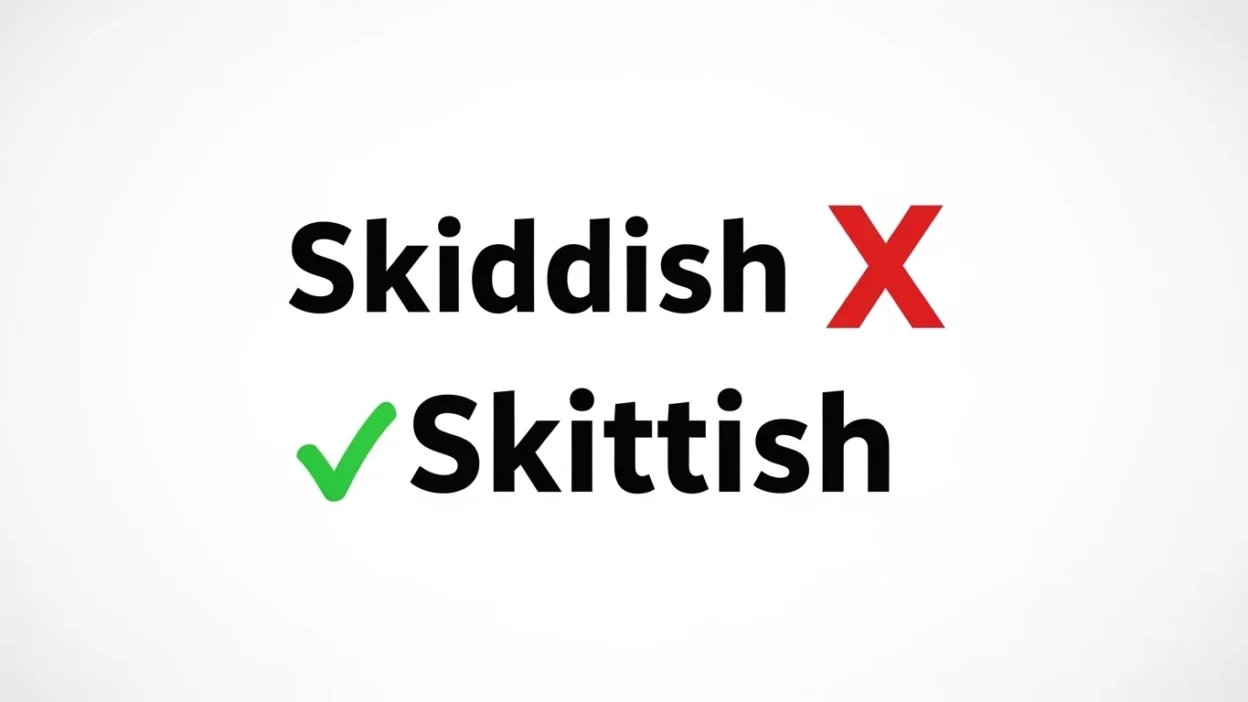
- ✅ Skittish is the correct spelling
- ❌ Skiddish is incorrect and not a standard English word
- Always use skittish to describe someone easily startled or nervous
What Does “Skittish” Mean?
The word skittish is an adjective used to describe someone or something that is easily frightened, nervous, or unpredictable.
Core meanings:
- Easily startled
- Nervous or jumpy
- Difficult to control (especially animals)
Examples:
- The horse became skittish during the storm.
- She felt skittish before the big presentation.
- Loud noises can make pets skittish.
LSI keywords and related phrases:
- jumpy
- nervous
- anxious
- easily frightened
- restless
- uneasy
These related terms help add depth and variety to your writing.
What Is “Skiddish”? Is It Ever Correct?
Let’s clear this up right away: “skiddish” is not a correct spelling in standard English.
It’s a common misspelling of skittish, often used informally or mistakenly based on pronunciation.
Why people write “skiddish”:
- The “t” sound in skittish can sound like a “d” in fast speech
- Phonetic spelling habits (writing what you hear)
- Lack of familiarity with the correct form
Important:
- ❌ Skiddish → Incorrect
- ✅ Skittish → Correct
Even in casual writing, using “skiddish” can reduce credibility.
Skiddish vs Skittish: Side-by-Side Comparison
| Feature | Skiddish ❌ | Skittish ✅ |
|---|---|---|
| Valid word | No | Yes |
| Meaning | None | Easily frightened or nervous |
| Usage | Incorrect | Correct |
| Accepted globally | No | Yes (US & UK English) |
| Example | ✖ The dog is skiddish | ✔ The dog is skittish |
How to Use “Skittish” Correctly
Using skittish becomes easy once you understand its tone and context.
1. Describing animals
- The deer was skittish and ran away quickly.
- Horses can become skittish in unfamiliar environments.
2. Describing people
- He felt skittish about making a big decision.
- She’s a bit skittish around strangers.
3. Describing reactions or moods
- Investors grew skittish during market uncertainty.
- The team became skittish after the sudden change.
Tip:
Use skittish when describing fearful, uneasy, or easily startled behavior.
Common Mistakes to Avoid
Even though the rule is simple, these mistakes are very common:
1. Writing “skiddish” instead of “skittish”
- ❌ The cat is skiddish
- ✅ The cat is skittish
2. Mishearing pronunciation
The “tt” in skittish can sound softer, leading to confusion.
3. Dropping or changing letters
- Incorrect: skidish, skitish
- Correct: skittish
4. Using it in the wrong tone
“Skittish” suggests nervousness—not anger or aggression.
American vs British English Differences
Here’s some helpful clarity:
- Skittish is spelled the same in both American English and British English
- There are no regional variations
- Skiddish is incorrect everywhere
So once you learn the correct spelling, you’re good globally.
Why “Skittish” Has Double “T”
English spelling can feel tricky, but there’s logic behind it.
Pattern:
Words with short vowel sounds often double the consonant:
- sit → sitting
- fit → fitting
- skit → skittish
Memory trick:
👉 Think: “A quick, jumpy feeling = double T → skittish”
This helps reinforce the correct spelling.
Synonyms and Alternatives for “Skittish”
To improve your writing and avoid repetition, try these alternatives:
For nervous behavior:
- jumpy
- anxious
- edgy
- uneasy
- timid
For animals:
- easily startled
- high-strung
- restless
Examples:
- A skittish horse → A nervous horse
- Skittish reaction → Anxious reaction
Using synonyms improves readability and SEO richness.
Real-Life Usage Examples
Let’s see how skittish works in different contexts:
Everyday life:
- I felt skittish walking alone at night.
Workplace:
- Employees grew skittish after rumors of layoffs.
Animals:
- The rabbit was too skittish to approach.
Finance:
- Markets became skittish due to uncertainty.
These examples show how versatile the word is.
FAQs About Skiddish vs Skittish
Is “skiddish” ever correct?
No, it is always a misspelling of “skittish.”
What does “skittish” mean in simple terms?
It means easily scared, nervous, or jumpy.
Why do people say “skiddish”?
Because the pronunciation can sound like it has a “d” instead of “t.”
Is “skittish” used for humans or animals?
Both. It can describe nervous behavior in people and animals.
Is there a British spelling of “skittish”?
No, both British and American English use the same spelling.
Can “skittish” describe emotions?
Yes, it often describes feelings of anxiety or unease.
What is a synonym for “skittish”?
Jumpy, nervous, anxious, or easily frightened.
Summary:
The difference between skiddish vs skittish is clear once you understand it. Skittish is the correct and accepted spelling used to describe someone or something that is easily frightened or nervous. On the other hand, skiddish is simply a common misspelling based on how the word sounds.
By learning the correct spelling and practicing it in real-life contexts, you can avoid this mistake and improve your writing instantly. Whether you’re describing a nervous pet or a tense situation, using the correct word makes your message clearer and more professional.
Actionable Takeaway
Here’s a simple rule to remember:
👉 Always use skittish with double “t” when describing nervous or jumpy behavior—never write skiddish
Before you finalize your writing, take a moment to double-check spelling. Small corrections like this can make a big difference in how polished and trustworthy your content appears.