The confusion between breath vs breathe is one of the most common grammar mistakes in English. These two words look almost identical and relate to the same idea—air and breathing—but they serve completely different grammatical purposes. Mixing them up can make even strong writing appear careless or unclear.
If you have ever paused while typing “take a deep breath” or “remember to breathe,” you are not alone. Many English learners and native speakers struggle with this pair because the spelling difference is small while the pronunciation difference is subtle. Fortunately, once you understand the grammar rule behind these words, the distinction becomes much easier to remember.
In this guide, you will learn the meanings of “breath” and “breathe,” pronunciation tips, grammar rules, examples, common mistakes, comparison tables, memory tricks, and practical ways to use both words confidently in everyday writing and conversation.
Quick Answer
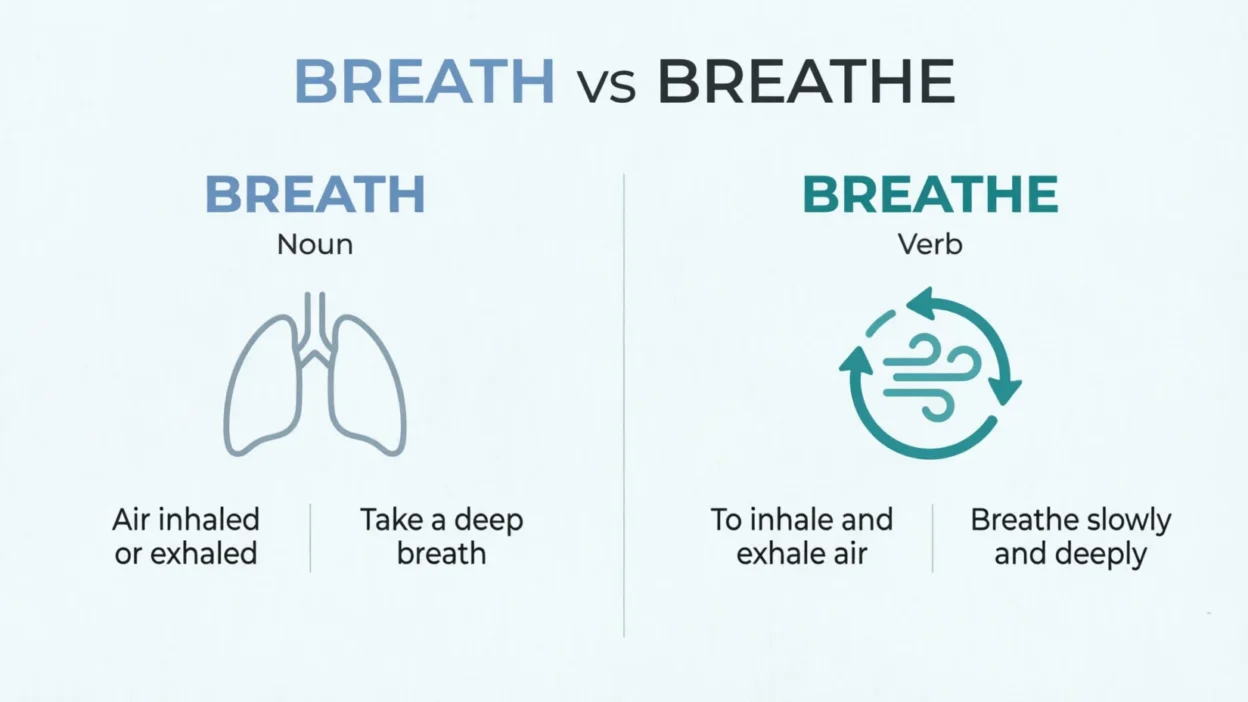
- Breath is a noun.
- Breathe is a verb.
Examples:
- Take a deep breath. ✅
- Please breathe slowly. ✅
A simple trick:
- If you are describing the air itself, use breath.
- If you are describing the action, use breathe.
What Does “Breath” Mean?
“Breath” is a noun that refers to:
- the air taken into or released from the lungs
- a single act of breathing
- a pause or moment of rest
Examples of Breath
- She took a deep breath before speaking.
- His breath smelled like mint.
- I was out of breath after running.
- Take a breath and relax.
Common Phrases With Breath
- shortness of breath
- catch your breath
- bad breath
- deep breath
- hold your breath
What Does “Breathe” Mean?
“Breathe” is a verb. It describes:
- the action of inhaling and exhaling air
Examples of Breathe
- Remember to breathe deeply.
- He could barely breathe after the race.
- Fresh air helps me breathe better.
- Try to breathe slowly during meditation.
Common Phrases With Breathe
- breathe deeply
- breathe normally
- breathe easier
- breathe in
- breathe out
Breath vs Breathe Comparison Table
| Word | Part of Speech | Meaning | Example |
|---|---|---|---|
| Breath | Noun | Air from lungs | Take a deep breath |
| Breathe | Verb | Action of inhaling/exhaling | Please breathe slowly |
The Main Grammar Difference
The biggest difference is grammatical function.
Breath = Thing
“Breath” names something.
Example:
- Her breath was cold.
Breathe = Action
“Breathe” describes doing something.
Example:
- She struggled to breathe.
Pronunciation Difference Between Breath and Breathe
The pronunciation difference is small but important.
Breath
Pronounced:
- BRETH
It ends with a soft “th” sound.
Breathe
Pronounced:
- BREETHE
It ends with a buzzing “th” sound.
The extra “e” changes both:
- pronunciation
- grammar role
How to Use “Breath” Correctly
Use “breath” when referring to:
- air
- breathing as a thing
- a pause
- physical condition
Correct Examples
- Take a deep breath before presenting.
- I lost my breath while hiking.
- Her breath fogged the window.
- He held his breath underwater.
How to Use “Breathe” Correctly
Use “breathe” when talking about:
- the act of inhaling and exhaling
- respiratory action
- relaxation breathing
Correct Examples
- Breathe slowly and stay calm.
- I cannot breathe through my nose.
- She learned to breathe properly during yoga.
- Fresh mountain air helps people breathe easier.
Common Mistakes With Breath vs Breathe
Because the spellings are so similar, many writers accidentally swap them.
Mistake 1: Using Breath as a Verb
Incorrect:
- Please breath slowly. ❌
Correct:
- Please breathe slowly. ✅
Mistake 2: Using Breathe as a Noun
Incorrect:
- Take a deep breathe. ❌
Correct:
- Take a deep breath. ✅
Mistake 3: Forgetting the Silent “E” Rule
The extra “e” usually signals:
- action/verb form
Similar examples:
- bath → bathe
- cloth → clothe
- breath → breathe
Practical Example Paragraphs
Example Using Breath
After climbing the steep hill, Maria stopped for a moment to catch her breath. The cool evening air helped her relax before continuing the hike.
Example Using Breathe
During the meditation session, the instructor reminded everyone to breathe slowly and focus on staying calm and present.
Placement and Grammar Rules Table
| Word/Phrase | Sentence Placement | Tone | Example Sentence |
|---|---|---|---|
| Deep breath | Middle/end | Neutral | Take a deep breath before speaking |
| Catch your breath | Informal phrase | Conversational | He stopped to catch his breath |
| Breathe deeply | Instruction/action | Neutral | Breathe deeply during exercise |
| Cannot breathe | Action phrase | Serious/medical | She could not breathe properly |
American vs British English Differences
There are no major spelling differences between American and British English for these words.
In Both Variations
- breath = noun
- breathe = verb
Pronunciation may vary slightly depending on accent, but spelling and grammar rules remain the same.
Why This Difference Matters
Using the correct word improves:
- grammar accuracy
- professionalism
- readability
- communication clarity
Confusing “breath” and “breathe” may:
- distract readers
- create awkward sentences
- weaken credibility in formal writing
This matters especially in:
- academic writing
- healthcare communication
- fitness content
- blogs
- professional emails
Memory Tricks for Breath vs Breathe
Simple memory tricks make these words much easier to remember.
Trick 1: The Extra “E” Means Action
“Breathe” has an extra “e,” and verbs often involve action.
Think:
- breathe = do something
Trick 2: Breath Is Shorter Like a Single Breath
“Breath” is shorter because it represents a thing, not an action.
Similar Word Pairs in English
English contains several noun-versus-verb pairs like this.
| Noun | Verb |
|---|---|
| Breath | Breathe |
| Bath | Bathe |
| Cloth | Clothe |
| Wreath | Wreathe |
Breath and Breathe in Everyday Communication
These words appear constantly in daily life.
Health and Fitness
- breathing exercises
- deep breathing
- shortness of breath
Emotional Situations
- take a breath
- breathe and relax
- breathe through stress
Medical Contexts
- trouble breathing
- breathing techniques
- respiratory health
Everyday Usage Examples
Correct Uses of Breath
- Take another breath before diving.
- His breath smelled like coffee.
- She was out of breath after dancing.
Correct Uses of Breathe
- Try to breathe calmly.
- Babies breathe faster than adults.
- He struggled to breathe after running.
Incorrect Examples
- Take a deep breathe. ❌
- Please breath slowly. ❌
FAQs About Breath vs Breathe
What is the difference between breath and breathe?
“Breath” is a noun, while “breathe” is a verb.
Is it take a deep breath or breathe?
- take a deep breath
How do you remember breath vs breathe?
The extra “e” in “breathe” signals action.
Is breathe a verb?
Yes. “Breathe” is always a verb.
Is breath a noun?
Yes. “Breath” refers to air or breathing itself.
Are breath and breathe pronounced differently?
Yes. “Breath” ends softly, while “breathe” has a buzzing sound.
Do British and American English spell them differently?
No. Both use the same spellings.
Final Thoughts
The difference between breath vs breathe becomes simple once you remember their grammatical roles. “Breath” is a noun that refers to air or a breathing moment, while “breathe” is the verb describing the action of inhaling and exhaling.
Mastering this small distinction can improve your grammar, writing clarity, and communication confidence. Whether you are writing professionally, studying English, or simply texting friends, using the correct word helps your language feel polished and natural.
Actionable Takeaway
Use this quick rule:
- breath = thing
- breathe = action
Easy memory trick:
- the extra “e” in “breathe” stands for “exhale” and action.
Whenever you describe doing the action, choose “breathe.” If you describe the air itself, choose “breath.”

Fenwick Quentin is a creative blogging author known for his analytical yet engaging writing style.
He explores topics such as innovation, digital culture, and personal development with depth and clarity.
Through his articles, Fenwick encourages readers to think critically and embrace continuous growth.