The confusion between disorganized vs unorganized is more common than many people realize. At first glance, both words seem interchangeable because they describe a lack of order or structure. However, there is a subtle but important difference in tone, meaning, and usage. Understanding this distinction can improve your writing, communication skills, and professional clarity.
Whether you are describing a messy workspace, an unfinished plan, a business structure, or personal habits, choosing the correct word matters. “Disorganized” usually carries a stronger negative meaning, while “unorganized” can sometimes sound more neutral or temporary. Knowing when to use each word helps your English sound more natural and precise.
In this guide, you will learn the meanings of “disorganized” and “unorganized,” grammar rules, pronunciation tips, real-life examples, comparison tables, common mistakes, and practical memory tricks so you can confidently use both words correctly.
Quick Answer
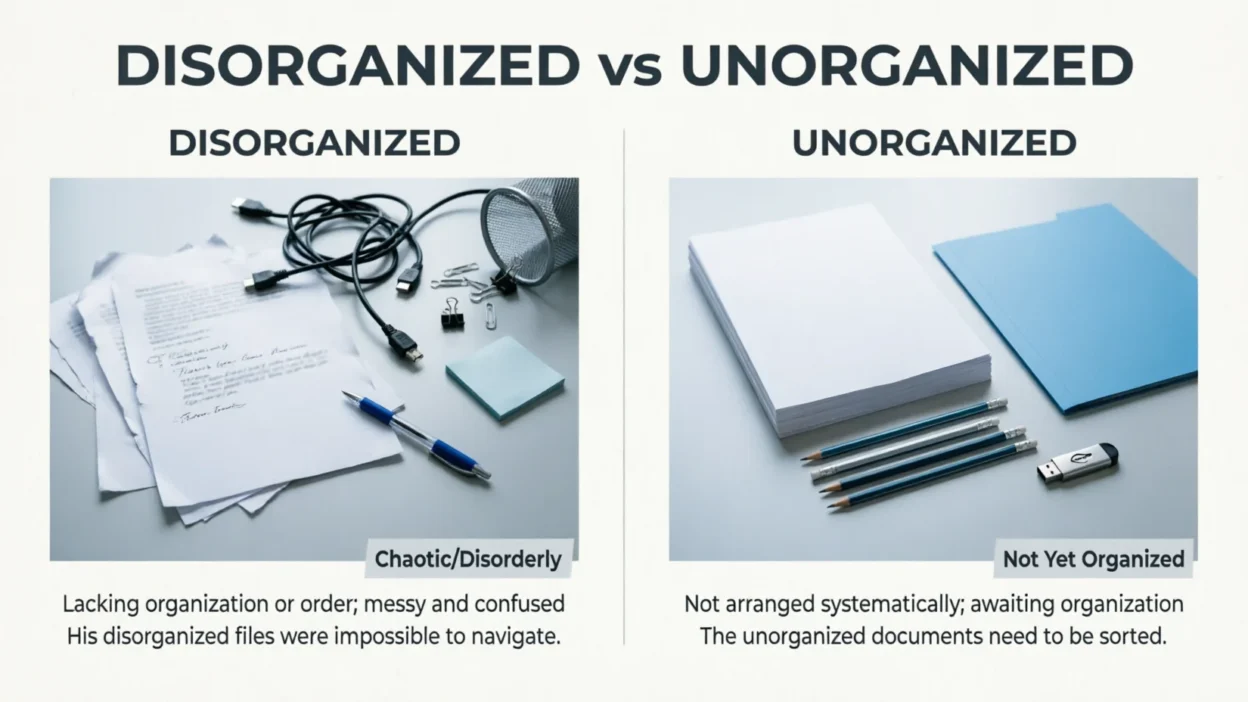
Use “disorganized” when something is messy, chaotic, or poorly arranged.
Use “unorganized” when something has not yet been arranged, structured, or formally organized.
Examples:
- Her desk looked completely disorganized. ✅
- The files were still unorganized after the move. ✅
What Does “Disorganized” Mean?
“Disorganized” describes:
- confusion
- disorder
- lack of structure
- chaotic arrangement
It often suggests that something:
- was organized before but became messy
- should be organized but is not
Examples of Disorganized
- His schedule is completely disorganized.
- The meeting felt disorganized and confusing.
- Their office looked messy and disorganized.
- A disorganized plan caused delays.
Tone of Disorganized
“Disorganized” usually sounds:
- negative
- critical
- stronger emotionally
It often describes:
- behavior
- work habits
- environments
- management problems
What Does “Unorganized” Mean?
“Unorganized” means:
- not yet organized
- lacking formal structure
- unfinished or unsorted
Unlike “disorganized,” it does not always imply chaos.
Examples of Unorganized
- The documents remain unorganized.
- The group was still unorganized before the event.
- Their storage room is largely unorganized.
- The data arrived unorganized.
Tone of Unorganized
“Unorganized” usually sounds:
- softer
- more neutral
- temporary
It often suggests something simply has not been arranged yet.
Disorganized vs Unorganized Comparison Table
| Word | Meaning | Tone | Example |
|---|---|---|---|
| Disorganized | Messy or chaotic | Negative | Her work area is disorganized |
| Unorganized | Not yet arranged | Neutral | The files are unorganized |
How to Use “Disorganized” Correctly
Use “disorganized” when describing:
- clutter
- confusion
- poor planning
- lack of coordination
Examples
- The presentation was disorganized.
- He seemed disorganized under pressure.
- Their workflow became disorganized quickly.
- A disorganized classroom affects learning.
Grammar Tip
“Disorganized” commonly modifies:
- people
- systems
- environments
- plans
Examples:
- a disorganized office
- disorganized thinking
How to Use “Unorganized” Correctly
Use “unorganized” when referring to:
- something unfinished
- lack of structure
- absence of formal arrangement
Examples
- The inventory remains unorganized.
- The project files are still unorganized.
- Their volunteer group is unorganized.
- Unorganized information slows productivity.
Grammar Tip
“Unorganized” often suggests:
- potential for future organization
- temporary disorder
Common Mistakes With Disorganized vs Unorganized
Many writers use these words interchangeably, but context matters.
Mistake 1: Using Unorganized for Chaos
Incorrect:
- The emergency response was unorganized and chaotic. ⚠️
Better:
- The emergency response was disorganized and chaotic. ✅
“Disorganized” fits stronger disorder better.
Mistake 2: Using Disorganized for Temporary Sorting
Incorrect:
- My new files are disorganized because I haven’t sorted them yet. ⚠️
Better:
- My new files are unorganized because I haven’t sorted them yet. ✅
Mistake 3: Assuming Both Words Mean Exactly the Same
Although similar, they carry different emotional tones and implications.
Practical Example Paragraphs
Seeing these words naturally in context helps clarify their meanings.
Example Using Disorganized
The event started late because the planning team was disorganized. Guests received conflicting schedules, important supplies were missing, and communication problems created unnecessary confusion.
Example Using Unorganized
After moving into the new apartment, Maya’s books and papers remained unorganized for several days. She planned to arrange everything over the weekend.
Placement and Grammar Rules Table
| Word | Sentence Placement | Tone | Example Sentence |
|---|---|---|---|
| Disorganized | Before nouns or after verbs | Negative/Critical | The office looked disorganized |
| Unorganized | Before nouns or after verbs | Neutral/Temporary | The files remain unorganized |
| Disorganized thinking | Mental/process description | Analytical | Stress caused disorganized thinking |
| Unorganized data | Technical/business use | Professional | The team received unorganized data |
Pronunciation Difference
The words sound very similar, but the prefixes differ slightly.
Disorganized
Pronounced:
- dis-OR-guh-nized
Unorganized
Pronounced:
- un-OR-guh-nized
The stress pattern remains mostly the same.
American vs British English Differences
There are no major spelling differences between American and British English for these words.
American English
“Disorganized” appears more frequently in everyday speech and professional writing.
British English
British English follows similar usage patterns and meanings.
Why This Difference Matters
Choosing the correct word improves:
- communication accuracy
- professionalism
- writing clarity
- emotional tone
For example:
- “The company is disorganized.” ✅
- “The company is unorganized.” ⚠️
The first suggests poor management. The second may simply suggest incomplete structure.
Synonyms and Related Terms
Learning related vocabulary strengthens language fluency naturally.
Synonyms for Disorganized
- chaotic
- messy
- confused
- disorderly
- cluttered
Synonyms for Unorganized
- unsorted
- unfinished
- unstructured
- unordered
- unmanaged
Related Grammar Searches
People searching for “disorganized vs unorganized” also search for:
- messy vs cluttered
- organize vs arrange
- affect vs effect
- ensure vs insure
- farther vs further
Helpful Memory Trick
Simple associations make these words easier to remember.
Disorganized = Disorder
Think:
- DIS = disorder
So:
- disorganized → messy chaos
Unorganized = Not Yet Organized
Think:
- UN = unfinished or not yet done
So:
- unorganized → not arranged yet
Professional and Workplace Usage
Both words appear often in business communication.
Disorganized in Workplaces
Examples:
- disorganized leadership
- disorganized meetings
- disorganized workflow
This usually sounds critical.
Unorganized in Workplaces
Examples:
- unorganized documents
- unorganized records
- unorganized materials
This sounds less judgmental.
Psychological and Behavioral Usage
“Disorganized” also appears in psychology and behavior discussions.
Examples
- disorganized thinking
- disorganized attachment
- disorganized behavior
These uses describe confusion or inconsistency.
“Unorganized” is less common in psychological contexts.
Everyday Usage Examples
Everyday Disorganized Examples
- My backpack is completely disorganized.
- The kitchen looked disorganized after dinner.
- He feels disorganized during busy weeks.
Everyday Unorganized Examples
- The garage is still unorganized.
- Their photo collection remains unorganized.
- I left my notes unorganized.
FAQs About Disorganized vs Unorganized
What is the difference between disorganized and unorganized?
“Disorganized” means messy or chaotic, while “unorganized” means not yet arranged or structured.
Is disorganized more negative than unorganized?
Yes. “Disorganized” usually sounds more critical and emotionally stronger.
Can unorganized mean messy?
Sometimes, but it often sounds less severe than “disorganized.”
Which word is more common?
“Disorganized” is generally more common in everyday English.
Is unorganized grammatically correct?
Yes. It is a valid English word.
Can a person be called unorganized?
Yes, though “disorganized” is more commonly used for people.
How can I remember the difference?
Think:
- disorganized = disorder
- unorganized = unfinished organization
Final Thoughts
The difference between disorganized vs unorganized may seem small, but understanding the tone and context helps you communicate more clearly and naturally. “Disorganized” usually describes chaos, confusion, or poor structure, while “unorganized” often suggests something simply has not been arranged yet.
Using the correct word improves your writing, strengthens professional communication, and helps your meaning sound more accurate. Whether you are describing work habits, storage systems, planning, or personal behavior, this distinction adds clarity and polish to your English.
Actionable Takeaway
Remember this simple shortcut:
- disorganized = messy and chaotic
- unorganized = not arranged yet
Quick test:
- If something feels chaotic or confusing → use disorganized
- If something simply has not been sorted yet → use unorganized
This easy memory trick will help you choose the right word confidently in everyday communication.