The difference between yea vs nay may seem old-fashioned at first, but these two words still appear in politics, voting systems, debates, formal meetings, and even casual conversation. Because they are short and sound simple, many people assume they are interchangeable with “yes” and “no.” While that is partly true, there are important differences in tone, usage, and context.
If you have ever watched a legislative vote or read historical documents, you have probably heard phrases like “the yeas and nays.” Understanding what these terms mean can improve your vocabulary, strengthen your formal writing, and help you better understand political, parliamentary, and historical language.
In this guide, you will learn the meanings of “yea” and “nay,” how they differ from “yes” and “no,” practical examples, common mistakes, grammar rules, pronunciation tips, and modern usage patterns in both American and British English.
Quick Answer
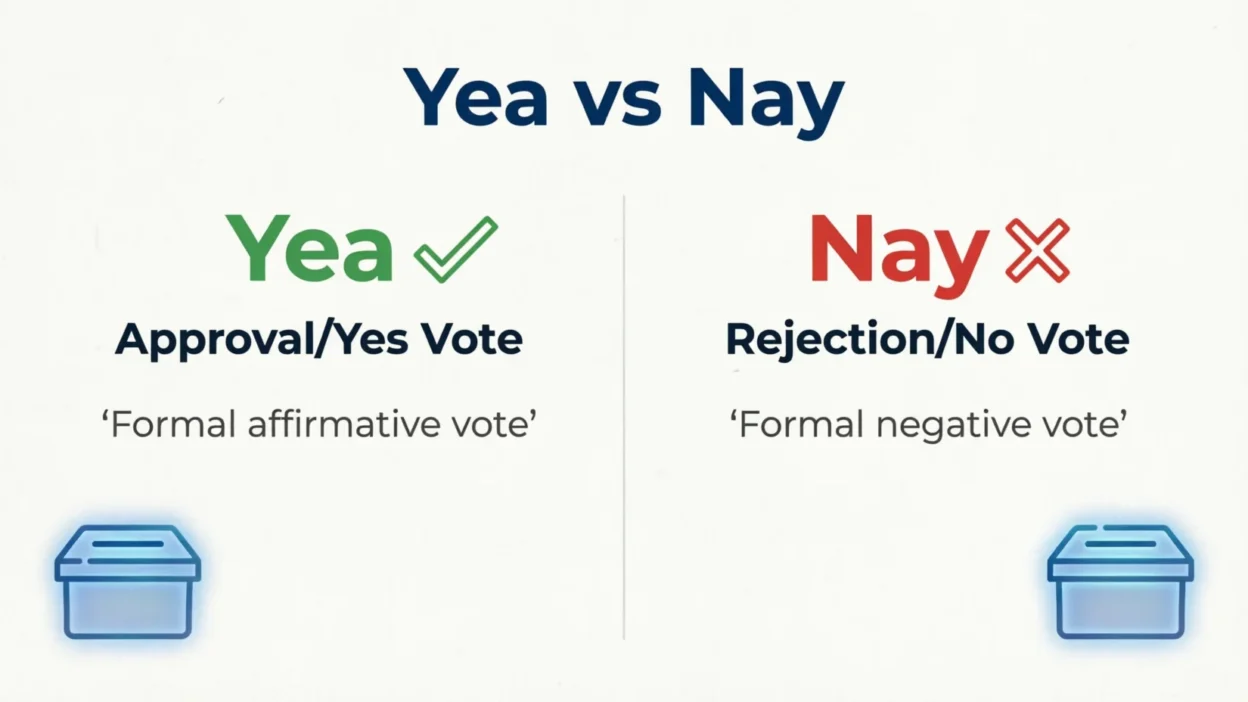
“Yea” means yes or approval, while “nay” means no or rejection. These words are mainly used in formal voting, legislative procedures, debates, and historical contexts.
Examples:
- The committee voted yea on the proposal. ✅
- Three members voted nay. ✅
What Does “Yea” Mean?
“Yea” is a formal or old-fashioned word meaning:
- yes
- approval
- agreement
- affirmative vote
It is commonly used in:
- government voting
- parliamentary procedure
- historical writing
- legal or official records
Examples of Yea
- The council voted yea on the new policy.
- Twelve members voted yea.
- All those in favor say yea.
Pronunciation of Yea
“Yea” is pronounced:
- yay
This pronunciation causes confusion because it sounds exactly like the casual exclamation “yay!”
However, the meanings are different.
What Does “Nay” Mean?
“Nay” is the opposite of “yea.”
It means:
- no
- refusal
- disagreement
- negative vote
Examples of Nay
- Two senators voted nay.
- The motion failed after several nay votes.
- All opposed should say nay.
Pronunciation of Nay
“Nay” is pronounced:
- nay
It rhymes with:
- day
- say
- play
Yea vs Nay Comparison Table
| Word | Meaning | Context | Example |
|---|---|---|---|
| Yea | Yes or approval | Formal voting | The committee voted yea |
| Nay | No or rejection | Formal voting | Several members voted nay |
Where “Yea” and “Nay” Are Commonly Used
These words appear most often in formal settings.
1. Government and Politics
Legislatures frequently use:
- yea votes
- nay votes
Examples:
- The bill passed with 60 yeas and 40 nays.
- Representatives voted nay on the amendment.
2. Parliamentary Procedure
Formal meetings may include:
- all in favor say yea
- all opposed say nay
3. Historical Texts
Older English writing often uses:
- yea
- nay
especially in:
- speeches
- religious texts
- legal records
4. Debate and Formal Discussion
Sometimes speakers use these words for dramatic or rhetorical effect.
Example:
- The audience responded with a loud yea.
Yea vs Yes: Are They the Same?
Not exactly.
Although “yea” means yes, the two words are used differently.
Yes
“Yes” is modern and conversational.
Examples:
- Yes, I agree.
- Yes, that works for me.
Yea
“Yea” sounds formal, historical, or official.
Examples:
- The board voted yea.
- The motion received ten yeas.
Nay vs No: Are They the Same?
Similarly, “nay” and “no” share similar meanings but different tones.
No
“No” is common everyday English.
Examples:
- No, thank you.
- No, I disagree.
Nay
“Nay” sounds formal or traditional.
Examples:
- Five members voted nay.
- The proposal received several nays.
Common Mistakes With Yea vs Nay
Many people misuse these words because they are less common in modern conversation.
Mistake 1: Confusing “Yea” With “Yeah”
Incorrect:
- Yea, I’m going to the store. ❌
Correct:
- Yeah, I’m going to the store. ✅
“Yeah” is informal speech.
“Yea” is formal voting language.
Mistake 2: Using Yea in Casual Conversation
Although technically understandable, it sounds unnatural.
Unnatural:
- Yea, I want pizza tonight.
Natural:
- Yes, I want pizza tonight.
Mistake 3: Misspelling “Nay” as “Neigh”
Incorrect:
- The senator voted neigh. ❌
Correct:
- The senator voted nay. ✅
“Neigh” is the sound a horse makes.
Mistake 4: Confusing Pronunciation
Remember:
- yea = yay
- nay = nay
Practical Example Paragraphs
Real-world examples make usage easier to understand.
Example Using Yea
During the city council meeting, members voted yea on the proposed environmental initiative. The final decision passed comfortably after receiving strong public support.
Example Using Nay
Several board members voted nay because they believed the budget proposal lacked sufficient financial planning and long-term stability.
Placement and Grammar Rules Table
| Word/Phrase | Sentence Placement | Tone | Example Sentence |
|---|---|---|---|
| Yea | Voting statements | Formal | The committee voted yea |
| Nay | Voting statements | Formal | Two members voted nay |
| Yeas and nays | Legislative reporting | Professional | The yeas and nays were recorded |
| All in favor say yea | Meeting procedure | Formal | All in favor say yea |
American vs British English Differences
Both American and British English recognize:
- yea
- nay
However, modern usage is relatively uncommon outside formal settings.
American English
The words appear frequently in:
- congressional voting
- legislative reporting
- government records
British English
British parliamentary systems also use formal voting language, though modern conversation usually favors:
- yes
- no
Historical and Cultural Significance
“Yea” and “nay” carry strong historical associations.
They often appear in:
- political speeches
- constitutional debates
- religious texts
- historical literature
Biblical Usage
Older Bible translations frequently use “yea.”
Example:
- “Yea, though I walk through the valley…”
In this context, “yea” can mean:
- truly
- indeed
- even
This differs slightly from the voting meaning.
Modern Usage Trends
Today, most people prefer:
- yes
- no
for everyday communication.
However, “yea” and “nay” remain important in:
- legal language
- formal procedures
- academic discussions
- political reporting
Synonyms and Related Terms
Using related vocabulary improves understanding naturally.
Synonyms for Yea
- yes
- affirmative
- approval
- agreement
- consent
Synonyms for Nay
- no
- negative
- refusal
- rejection
- opposition
Related Searches
People searching for “yea vs nay” also often search for:
- yea meaning
- yea vs yeah
- yes vs yea
- parliamentary voting terms
- yeas and nays definition
Helpful Memory Trick
A simple memory trick can help instantly.
Yea = Yay
Think:
- “yay” sounds positive
So:
- yea = approval
Nay = Negative
“Nay” starts with “n,” like:
- no
- negative
So:
- nay = rejection
Why Understanding These Words Matters
Knowing these terms improves:
- reading comprehension
- political vocabulary
- formal communication
- historical understanding
They are especially useful in:
- academic writing
- legal studies
- government reporting
- debate settings
- historical analysis
Even if you rarely use them yourself, recognizing their meaning helps you understand formal English more confidently.
FAQs About Yea vs Nay
What does yea mean?
“Yea” means yes, approval, or an affirmative vote.
What does nay mean?
“Nay” means no, rejection, or a negative vote.
Are yea and yes interchangeable?
Not usually. “Yea” sounds formal or historical, while “yes” is modern everyday English.
Is nay still used today?
Yes, mostly in formal voting and legislative procedures.
How do you pronounce yea?
“Yea” is pronounced like “yay.”
What is the difference between yea and yeah?
“Yea” is formal and official. “Yeah” is informal conversation.
What does “yeas and nays” mean?
It refers to recorded yes and no votes during formal decision-making.
Final Thoughts
The difference between yea vs nay becomes much simpler once you understand their formal role in English. “Yea” expresses approval or agreement, while “nay” expresses rejection or opposition. Although these words sound old-fashioned today, they remain important in political, legal, historical, and parliamentary language.
Learning vocabulary like this strengthens your understanding of formal English and helps you interpret official communication more accurately. Whether you encounter these terms in government proceedings, literature, or historical texts, knowing their meanings adds clarity and confidence to your reading and writing.
Actionable Takeaway
Remember this simple rule:
- yea = yes or approval
- nay = no or rejection
Also keep in mind:
- yea sounds like “yay”
- nay begins with “n” like “negative”
This quick association makes the difference easy to remember in both writing and conversation.