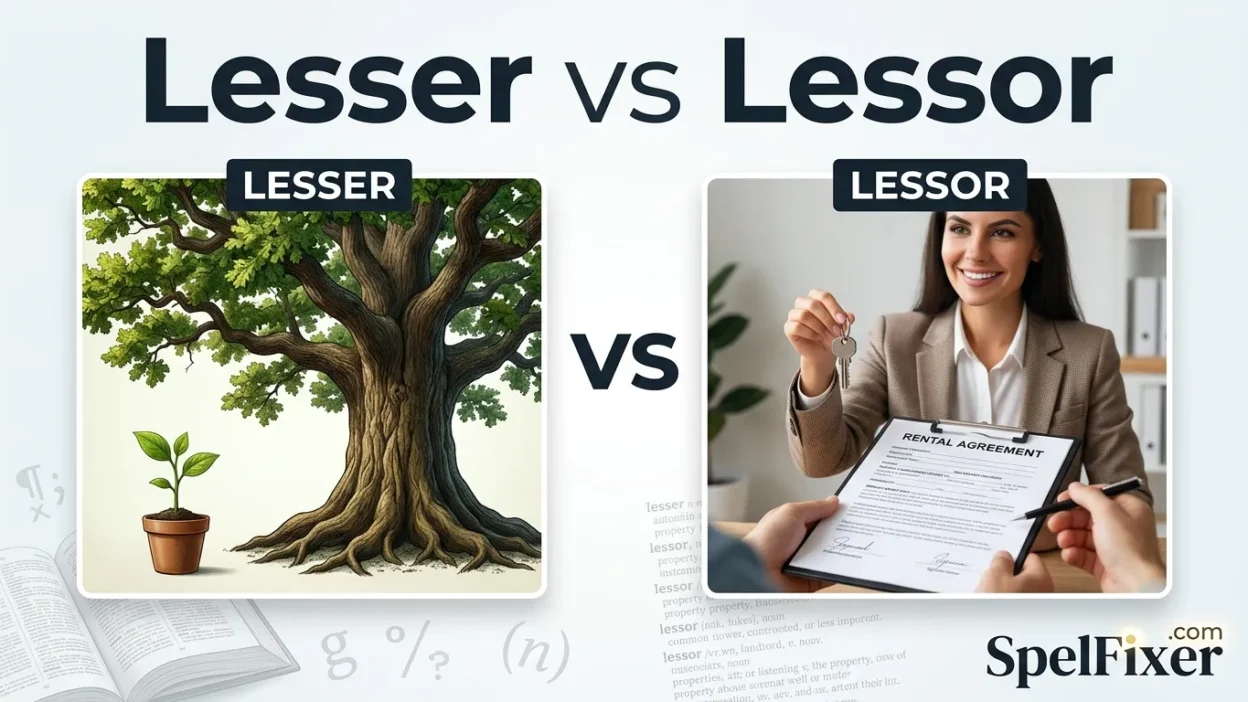
If you have ever paused over lesser vs lessor, you are not alone. These two words look almost identical, but they have completely different meanings and grammatical roles. One is mainly used to describe something as smaller or less important, while the other refers to a person or organization that leases property or assets.
Understanding the difference becomes especially important in formal writing, contracts, business documents, and everyday English. In this guide, you will learn exactly when to use lesser and lessor, with simple examples, common mistakes, and an easy memory trick.
Quick Answer:
- Lesser = smaller, lower, or less important in degree, size, value, or importance.
- Lessor = a person or company that leases or rents property or another asset to someone else.
- Lessee = the person or company that receives the property or asset under a lease.
Example:
- This is the lesser of two problems.
- The lessor agreed to repair the building.
A simple way to remember it is: lesser describes something; lessor leases something.
What Does Lesser Mean?
Lesser is an adjective that means smaller in amount, degree, importance, value, or significance.
It is the comparative form of little in certain contexts and is commonly used when comparing two things. It can refer to physical size, importance, seriousness, influence, or quality.
Examples of Lesser
- This is the lesser of the two problems.
- We chose the lesser expense.
- The second issue is of lesser importance.
- He accepted the lesser role in the project.
- The damage was lesser than we originally expected.
The word often appears in the phrase “the lesser of two evils,” meaning the less harmful or undesirable choice between two bad options.
Lesser in a Sentence
Here are some natural examples:
The company chose the lesser cost option.
She decided that the second risk was the lesser concern.
This mistake is a lesser problem compared with the first one.
In each example, lesser describes something that has a lower degree of importance, seriousness, size, or value.
What Does Lessor Mean?
Lessor is a noun that refers to a person or organization that leases property, equipment, or another asset to another party.
In a rental or lease agreement, the lessor is essentially the landlord or owner who grants someone else the right to use an asset for an agreed period.
The person receiving the right to use the property is called the lessee.
Examples of Lessor
- The lessor must maintain the property according to the lease agreement.
- The lessor provided the tenant with a copy of the contract.
- The car’s lessor approved the requested changes.
- The lessor agreed to extend the lease for another year.
- The building owner is the lessor in this agreement.
Because lessor is a legal and business term, you are more likely to encounter it in contracts, rental agreements, commercial documents, and financial writing.
Lesser vs Lessor: Comparison Table
| Word | Part of Speech | Meaning | Typical Use | Example |
| Lesser | Adjective | Smaller, lower, or less important | Comparisons and descriptions | This is the lesser problem. |
| Lessor | Noun | Person or organization that leases something | Contracts and rental situations | The lessor signed the agreement. |
| Lessee | Noun | Person or organization receiving a lease | Contracts and rental situations | The lessee paid the rent. |
The biggest difference is simple: lesser is about degree or importance, while lessor is about leasing.
Lesser vs Lessor Examples
Seeing the words in different situations can make the distinction easier.
Example 1: Comparing Two Problems
Correct:
The second problem is the lesser of the two.
Here, lesser means the less serious or less significant problem.
Incorrect:
The second problem is the lessor of the two.
Lessor does not mean “less important.”
Example 2: A Rental Agreement
Correct:
The lessor owns the apartment and rents it to the tenant.
Here, lessor refers to the party providing the property.
Incorrect:
The lesser owns the apartment and rents it to the tenant.
In this context, lessor is the correct word.
Example 3: Business Decision
Correct:
The company selected the lesser expense.
The word lesser describes the lower expense.
Example 4: Commercial Lease
Correct:
The lessor and lessee signed the commercial lease.
Here, lessor is the party providing the property, while lessee is the party using it.
Lesser vs Lessor vs Lessee
One reason these words cause confusion is that lessor and lessee are both connected with leasing.
Think of a basic rental arrangement:
Lessor → provides the property → Lessee
For example, imagine a landlord rents an office to a business.
- The lessor = landlord/property owner
- The lessee = business renting the office
- The lease = legal agreement between them
Lesser is completely different. It has nothing specifically to do with rental agreements.
It describes something that is lower, smaller, or less important.
How to Remember the Difference
A quick memory trick can save you from confusing these words.
Lesser = Less
Both lesser and less relate to comparison.
Think:
Lesser = less important, less serious, or smaller.
Example:
This is the lesser concern.
Lessor = Lease
The spelling lessor contains the idea of lease.
Think:
Lessor = the person who leases something to you.
For example:
The lessor owns the property.
You can also remember the related pair:
Lessor → gives the lease
Lessee → receives the lease
This distinction is particularly useful when reading legal documents.
Common Mistakes With Lesser and Lessor
1. Using “lessor” to Mean “less important”
Incorrect:
This is the lessor problem.
Correct:
This is the lesser problem.
When you are comparing importance, seriousness, size, or degree, use lesser.
2. Using “lesser” for a Property Owner
Incorrect:
The lesser signed the rental agreement.
Correct:
The lessor signed the rental agreement.
When referring to the party leasing property to someone else, use lessor.
3. Confusing Lessor With Lessee
This is one of the most common mistakes in lease-related writing.
Remember:
- Lessor = gives the lease
- Lessee = receives the lease
4. Assuming Similar Spelling Means Similar Meaning
Although lesser and lessor differ by only one letter, they belong to different grammatical categories and have unrelated meanings.
Lesser is generally an adjective.
Lessor is a noun.
Is Lesser a Comparative Word?
Yes, lesser is used to indicate a lower degree, amount, importance, or value in certain comparisons.
For example:
- a lesser amount
- a lesser concern
- a lesser-known author
- a lesser role
- a lesser degree
However, less is often more natural when simply talking about quantity.
For example:
- We need less water.
- There is less traffic today.
Lesser is more commonly used when emphasizing comparison, rank, importance, degree, or significance.
Is Lessor a Legal Term?
Yes. Lessor is especially common in legal, real-estate, commercial, and financial contexts.
A lease agreement may identify the parties as the lessor and lessee rather than simply using terms such as landlord and tenant.
For example:
The lessor grants the lessee the right to occupy the premises for the duration of the lease.
In everyday conversation, people are more likely to say landlord and tenant, but lessor and lessee are useful formal terms.
American vs British English: Lesser vs Lessor
There is essentially no major spelling difference between American and British English for these words.
Both varieties of English use:
- lesser for something smaller, lower, or less important
- lessor for the party that leases property or an asset
The main differences you may notice are related to the surrounding terminology.
For example, British English commonly uses landlord and tenant, just as American English does, while formal contracts in either variety can use lessor and lessee.
So if you are writing for an American or British audience, you generally do not need to change the spelling of either word.
When Should You Use Lesser?
Use lesser when you are describing something that is:
- smaller
- lower in degree
- less serious
- less important
- less significant
- lower in value or rank
Examples:
- the lesser risk
- the lesser amount
- the lesser-known option
- the lesser concern
- the lesser penalty
When Should You Use Lessor?
Use lessor when you mean the person or organization that leases an asset or property to another party.
Typical contexts include:
- rental agreements
- real estate
- commercial leases
- equipment leasing
- vehicle leasing
- legal contracts
- financial documents
Example:
The lessor notified the lessee about the renewal terms.
FAQs
Is “lesser” the same as “lessor”?
No. Lesser means smaller, lower, or less important, while lessor refers to a person or organization that leases something to another party.
What is the difference between a lessor and a lessee?
The lessor provides or leases the property or asset. The lessee receives the right to use it under the lease.
Is lesser an adjective?
Yes. Lesser is generally used as an adjective to describe something as lower, smaller, or less important.
Is lessor a noun?
Yes. Lessor is a noun referring to the person or organization that leases property or another asset.
Is “lessor” the same as landlord?
In many situations, yes, a landlord can be described as the lessor when they lease property to a tenant. However, lessor is a broader formal term that can also apply to leased assets other than real estate.
How can I easily remember lesser vs lessor?
Remember lesser = less and lessor = lease. If you are comparing importance or degree, use lesser. If someone is providing a lease, use lessor.
Does British English use “lessor” differently?
No major difference exists. Lessor and lesser have the same basic meanings in American and British English.
Which is correct: “lesser problem” or “lessor problem”?
Lesser problem is correct because you are describing the problem as less serious or important.
Summary:
The difference between lesser vs lessor becomes straightforward once you focus on their meanings. Lesser describes something that is smaller, lower, less serious, or less important. It is commonly used when comparing two things or discussing degree, significance, or value.
Lessor, on the other hand, is a formal noun used in leasing situations. It identifies the person or organization that leases property or another asset to someone else. Remember that the lessor gives the lease, while the lessee receives it.
Actionable Takeaway
Before using either word, ask yourself one simple question: Am I comparing something, or am I talking about a lease?
- Comparing size, importance, seriousness, or degree? → Lesser
- Talking about the party providing a lease? → Lessor
- Talking about the party receiving a lease? → Lessee
Memory trick: Lesser = less. Lessor = lease.