The English language is full of words that sound alike but carry completely different meanings. One common example is die vs dye. Because these words are pronounced the same way, many writers accidentally confuse them in emails, essays, social media posts, and everyday conversations.
Even though they sound identical, “die” and “dye” have very different definitions and uses. One relates to death or stopping function, while the other refers to coloring materials like hair, fabric, or clothing. Understanding the distinction helps you avoid embarrassing grammar mistakes and communicate more clearly in both personal and professional writing.
In this guide, you’ll learn the meanings, grammar rules, examples, common mistakes, pronunciation tips, and practical usage differences between die and dye.
Quick Answer
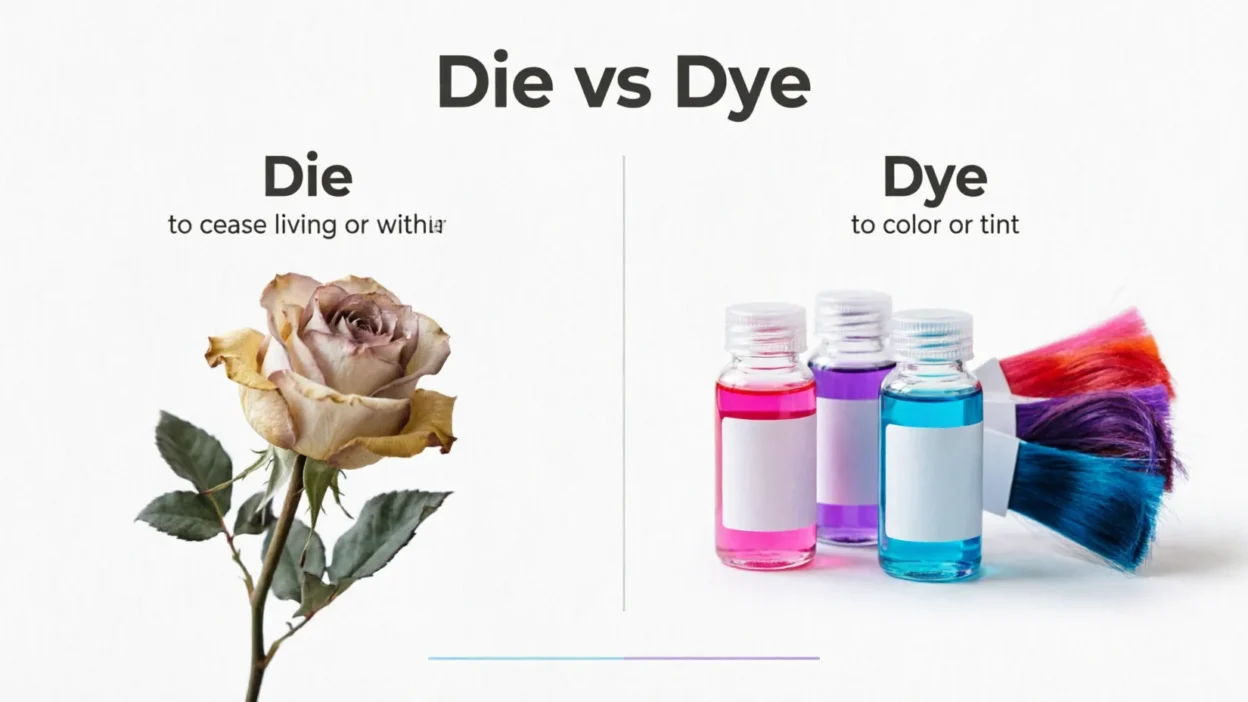
“Die” usually means to stop living or stop functioning, while “dye” means to color something such as hair, fabric, or clothing. Although they sound the same, they have completely different meanings and spellings.
Examples:
- Flowers die without water. ✅
- She wants to dye her hair blue. ✅
What Does “Die” Mean?
“Die” is a verb most commonly associated with death or the end of life. It can also describe machines, batteries, sounds, or activities stopping completely.
Meaning of Die
The word “die” means:
- To stop living
- To stop functioning
- To disappear gradually
Examples of Die in Sentences
- Plants die without sunlight.
- My phone battery died during the trip.
- The excitement slowly died after the event.
Common Uses of Die
“Die” appears in many everyday situations:
- Human death
- Animal death
- Machines stopping
- Emotions fading
- Trends disappearing
Verb Forms of Die
| Tense | Form |
|---|---|
| Present | Die |
| Past | Died |
| Past Participle | Died |
| Present Participle | Dying |
Examples:
- He died peacefully.
- The battery is dying.
Tips for Remembering Die
Think of the letter “i” in “die” as representing “life ending.”
What Does “Dye” Mean?
“Dye” is usually a verb or noun related to coloring something.
Meaning of Dye
The word “dye” means:
- To add color to fabric, hair, or material
- A substance used for coloring
Examples of Dye in Sentences
- She wants to dye her hair red.
- They dyed the fabric green.
- The blue dye stained the table.
Common Uses of Dye
“Dye” often appears in discussions about:
- Hair coloring
- Textile coloring
- Art projects
- Fashion
- Crafts
Verb Forms of Dye
| Tense | Form |
|---|---|
| Present | Dye |
| Past | Dyed |
| Past Participle | Dyed |
| Present Participle | Dyeing |
Examples:
- She dyed her jacket black.
- They are dyeing the curtains today.
Tips for Remembering Dye
The “y” in “dye” can remind you of colorful “yarn” or “yellow.”
Die vs Dye Comparison Table
| Feature | Die | Dye |
|---|---|---|
| Meaning | Stop living or functioning | Add color |
| Part of Speech | Verb/Noun | Verb/Noun |
| Pronunciation | Same as dye | Same as die |
| Common Context | Death or ending | Coloring hair or fabric |
| Past Tense | Died | Dyed |
| Present Participle | Dying | Dyeing |
Why Die and Dye Are Confusing
“Die” and “dye” are homophones, meaning they sound exactly alike but have different meanings and spellings.
Same Pronunciation
Both words are pronounced:
/daɪ/
That identical sound often causes spelling confusion.
Similar Writing Contexts
Some sentences may look strange if the wrong word is used.
Incorrect:
- I want to die my hair. ❌
Correct:
- I want to dye my hair. ✅
Incorrect:
- The flowers dye without water. ❌
Correct:
- The flowers die without water. ✅
Fast Typing Mistakes
Autocorrect and quick typing often create accidental mix-ups between these two words.
When to Use Die
Understanding context is the easiest way to choose the correct word.
1. Talking About Death
Examples:
- Fish die without clean water.
- The old tree finally died.
2. Describing Machines Stopping
Examples:
- My laptop died suddenly.
- The engine died in the middle of the road.
3. Referring to Fading Energy or Interest
Examples:
- The conversation died quickly.
- His enthusiasm died after the meeting.
4. Idioms Using Die
Common expressions include:
- Die hard
- Die out
- Die down
- Never say die
5. Tips for Using Die Correctly
- Think about endings or stopping.
- Use it for life, power, or energy loss.
- Remember the past tense is “died.”
When to Use Dye
Use “dye” when discussing color or coloring processes.
1. Hair Coloring
Examples:
- She dyed her hair blonde.
- I want to dye my beard black.
2. Fabric and Clothing
Examples:
- They dyed the curtains blue.
- The shirt was dyed by hand.
3. Artistic and Craft Projects
Examples:
- We used natural dye for the artwork.
- The artist mixed several dyes together.
4. Industrial and Textile Use
Examples:
- Factories dye thousands of fabrics daily.
- Red dye is common in fashion design.
5. Tips for Using Dye Correctly
- Connect it with color.
- Think of painting or fashion.
- Remember “dyeing” keeps the “e.”
Common Mistakes With Die and Dye
Many English learners accidentally switch these words.
Mistake 1: Using Die for Hair Coloring
Incorrect:
- She wants to die her hair pink. ❌
Correct:
- She wants to dye her hair pink. ✅
Mistake 2: Using Dye for Death
Incorrect:
- Plants dye without sunlight. ❌
Correct:
- Plants die without sunlight. ✅
Mistake 3: Confusing Dying and Dyeing
This is one of the biggest grammar mistakes.
| Word | Meaning |
|---|---|
| Dying | Near death or stopping |
| Dyeing | Coloring something |
Examples:
- The battery is dying. ✅
- She is dyeing her hair. ✅
Mistake 4: Incorrect Past Tense
Incorrect:
- She die her shirt blue. ❌
Correct:
- She dyed her shirt blue. ✅
Practical Example Paragraphs
Seeing these words in real paragraphs helps reinforce the difference.
Example Using Die
Without regular maintenance, even expensive machines can die unexpectedly. Last winter, my car battery died during a snowstorm, leaving me stranded for hours. Experiences like this remind people how important preparation can be.
Example Using Dye
Before the festival, Mia decided to dye her hair purple to match her outfit. She also dyed a white scarf with bright colors to create a unique handmade accessory that stood out beautifully.
Placement and Grammar Rules Table
| Word | Sentence Placement | Tone | Example Sentence |
|---|---|---|---|
| Die | Main verb | Neutral | Flowers die without sunlight. |
| Died | Past tense verb | Neutral | The battery died overnight. |
| Dying | Continuous form | Emotional/Neutral | The plant is dying slowly. |
| Dye | Main verb | Neutral | She wants to dye her hair. |
| Dyed | Past tense verb | Neutral | He dyed the fabric blue. |
| Dyeing | Continuous form | Neutral | They are dyeing the curtains. |
American vs British English Differences
There are almost no major differences between American and British English regarding “die” and “dye.”
Both forms:
- Share the same spelling
- Have the same meanings
- Follow the same grammar rules
The only slight difference may appear in pronunciation accents, but the words remain homophones in both regions.
Related Words and LSI Keywords
To strengthen your understanding, here are related terms often connected with die vs dye:
- Homophones
- Hair dye
- Textile dye
- English grammar confusion
- Common spelling mistakes
- Dying vs dyeing
- Vocabulary differences
- Word usage rules
- Grammar tips
- English writing help
FAQs About Die vs Dye
Are die and dye pronounced the same?
Yes. They are homophones and share the same pronunciation.
What is the difference between dying and dyeing?
“Dying” relates to death or stopping. “Dyeing” refers to coloring something.
Is dye a noun or a verb?
It can be both. “Dye” can describe the coloring substance or the act of coloring.
Can machines die?
Yes. Informally, people say machines, batteries, and electronics “die” when they stop working.
How do I remember the difference?
Think of “dye” as connected to colorful dye products and “die” as related to endings.
Is “dyed” spelled with an e?
Yes. The correct past tense is “dyed.”
Which word is more commonly used?
“Die” is generally more common because it applies to many situations beyond literal death.
Final Thoughts
The difference between die vs dye may seem small, but it completely changes a sentence’s meaning. “Die” refers to death, stopping, or fading away, while “dye” relates to coloring hair, fabric, or other materials. Since they sound identical, context becomes the key to choosing the correct spelling.
Mastering commonly confused words like these improves your grammar, strengthens your writing, and helps your communication sound more polished. Whether you are writing professionally, academically, or casually online, understanding the distinction between die and dye can help you avoid simple but noticeable mistakes.
Actionable Takeaway
- Use die for death, endings, or stopping function
- Use dye for coloring hair, fabric, or materials
- Remember: dying and dyeing have different meanings
- Focus on sentence context to choose correctly
- Practice with real examples to build confidence

Fenwick Quentin is a creative blogging author known for his analytical yet engaging writing style.
He explores topics such as innovation, digital culture, and personal development with depth and clarity.
Through his articles, Fenwick encourages readers to think critically and embrace continuous growth.