English is full of words that sound similar but have completely different meanings. One pair that often causes confusion is sew vs sow. Because both words are pronounced similarly in some accents and share a simple three-letter structure, many writers accidentally use one when they mean the other.
If you’ve ever wondered whether you should sew a dress or sow a dress, you’re in the right place. Understanding the difference between these words will improve your writing, prevent embarrassing mistakes, and help you communicate more clearly in both personal and professional settings.
Quick Answer
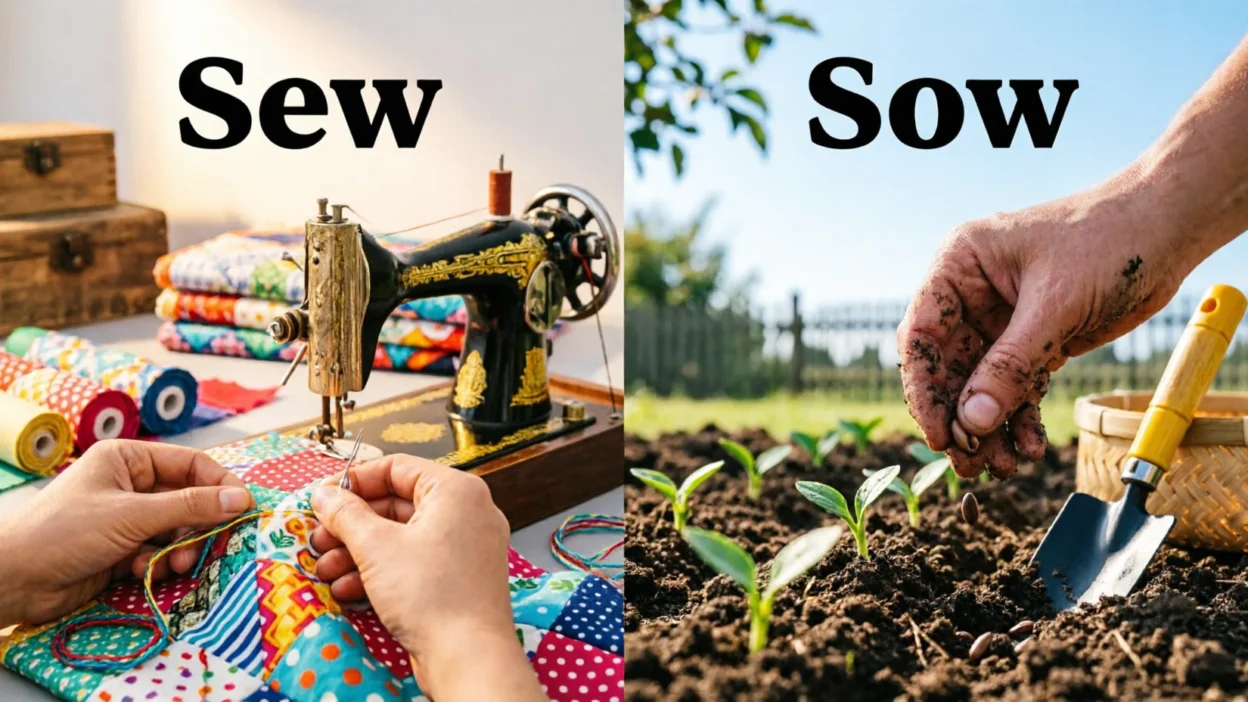
Sew means to join fabric or other materials together using a needle and thread. Sow means to plant seeds in the ground or spread something that will grow or develop over time. Although they may sound alike, they have completely different meanings and uses.
Understanding the Meaning of Sew
The word sew is a verb related to stitching, mending, or creating items with fabric and thread.
People sew clothing, blankets, curtains, and many other textile products. The word has been used in English for centuries and remains common in crafts, fashion, and home improvement.
Examples of Sew
- My grandmother can sew beautiful quilts.
- I need to sew a button back onto my shirt.
- She learned to sew dresses at a young age.
- They sewed the torn fabric carefully.
Common Uses of Sew
- Sewing clothes
- Repairing fabric
- Making costumes
- Quilting projects
- Crafting and embroidery
Related Terms
- Stitch
- Tailor
- Needlework
- Embroider
- Mend
Understanding the Meaning of Sow
The word sow most commonly means to plant seeds in soil so they can grow.
However, sow can also be used figuratively to describe spreading ideas, emotions, or conditions that later develop into something larger.
Examples of Sow
- Farmers sow seeds in the spring.
- We plan to sow vegetables in the garden this weekend.
- The speech may sow hope among the community.
- Rumors can sow confusion and mistrust.
Common Uses of Sow
- Planting crops
- Gardening
- Agriculture
- Spreading ideas
- Creating future outcomes
Related Terms
- Plant
- Scatter
- Cultivate
- Grow
- Seed
Sew vs Sow: Key Differences
The easiest way to distinguish these words is to focus on what is being created.
| Feature | Sew | Sow |
|---|---|---|
| Primary Meaning | Join fabric with thread | Plant seeds or spread something |
| Part of Speech | Verb | Verb |
| Common Context | Clothing and crafts | Farming and gardening |
| Figurative Use | Rare | Common |
| Example | Sew a dress | Sow seeds |
Understanding the context usually makes the correct choice obvious.
When to Use Sew
Use sew whenever you’re talking about stitching, repairing, or creating something with fabric and thread.
Correct Examples
- She can sew her own clothing.
- I need to sew the hem of my pants.
- They sewed matching costumes for the performance.
- Learning to sew can save money on clothing repairs.
Common Sewing Activities
- Making garments
- Altering clothes
- Repairing tears
- Creating home décor
- Craft projects
Sample Sentence
After watching several tutorials, Sarah learned how to sew a simple skirt using a sewing machine.
When to Use Sow
Use sow when referring to planting seeds or causing something to spread and develop.
Correct Examples
- Farmers sow wheat every year.
- Gardeners sow flower seeds in the spring.
- Leaders should avoid comments that sow division.
- Education can sow the seeds of future success.
Agricultural Uses
- Sow corn
- Sow grass seed
- Sow vegetables
- Sow wildflowers
Figurative Uses
- Sow doubt
- Sow discord
- Sow hope
- Sow kindness
Sample Sentence
The community project helped sow optimism among local residents.
Practical Examples in Everyday Writing
Let’s compare the two words side by side.
Sew Examples
- My mother taught me to sew when I was ten.
- He needs to sew the patch onto his jacket.
- They sewed handmade gifts for the holidays.
Sow Examples
- We will sow carrots next month.
- Farmers sow crops before the rainy season.
- Positive actions can sow trust within a team.
Notice how sew always relates to fabric, while sow relates to planting or spreading.
Common Mistakes People Make
Because these words sound similar in some dialects, they are often confused in writing.
Mistake 1: Using Sow for Fabric Projects
Incorrect:
- I need to sow my torn shirt.
Correct:
- I need to sew my torn shirt.
Mistake 2: Using Sew for Gardening
Incorrect:
- We will sew tomato seeds tomorrow.
Correct:
- We will sow tomato seeds tomorrow.
Mistake 3: Confusing Literal and Figurative Meanings
Incorrect:
- His comments sewed doubt among voters.
Correct:
- His comments sowed doubt among voters.
How to Avoid These Errors
Ask yourself:
- Am I talking about fabric and thread? → Use sew.
- Am I talking about seeds or spreading ideas? → Use sow.
Memory Tricks for Sew vs Sow
Simple memory aids can help you remember the correct word.
Remember Sew
The word sew contains the letters ew, which you can associate with needlework and sewing projects.
Think:
Sew = Stitching fabric
Remember Sow
The word sow contains ow, which can remind you of working outdoors in fields and gardens.
Think:
Sow = Seeds in soil
Quick Formula
- Fabric → Sew
- Seeds → Sow
American vs British English Differences
The good news is that there is very little difference between American and British English regarding sew and sow.
American English
- Uses sew for stitching.
- Uses sow for planting.
British English
- Uses the same meanings and spellings.
- Grammar and usage remain consistent.
Pronunciation Notes
The pronunciation of sow can vary depending on meaning:
- Sow (plant seeds) rhymes with go.
- Sow (female pig) rhymes with cow.
The sewing-related word sew usually rhymes with go.
Related Words and Phrases
Expanding your vocabulary can make these distinctions easier to remember.
Words Related to Sew
- Stitch
- Tailor
- Needlework
- Embroidery
- Hemming
- Mending
Words Related to Sow
- Plant
- Cultivate
- Scatter
- Seed
- Grow
- Harvest
These related terms reinforce the unique contexts in which each word belongs.
Frequently Asked Questions
Is sew or sow used for clothing?
Sew is the correct word when talking about clothing, fabric, and stitching.
What does sow mean in gardening?
Sow means to plant seeds in soil so they can grow into plants.
Can sow be used figuratively?
Yes. People often use sow figuratively, such as “sow doubt,” “sow kindness,” or “sow hope.”
Is sew ever used in agriculture?
No. Sew is used for fabric and stitching, not planting.
How do you remember the difference between sew and sow?
Remember: sew is for stitching fabric, while sow is for planting seeds.
Are sew and sow pronounced the same?
Often yes, especially when sow means planting seeds. However, pronunciation can vary by region and context.
Which word is more common?
Both are common, but they appear in different contexts. Sew is frequent in crafting, while sow is common in gardening and farming.
Is there a British vs American difference?
No significant difference exists. Both varieties of English use the same spellings and meanings.
Summary
The difference between sew vs sow is straightforward once you understand their meanings. Sew refers to joining fabric with a needle and thread, making it the correct choice for clothing, repairs, tailoring, and crafts. Sow, on the other hand, refers to planting seeds or spreading ideas, emotions, or influences that may develop over time.
Although the words can sound similar, their meanings are entirely different. Paying attention to context will help you choose the right one every time and avoid common writing mistakes.
Actionable Takeaway
Before using either word, identify the context. If you’re working with fabric, clothing, or stitching, choose sew. If you’re planting seeds or describing the spread of ideas or emotions, choose sow. This simple rule will help you write with confidence and accuracy.