The confusion between specs vs specks happens more often than you might think. These two words sound very similar in spoken English, but they have completely different meanings. One usually refers to specifications or glasses, while the other refers to tiny spots or particles. Because of their close pronunciation, writers and English learners frequently mix them up in emails, essays, online posts, and professional writing.
If you have ever wondered whether something has “tiny specs of dust” or “tiny specks of dust,” you are not alone. This common spelling confusion can make sentences look awkward or incorrect. Fortunately, once you understand the meanings and usage rules, distinguishing between these words becomes simple.
In this complete guide, you will learn the difference between specs and specks, their meanings, grammar rules, sentence examples, common mistakes, practical writing tips, memory tricks, and comparison tables to help you use both words correctly every time.
Quick Answer
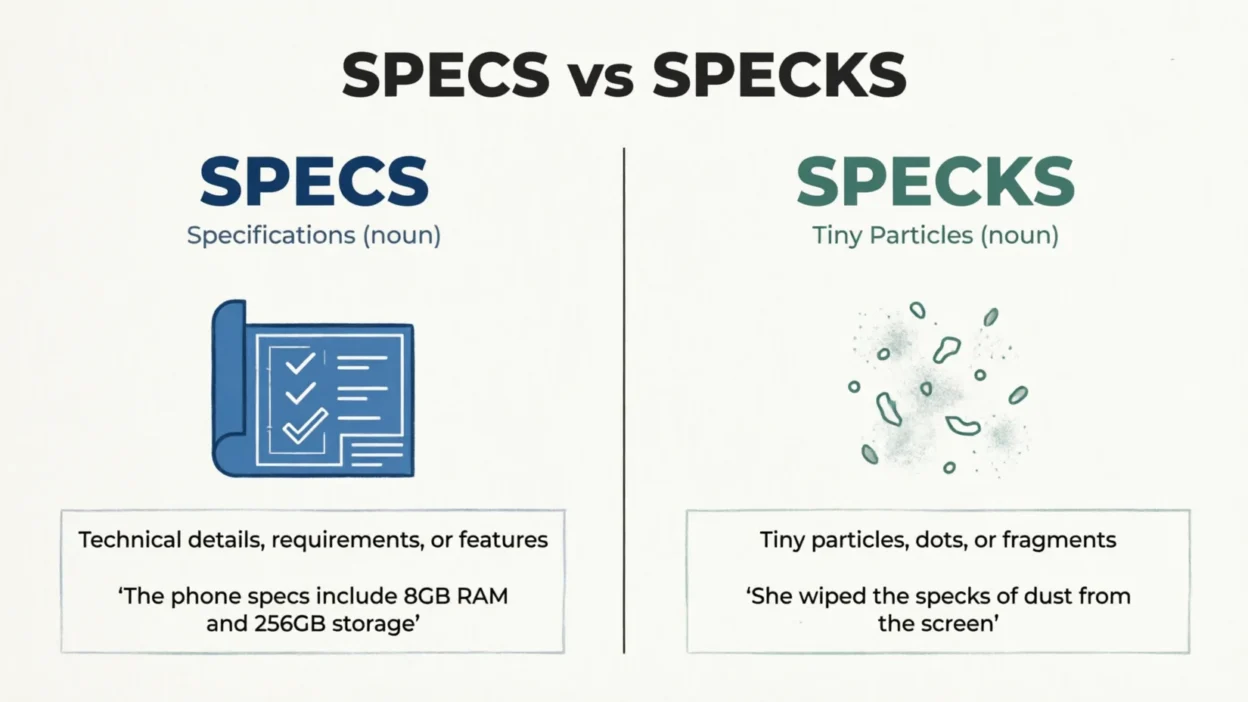
- Specs usually means specifications or eyeglasses.
- Specks means tiny spots, particles, or small marks.
- Check the laptop specs before buying. ✅
- There were specks of dust on the table. ✅
Simple rule:
- Specs = details or glasses
- Specks = tiny spots
What Does “Specs” Mean?
The word “specs” is commonly used as a shortened form of:
- specifications
- spectacles (glasses)
The meaning depends on the context.
Specs Meaning: Specifications
In technology, business, and products, “specs” refers to:
- technical details
- measurements
- features
- performance information
Examples
- The phone specs are impressive.
- Check the computer specs before gaming.
- The car’s specs include a powerful engine.
- Product specs are listed online.
Specs Meaning: Eyeglasses
“Specs” can also mean:
- glasses
- spectacles
This usage is more informal.
Examples
- He forgot his specs at home.
- Her new specs look stylish.
- I need stronger reading specs.
What Does “Specks” Mean?
“Specks” refers to:
- tiny particles
- small spots
- little marks
- bits of dust or dirt
It describes very small visible pieces of something.
Examples of Specks
- Specks of dust covered the shelf.
- There were tiny specks of paint on the floor.
- I noticed specks of dirt on my shoes.
- The image contained black specks.
Specs vs Specks Comparison Table
| Word | Meaning | Common Usage | Example |
|---|---|---|---|
| Specs | Specifications or glasses | Technology, products, fashion | The laptop specs are excellent |
| Specks | Tiny spots or particles | Dust, dirt, marks | Specks of dust covered the desk |
The Main Difference Between Specs and Specks
The easiest way to remember the difference is by thinking about size and context.
Specs = Information or Glasses
Think:
- product details
- technical specifications
- spectacles
Example:
- The phone specs include 16GB RAM.
Specks = Tiny Particles
Think:
- little dots
- grains
- dust particles
Example:
- Specks of sand covered the towel.
How to Use “Specs” Correctly
Use “specs” when discussing:
- product information
- technical details
- eyeglasses
Common Uses of Specs
- phone specs
- computer specs
- design specs
- gaming specs
- reading specs
Correct Examples
- Compare the specs before purchasing a laptop.
- These specs meet industry standards.
- She cleaned her specs carefully.
- The gaming PC has high-end specs.
How to Use “Specks” Correctly
Use “specks” when referring to:
- tiny particles
- small marks
- little visible spots
Common Uses of Specks
- specks of dust
- specks of dirt
- specks of paint
- black specks
- white specks
Correct Examples
- Tiny specks floated through the sunlight.
- Specks of flour covered the kitchen counter.
- The mirror had small specks on it.
- We noticed specks of rust on the metal.
Common Mistakes With Specs vs Specks
These words are easy to confuse because they sound similar.
Mistake 1: Using Specs for Dust
Incorrect:
- Specs of dust covered the shelf. ❌
Correct:
- Specks of dust covered the shelf. ✅
Why?
Dust consists of tiny particles, not specifications.
Mistake 2: Using Specks for Technical Details
Incorrect:
- Check the phone specks online. ❌
Correct:
- Check the phone specs online. ✅
Why?
The sentence refers to product specifications.
Mistake 3: Confusing Informal Meanings
Some people forget that “specs” can also mean:
- eyeglasses
Example:
- Grandpa cleaned his specs.
Practical Example Paragraphs
Example Using Specs
Before purchasing a gaming computer, many buyers carefully compare the specs, including processor speed, graphics performance, storage capacity, and memory.
Example Using Specks
As sunlight entered through the window, tiny specks of dust floated quietly through the air, creating a peaceful atmosphere in the room.
Placement and Grammar Rules Table
| Phrase | Sentence Placement | Tone/Formality | Example Sentence |
|---|---|---|---|
| Product specs | Middle/end | Professional/informal | The phone specs are excellent |
| Technical specs | Middle | Formal/business | Review the technical specs carefully |
| Specks of dust | Beginning/middle | Neutral | Specks of dust covered the table |
| Tiny specks | Middle/end | Descriptive | Tiny specks appeared on the screen |
American vs British English Differences
There are no major spelling differences between American and British English for:
- specs
- specks
However, British English more commonly uses:
- specs
to mean:
- eyeglasses
Examples
British English:
- I forgot my specs at home.
American English:
- I forgot my glasses at home.
Both varieties still use:
- specs
for: - specifications
Easy Memory Tricks for Specs vs Specks
Trick 1: Specs = Specifications
The word:
- specs
is short for:
- specifications
This helps you remember its connection to:
- details
- features
- products
Trick 2: Specks = Tiny Spots
Think:
- specks = small speckled dots
Example:
- specks of dirt
Why Correct Usage Matters
Using the correct word improves:
- writing clarity
- professionalism
- grammar accuracy
- reader understanding
Confusing these terms may:
- create awkward wording
- confuse readers
- weaken technical writing
- reduce credibility
This matters especially in:
- product reviews
- academic writing
- business communication
- blog posts
- technical content
Similar English Word Confusions
People who search for “specs vs specks” often also confuse:
- discreet vs discrete
- passed vs past
- compliment vs complement
- breath vs breathe
- stationery vs stationary
These word pairs sound similar but carry different meanings.
Everyday Examples of Specs and Specks
Correct Uses of Specs
- The camera specs are impressive.
- He adjusted his specs while reading.
- Compare phone specs before buying.
- These design specs are outdated.
Correct Uses of Specks
- Specks of dust covered the keyboard.
- Tiny specks appeared on the painting.
- I noticed specks of sand in my shoes.
- The old photo contained black specks.
Incorrect Examples
- The laptop specks are excellent. ❌
- Specs of dirt covered the floor. ❌
FAQs About Specs vs Specks
What is the difference between specs and specks?
“Specs” refers to specifications or glasses, while “specks” means tiny particles or spots.
Is specs short for specifications?
Yes. “Specs” is a common abbreviation for:
- specifications
What are specks of dust?
They are tiny visible particles of dust.
Can specs mean eyeglasses?
Yes. In informal English, “specs” can mean spectacles or glasses.
Which word is correct for product details?
Use:
- specs
Which word refers to tiny spots?
Use:
- specks
Are specs and specks pronounced differently?
They sound very similar, which is why many people confuse them.
Final Thoughts
Understanding the difference between specs vs specks can improve your grammar, vocabulary, and writing confidence. Although these words sound alike, they have very different meanings. “Specs” refers to specifications or glasses, while “specks” describes tiny spots or particles.
Mastering commonly confused words helps your writing become clearer, more professional, and easier to understand. Whether you are discussing technology, describing dust particles, or writing product reviews, choosing the correct word makes your communication more accurate and polished.
Actionable Takeaway
Use this quick rule:
- specs = specifications or glasses
- specks = tiny spots or particles
Easy memory trick:
- “specks” has an extra “k,” like tiny little marks or speckles
Before writing, ask yourself:
- “Am I talking about product details or tiny particles?”
That simple question will help you choose the correct word every time.

Fenwick Quentin is a creative blogging author known for his analytical yet engaging writing style.
He explores topics such as innovation, digital culture, and personal development with depth and clarity.
Through his articles, Fenwick encourages readers to think critically and embrace continuous growth.