The confusion between vary vs very is surprisingly common, especially for English learners and fast typists. These two words look similar, sound somewhat alike, and are often mistaken for one another in writing. However, their meanings and grammatical functions are completely different. One relates to change or difference, while the other is used to add emphasis.
If you have ever written phrases like “prices very every day” or “the results vary good,” you are not alone. Small spelling differences can completely change a sentence’s meaning. Understanding how to use vary and very correctly will help your writing become clearer, more professional, and easier to understand.
In this complete guide, you will learn the meanings of vary and very, grammar rules, examples, common mistakes, comparison tables, practical usage tips, and simple memory tricks to help you avoid confusion every time.
Quick Answer
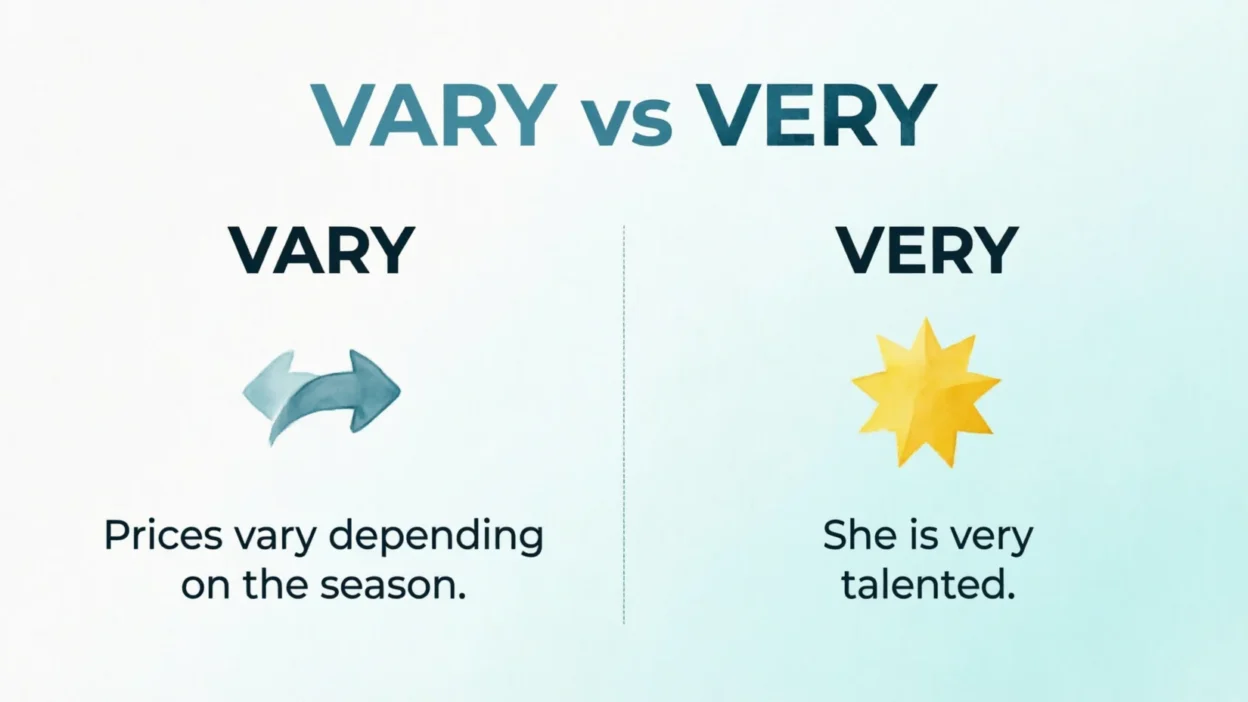
- Vary means to change, differ, or become different.
- Very is an adverb used to emphasize adjectives or adverbs.
- Prices vary depending on location. ✅
- She is very happy today. ✅
Simple rule:
- Vary = change
- Very = emphasis
What Does “Vary” Mean?
The word “vary” is a verb that means:
- to change
- to differ
- to become different
- to show variation
It is often used when discussing:
- differences
- changing conditions
- fluctuating results
- variety
Examples of Vary
- Prices vary between stores.
- Weather conditions vary by season.
- Results may vary from person to person.
- Opinions vary widely on the topic.
What Does “Very” Mean?
“Very” is an adverb used to:
- add emphasis
- strengthen adjectives or adverbs
It helps describe intensity or degree.
Examples of Very
- The movie was very exciting.
- She speaks very clearly.
- This lesson is very important.
- They arrived very early.
Vary vs Very Comparison Table
| Word | Part of Speech | Meaning | Example |
|---|---|---|---|
| Vary | Verb | To change or differ | Prices vary daily |
| Very | Adverb | Adds emphasis | She is very kind |
The Main Difference Between Vary and Very
The easiest way to separate these words is by their function.
Vary = Change or Difference
Use “vary” when discussing:
- changes
- differences
- fluctuations
Example:
- Temperatures vary throughout the year.
Very = Strong Emphasis
Use “very” to:
- intensify descriptions
Example:
- The weather is very cold today.
How to Use “Vary” Correctly
“Vary” is used as a verb and usually appears when discussing differences or changes.
Common Uses of Vary
- vary greatly
- vary by location
- vary in size
- vary from person to person
- results may vary
Correct Examples
- Prices vary depending on quality.
- Tastes vary among individuals.
- Colors may vary slightly.
- The rules vary by country.
How to Use “Very” Correctly
Use “very” to strengthen:
- adjectives
- adverbs
Common Uses of Very
- very good
- very fast
- very important
- very happy
- very carefully
Correct Examples
- She is very talented.
- The test was very difficult.
- He answered very politely.
- We are very excited.
Common Mistakes With Vary vs Very
These words are commonly confused because of their similar spelling.
Mistake 1: Using Very Instead of Vary
Incorrect:
- Prices very across regions. ❌
Correct:
- Prices vary across regions. ✅
Why?
The sentence discusses change and difference.
Mistake 2: Using Vary for Emphasis
Incorrect:
- She is vary intelligent. ❌
Correct:
- She is very intelligent. ✅
Why?
The sentence needs emphasis, not change.
Mistake 3: Typing Errors
Because the words differ by only one letter, typing mistakes happen frequently in:
- emails
- essays
- online comments
- business writing
Practical Example Paragraphs
Example Using Vary
Travel costs can vary significantly depending on the season, destination, airline availability, and hotel demand. Planning ahead often helps travelers save money.
Example Using Very
The customer service representative was very helpful and answered every question with patience and professionalism.
Placement and Grammar Rules Table
| Phrase | Sentence Placement | Tone/Formality | Example Sentence |
|---|---|---|---|
| Vary greatly | Middle/end | Formal/professional | Prices vary greatly online |
| Results may vary | Beginning/end | Informal/professional | Results may vary by user |
| Very important | Middle | Neutral/formal | This is very important |
| Very quickly | Middle/end | Neutral | She finished very quickly |
Vary in Different Sentence Structures
Vary With “From”
Example:
- Prices vary from store to store.
Vary With “By”
Example:
- Salaries vary by experience level.
Vary With “Depending On”
Example:
- Costs vary depending on location.
Very in Everyday English
“Very” is one of the most commonly used intensifiers in English.
Examples
- very cold
- very busy
- very beautiful
- very slowly
- very successful
It appears in:
- conversations
- essays
- emails
- storytelling
- professional writing
American vs British English Differences
There are no spelling differences between American and British English for:
- vary
- very
Both forms are spelled and used the same way in each variety of English.
Example in Both Variants
- Results may vary.
- She is very confident.
Easy Memory Tricks for Vary vs Very
Trick 1: Vary = Variation
The word:
- vary
connects to:
- variation
Both relate to:
- differences
- change
Trick 2: Very = Emphasis
Think:
- very = extra emphasis
Example:
- very big
- very small
- very exciting
Why Correct Usage Matters
Using the correct word improves:
- writing clarity
- grammar accuracy
- professionalism
- reader understanding
Mixing them up may:
- confuse readers
- create grammar mistakes
- weaken credibility
- make writing look careless
Correct usage matters especially in:
- academic writing
- business communication
- website content
- professional emails
- SEO articles
Similar English Word Confusions
People who search for “vary vs very” often also confuse:
- affect vs effect
- breath vs breathe
- discreet vs discrete
- than vs then
- passed vs past
Learning these confusing word pairs strengthens overall English fluency and writing confidence.
Everyday Examples of Vary and Very
Correct Uses of Vary
- Opinions vary widely.
- Prices vary every season.
- Conditions vary by region.
- Performance may vary.
Correct Uses of Very
- The lesson was very helpful.
- She drives very carefully.
- We are very grateful.
- The coffee is very hot.
Incorrect Examples
- Prices very daily. ❌
- The movie was vary exciting. ❌
FAQs About Vary vs Very
What is the difference between vary and very?
“Vary” means to change or differ, while “very” adds emphasis to adjectives or adverbs.
Is vary a verb?
Yes. “Vary” is a verb.
Is very an adverb?
Yes. “Very” is an adverb used for emphasis.
Can vary and very be used interchangeably?
No. They have completely different meanings and grammar roles.
How do you use vary in a sentence?
Example:
- Costs vary depending on location.
How do you use very in a sentence?
Example:
- She is very talented.
Why do people confuse vary and very?
Because they look and sound somewhat similar, especially in fast writing or typing.
Final Thoughts
Understanding the difference between vary vs very can improve your grammar, writing accuracy, and communication skills. Although these words differ by only one letter, they serve completely different purposes. “Vary” describes change or difference, while “very” adds emphasis and intensity.
Mastering commonly confused words helps your writing become more polished and professional. Whether you are writing emails, blog posts, essays, or business documents, choosing the correct word ensures your message remains clear and effective.
Actionable Takeaway
Use this quick rule:
- vary = change or differ
- very = emphasis
Easy memory trick:
- “vary” connects to “variation”
- “very” strengthens descriptions
Before writing, ask yourself:
- “Am I talking about change or emphasis?”
That simple question will help you choose the correct word every time.